Rear Projection Film for Glass, Windows, Acrylic, and Commercial Displays
Turn glass, acrylic, and clear surfaces into high-impact projection displays for retail, museums, kiosks, events, trade shows, lobbies, and digital signage.
Rear Projection Film allows businesses to transform glass, windows, acrylic panels, and transparent surfaces into projection-ready display surfaces.
Instead of using a bulky traditional screen, rear projection film applies directly to a clear surface. Then a projector displays content from behind the surface, creating a bright, clean, professional image that customers, visitors, and audiences can see from the front.
It is a flexible solution for commercial environments that need large-format visuals, window displays, interactive projection, digital signage, brand experiences, museum exhibits, trade show booths, and custom display installations.
Request a Projection Film Quote
View Projection Film Products
Quick Product Snapshot
| Detail | Rear Projection Film |
|---|---|
| Product Type | Projection film for glass, acrylic, and clear surfaces |
| Best For | Retail windows, museums, trade shows, kiosks, lobbies, events, restaurants, digital signage |
| Main Use | Rear projection displays |
| Surface Options | Glass, acrylic, windows, custom clear panels |
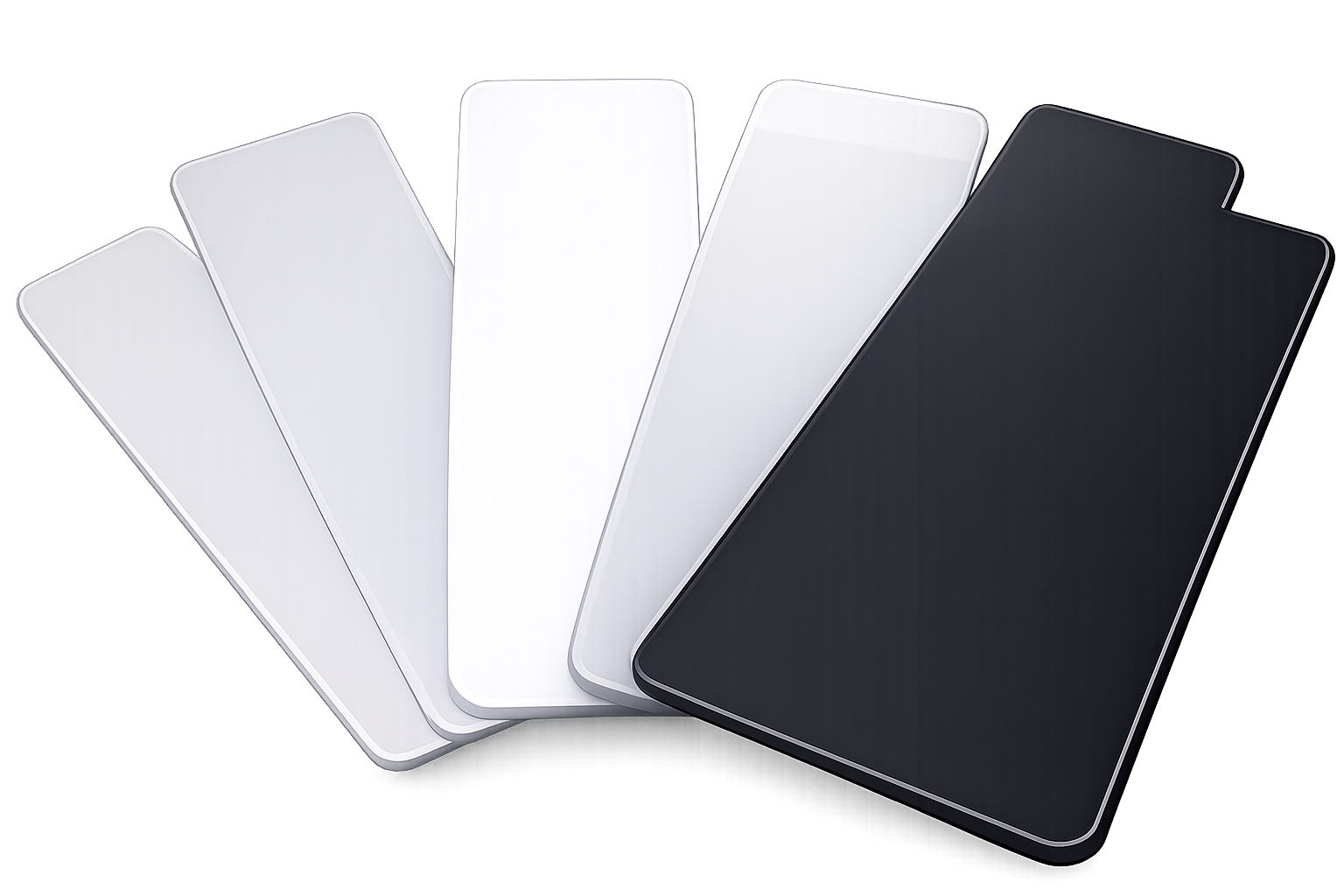
| Film Types | Clear, grey, white, black, high-contrast, DualView |
| Custom Sizes | Available |
| Samples | Available |
| Quote Needed | Width, height, quantity, film type, surface type, projector details, application photos |
What Is Rear Projection Film?
Rear projection film is a specialized film that turns glass, acrylic, windows, or other clear panels into a projection screen.
The film is applied to the surface. A projector is placed behind the glass or acrylic. The projected image appears on the film and is viewed from the opposite side.
This creates a clean display effect without a traditional rigid screen.
Rear projection film is commonly used for:
- Retail window displays
- Museum exhibits
- Trade show booths
- Corporate lobbies
- Kiosks
- Restaurants
- Real estate window displays
- Event displays
- Interactive projection systems
- Projection on glass
- Digital signage experiences
- Transparent display-style effects
Rear projection film is useful when the display surface needs to look integrated, architectural, or custom-built.
Why Use Projection Film Instead of a Traditional Screen?
Traditional projection screens work well in many environments, but they are not always the right fit for commercial spaces.
Rear projection film gives businesses more design flexibility because it can be applied to existing or custom glass and acrylic surfaces.
| Feature | Rear Projection Film | Traditional Projection Screen |
|---|---|---|
| Surface | Glass, acrylic, windows, clear panels | Fabric or rigid screen |
| Appearance | Integrated and architectural | Visible screen structure |
| Custom Sizes | Available | Limited by screen format |
| Retail Window Use | Strong fit | Usually not practical |
| Kiosk Integration | Strong fit | Usually bulky |
| Museum Displays | Clean and customizable | Can look less integrated |
| Shipping | Ships rolled in a tube | Often larger and more rigid |
| Design Flexibility | High | Moderate |
| Commercial Display Use | Excellent | Depends on space |
Rear projection film is especially useful when the screen needs to disappear into the environment and the content needs to become the focus.
Section 3
Projection Film Product Categories
RearProjectionFilms.com offers multiple projection film types for different display needs.
Rear Projection Film
Rear Projection Film is designed for applications where a projector is placed behind the surface and content is viewed from the front.
Best for:
- Glass displays
- Acrylic panels
- Retail windows
- Lobbies
- Trade shows
- Museums
- Events
- Kiosks
- Digital signage
DualView Projection Film
DualView Projection Film is designed for applications where projected content needs to be visible from both sides or work in more flexible viewing environments.
Best for:
- Storefronts
- Glass partitions
- Event displays
- Trade show booths
- Public-facing exhibits
- Interactive experiences
Clear / Holographic Projection Film
Clear or holographic-style projection film creates a floating-image display effect while maintaining a more transparent look.
Best for:
- Retail windows
- Product showcases
- Museums
- Brand activations
- Showrooms
- Trade shows
- Futuristic display effects
Projection Film Samples
Projection Film Samples help buyers compare film types before committing to a larger order.
Best for:
- Testing projector brightness
- Reviewing surface appearance
- Comparing contrast
- Testing transparency
- Confirming viewing angles
- Client approval
- Mockups and prototypes
Where Rear Projection Film Can Be Used
Projection film is used across a wide range of commercial environments.
| Application | How Projection Film Helps |
|---|---|
| Retail Windows | Turns storefront glass into eye-catching promotional displays. |
| Museums & Exhibits | Supports immersive storytelling, interactive exhibits, and protected displays. |
| Trade Shows | Creates lightweight, high-impact visual displays for booths and events. |
| Kiosks | Integrates projection into glass or acrylic kiosk surfaces. |
| Corporate Lobbies | Adds branded visuals, welcome messaging, and architectural display features. |
| Restaurants | Supports menu visuals, window promotions, and atmospheric projection effects. |
| Real Estate Offices | Turns windows into property listing displays after hours. |
| Digital Signage | Provides a custom projection-based alternative to standard flat panels. |
| Events | Creates temporary projection surfaces for launches, activations, and experiences. |
| Interactive Displays | Supports touch overlays, sensors, and gesture-based projection concepts. |
| Projection on Glass | Converts existing glass into a display-ready surface. |
| Acrylic Panels | Allows custom fabricated panels to become projection screens. |
Retail Window Projection Film
Retail is one of the strongest applications for rear projection film.
With projection film, storefront windows can become attention-grabbing digital displays while still keeping a clean architectural look.
Retail window projection film can be used for:
- Storefront promotions
- Seasonal campaigns
- Product launches
- Sale announcements
- Brand storytelling
- After-hours advertising
- Mall displays
- Luxury retail visuals
- Interactive window displays
- Pop-up shop displays
Instead of hanging a screen in the window, the glass itself becomes the display surface.
This gives retailers a cleaner look and a better use of existing storefront space.
Recommended page: Retail Window Projection Film
Projection Film for Museums and Exhibits
Museums use projection film to create displays that feel integrated into the exhibit rather than added on later.
Projection film can support:
- Digital storytelling
- Timeline displays
- Artifact interpretation
- Transparent display effects
- Interactive education stations
- Donor walls
- Immersive exhibit layers
- Visitor information displays
- Archival media presentations
- Projection on glass cases or acrylic panels
For museum projects, the surface matters. Glass, acrylic, lighting, projector placement, viewer distance, and content brightness all affect the final result.
Projection film gives museums a flexible way to add digital media without relying only on standard monitors.
Recommended page: Rear Projection Film for Museums
Projection Film for Trade Shows and Events
Trade shows need visuals that stop people in the aisle.
Rear projection film can help create booth displays that feel custom, futuristic, and premium without requiring heavy rigid screens.
Use projection film for:
- Booth windows
- Acrylic display towers
- Product reveal stations
- Brand walls
- Demo pods
- Launch events
- Corporate presentations
- Interactive displays
- Temporary installations
- Projection effects behind glass
Because projection film can ship rolled in a tube, it can be easier to transport than large rigid display surfaces.
For event teams, that flexibility matters.
Recommended page: Rear Projection Film for Trade Shows
Projection Film for Kiosks and Interactive Displays
Projection film can be integrated into kiosks, acrylic panels, and interactive installations where a standard screen is not the right visual fit.
Kiosk and interactive use cases include:
- Product selectors
- Museum interactives
- Wayfinding displays
- Touch-enabled projection systems
- Transparent-style interfaces
- Retail engagement displays
- Interactive brand experiences
- Visitor information stations
- Control interfaces
- Custom acrylic display panels
Projection film can also be paired with touch overlays, motion sensors, or custom interface systems depending on the application.
This gives designers more room to create displays that feel built into the environment.
Recommended page: Projection Film for Kiosks
Choosing the Right Projection Film
Different projects need different film types.
The best projection film depends on brightness, contrast, transparency, viewing angle, projector type, lighting conditions, and the desired visual effect.
| Film Direction | Best For | Main Benefit |
|---|---|---|
| Clear Projection Film | Retail windows, showrooms, futuristic effects | More transparent appearance |
| Grey Projection Film | Commercial displays, brighter environments | Stronger contrast |
| White Projection Film | General projection and high brightness | Clean image visibility |
| Black Projection Film | High-contrast applications | Deeper blacks and contrast |
| DualView Film | Two-sided or flexible viewing applications | Content visibility from more than one side |
| Samples | Testing before purchase | Helps confirm the right film choice |
If you are not sure which film is right, order samples or send your project details for review.
What We Need for a Quote
To recommend and quote the right projection film, send as much project information as possible.
We typically need:
- Width
- Height
- Quantity
- Film type if known
- Glass or acrylic surface
- Indoor or outdoor use
- Projector model if known
- Projector brightness
- Throw distance
- Viewing side
- Lighting conditions
- Application type
- Photos of the surface
- Photos of the installation area
- Shipping location
- Desired timeline
If you do not know every detail yet, that is fine. Send what you have.
A photo and rough size are enough to start the conversation.
How Rear Projection Film Works
The basic setup is simple:
Step 1: Choose the Surface
The surface may be glass, acrylic, a window, a partition, or a custom clear panel.
Step 2: Apply the Film
The film is applied to the surface to create a projection-ready screen area.
Step 3: Place the Projector Behind the Surface
The projector displays the content from behind the glass or acrylic.
Step 4: View the Image From the Front
Viewers see the projected content on the film from the opposite side.
Step 5: Adjust Brightness and Content
The final result depends on projector brightness, ambient light, content contrast, and viewing conditions.
For best results, test the film with your projector and lighting environment before large-scale rollout.
Benefits of Rear Projection Film
Rear projection film gives commercial spaces a flexible way to create custom projection displays.
Key benefits include:
- Turns glass and acrylic into display surfaces
- Supports custom sizes
- Works for retail, museums, events, kiosks, and lobbies
- Creates a cleaner look than many traditional screens
- Can ship rolled in a tube
- Useful for temporary or permanent installations
- Supports window projection concepts
- Can create transparent or holographic-style effects
- Helps businesses build custom visual experiences
- Offers an alternative to standard flat panel displays
Rear projection film is not just a screen material. It is a design tool.
Why Choose RearProjectionFilms.com?
RearProjectionFilms.com is powered by Screen Solutions International, a display technology company with more than 15 years of experience supplying projection films, specialty screen materials, display surfaces, enclosures, and custom visual solutions.
SSI works with:
- Commercial AV integrators
- Retailers
- Museums
- Event producers
- Trade show teams
- Designers
- Fabricators
- Architects
- Digital signage companies
- Corporate clients
- Experiential agencies
That experience matters because projection film projects are not one-size-fits-all.
The right recommendation depends on the surface, projector, brightness, film type, lighting, installation, and final viewing experience.
Learn more at Screen Solutions International.
Popular Projection Film Resources
Use these links near the bottom of the homepage once the pages are built:
- What Is Rear Projection Film?
- Rear Projection Film vs. Front Projection Screen
- Best Rear Projection Film for Glass
- How to Project Video Onto a Window
- DualView Projection Film Explained
- How to Measure for Rear Projection Film
- Rear Projection Film Installation Guide
- Best Projectors for Rear Projection Film
Rear Projection Film FAQs
What is rear projection film?
Rear projection film is a projection film applied to glass, acrylic, windows, or clear panels so a projector can display an image from behind the surface.
Can rear projection film be used on glass?
Yes. Rear projection film is commonly used on glass windows, storefronts, partitions, display cases, and architectural glass surfaces.
Can rear projection film be used on acrylic?
Yes. Rear projection film can be applied to many acrylic panels, including custom fabricated display surfaces, kiosks, exhibits, and event displays.
Is rear projection film transparent?
Some projection films are more transparent than others. Clear or holographic-style projection films create a more transparent display effect, while grey, white, or black films provide stronger contrast.
Can projection film be used outdoors?
Some projects may be used in window-facing or controlled exterior-facing environments, but outdoor exposure, weather, sunlight, and installation conditions must be reviewed.
What projector do I need?
The right projector depends on screen size, ambient light, throw distance, content, and film type. Brighter environments usually require brighter projectors.
Do you sell samples?
Yes. Projection film samples are recommended for testing brightness, contrast, transparency, and appearance before ordering larger sizes.
Can projection film be custom cut?
Yes. Custom sizing is available. Send width, height, quantity, surface type, and project details for quoting.
What information is needed for a quote?
Send width, height, quantity, film type if known, surface type, projector details, lighting conditions, application photos, shipping location, and timeline.
Ready to Turn Glass Into a Projection Display?
Send us your project size, surface type, film preference, projector details, photos, and application goals. We’ll help point you toward the right projection film option.
Call: 888-631-5880
Email: ssisales@ssidisplays.com
Website: RearProjectionFilms.com
Powered by: Screen Solutions International
Request a Projection Film Quote
Order Projection Film Samples