
Introduction
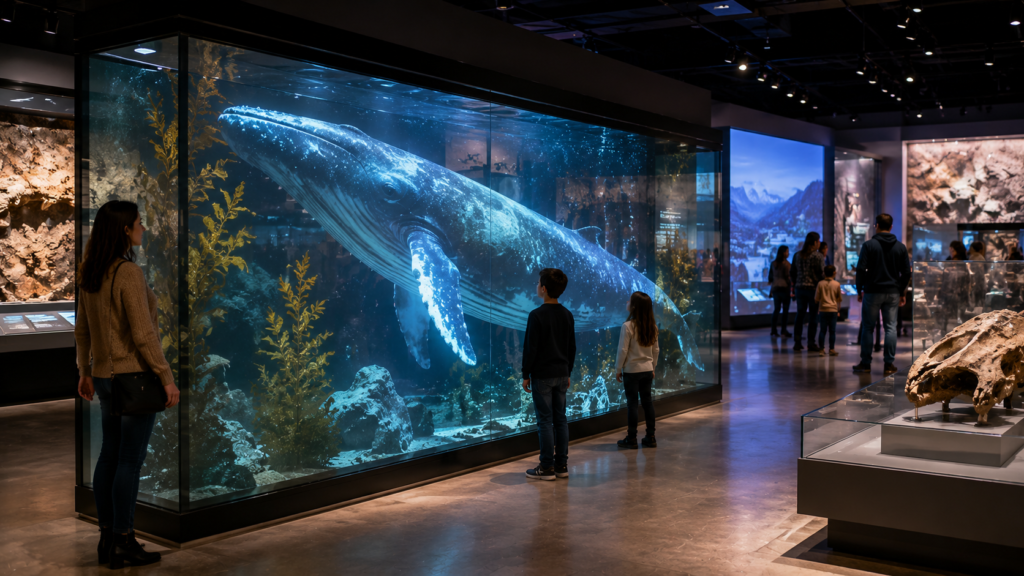
Rear projection film for museums and exhibits gives cultural institutions a powerful way to turn glass, acrylic, and transparent display surfaces into immersive digital storytelling tools. Instead of relying only on printed panels, static artifact labels, flat monitors, or bulky display walls, museums can use rear projection film to create dynamic exhibit visuals that feel integrated into the space.
For museum directors, exhibit designers, visitor experience teams, and AV decision-makers, this matters because modern visitors expect more engaging environments. They still value authentic artifacts, historical objects, art, science, and education. However, they also respond strongly to motion, layered media, interactive content, and immersive storytelling.
Rear projection film helps bridge that gap. It can support educational videos, exhibit timelines, donor recognition, wayfinding, animated diagrams, digital labels, atmospheric visuals, and holographic-style effects. In addition, it can help museums preserve clean exhibit design because the display appears on glass or acrylic rather than a bulky hardware fixture.
Screen Solutions International offers multiple rear projection film options for museums and exhibit spaces, including Rear Projection Films, Definition Rear Projection Film, Accent Rear Projection Film, Intrigue Rear Projection Film, and Rear Projection Film Samples. SSI also supports related display technologies such as Transparent OLED Displays, Transparent Displays, Digital Signage, projection systems, and custom experiential displays.
For museums, galleries, science centers, history centers, visitor centers, universities, and traveling exhibits, rear projection film offers a flexible way to create stronger visitor engagement without overwhelming the exhibit environment.
Why Museums Need Flexible Digital Storytelling Tools
Museums face a unique challenge. They must educate, inspire, preserve, and engage. However, visitor expectations continue to evolve. Many audiences now encounter digital content every day through phones, streaming platforms, social media, classrooms, gaming, and immersive attractions. Therefore, museums need media tools that enhance interpretation without distracting from the collection.
Rear projection film supports that balance. It can add movement, context, and visual depth while keeping the exhibit surface clean. Because it applies to glass, acrylic, or Plexiglas, it can blend into cases, partitions, walls, windows, and freestanding exhibit structures.
The American Alliance of Museums highlights audience engagement and visitor experience as central museum priorities, with a focus on helping visitors feel welcomed and stimulated throughout their journey. Rear projection film supports that mission because it can make interpretive content more visible, flexible, and memorable.
Additionally, AVIXA identifies digital signage as a key professional AV category that connects AV, IT, and content. This matters for museums because successful exhibit technology now depends on more than hardware. It also depends on content management, media planning, reliability, and visitor flow.
What Is Rear Projection Film for Museums?
Rear projection film is a specialized film applied to a transparent or translucent surface. A projector sits behind the viewing surface and projects the image forward onto the film. Visitors see the projected content from the front side.
This creates a clean display effect because the main hardware does not sit between the visitor and the content. As a result, rear projection film can help museums maintain a polished exhibit environment while adding digital media.
Museums can use rear projection film on:
- Glass exhibit cases
- Acrylic panels
- Freestanding display structures
- Gallery partitions
- Interpretive walls
- Entrance glass
- Donor recognition areas
- Theater pre-show spaces
- Science center demonstration zones
- Temporary exhibit structures
- Visitor center windows
Because the film can support motion graphics, video, static visuals, and atmospheric content, it gives exhibit teams a highly adaptable media surface.
How Rear Projection Film Improves Visitor Engagement
Visitor engagement depends on clarity, curiosity, pacing, and emotional connection. Rear projection film can support each of these goals when it becomes part of the exhibit design strategy.
It Makes Complex Information Easier to Understand
Museums often need to explain complex subjects. A science center may need to show molecular movement. A history museum may need to explain a timeline. A natural history exhibit may need to show geological change over millions of years. A transportation museum may need to demonstrate how a machine works.
Static labels can explain these ideas, but motion can make them easier to understand. Rear projection film allows museums to add animated diagrams, visual sequences, and layered educational content near the physical exhibit.
For example, a museum can place a projected animation beside an artifact to show how people used it. Similarly, a natural history exhibit can show changing environments behind a fossil display. As a result, the visitor receives both the physical object and the story behind it.
It Creates a More Memorable Exhibit Moment
People remember experiences that feel different. Rear projection film can create a floating visual effect, especially when paired with the right content and environment. SSI’s Intrigue Rear Projection Film is designed to adhere to glass, acrylic, or Plexiglas and create a floating image effect with full-motion video or static visuals.
That type of presentation can make an exhibit feel more immersive without requiring a full theater buildout. Therefore, museums can add impact to key moments such as artifact reveals, hero objects, entrance displays, and thematic transitions.
It Helps Visitors Move Through the Exhibit
Museums need good wayfinding and pacing. Rear projection film can support directional messaging, exhibit section titles, queue information, room transitions, and interactive prompts.
For example, a science museum can use a projected glass panel to introduce the next section. A history center can show animated maps to guide visitors through a timeline. A children’s museum can use bright, friendly visuals to direct families toward hands-on zones.
Because the content can update digitally, museums can also adjust messaging for special events, school groups, private rentals, donor evenings, or seasonal programming.
It Supports Multi-Sensory Exhibit Design
A strong exhibit does not rely on one communication method. It uses objects, text, lighting, sound, video, architecture, and movement. Rear projection film adds another layer to that experience.
When paired with controlled lighting, audio, sensors, or touch technology, the film can help create a more immersive environment. Additionally, it can work alongside SSI technologies such as transparent OLED displays, LED video walls, digital signage, projection domes, projection spheres, and custom experiential displays.
Best Museum Applications for Rear Projection Film
Rear projection film works especially well where museums need media that feels integrated, flexible, and visually distinctive.
Artifact Interpretation
Artifacts often need context. Rear projection film can show related maps, portraits, restoration footage, diagrams, translated text, or historical reenactment clips near the object.
For example, a museum displaying an ancient tool could project a subtle animation showing how it was used. A maritime museum could show weather patterns, route maps, or ship construction details behind a model. A military museum could use projection film to show tactical maps or oral history clips near relevant objects.
This approach helps visitors understand the artifact without replacing it.
Donor Recognition Displays
Museums often need elegant donor recognition that can change over time. Rear projection film can turn glass into a premium digital donor wall. The museum can show names, campaign videos, legacy stories, sponsor acknowledgments, and event-specific recognition.
Unlike etched glass or printed panels, digital donor content can update as campaigns evolve. Therefore, rear projection film offers flexibility for development teams.
Traveling Exhibits
Traveling exhibits need adaptable technology. Since venues differ, exhibit teams often need display systems that can fit multiple layouts. Rear projection film can support modular acrylic panels, portable glass-style displays, and temporary exhibit walls.
Additionally, digital content can update for each venue. This helps traveling exhibits adjust sponsor information, local education content, dates, and language needs.
Science and Technology Exhibits
Science exhibits often benefit from animation. Rear projection film can display process diagrams, data visualizations, simulations, and motion-based explanations.
For example, a climate exhibit can show atmospheric changes. A space exhibit can display planetary motion. A medical exhibit can show internal body systems. Because the content appears on glass or acrylic, the display can feel more integrated than a traditional monitor.
Art Galleries and Immersive Installations
Galleries can use rear projection film for artist statements, digital layers, moving textures, atmospheric backdrops, or mixed-media installations. The technology can also help artists combine physical works with projected media.
Because the film can preserve a clean visual field, it works well in spaces where design sensitivity matters.
Visitor Centers and Cultural Heritage Sites
Visitor centers can use rear projection film to introduce a location, show orientation videos, display maps, or present historical context. Government, park, university, and cultural heritage sites can benefit from this approach because visitors often need quick, visual explanations before touring the site.
Comparison Table: Rear Projection Film vs. Other Museum Display Tools
| Museum Display Tool | Best Use Case | Main Benefit | Key Consideration |
|---|---|---|---|
| Rear Projection Film | Glass panels, exhibit cases, immersive interpretation | Integrates digital content into transparent surfaces | Requires projector space behind the surface |
| Standard LCD Display | Basic videos, directories, schedules | Easy to install and manage | Can look like standard commercial hardware |
| LED Video Wall | Large immersive rooms and high-impact entry areas | Bright, scalable, and dramatic | Requires more physical structure |
| Transparent OLED Display | Premium artifact overlays and futuristic showcases | Digital content with see-through display capability | Higher-end display category |
| Printed Exhibit Graphics | Static labels, wall text, permanent panels | Reliable and cost-effective | Harder to update |
| Projection Mapping | Large surfaces and immersive environments | Highly customizable visual storytelling | Needs careful calibration and space planning |
In many museums, the best solution combines several technologies. For example, rear projection film can support artifact interpretation, while LED video walls create a large orientation experience. Transparent OLED can add digital overlays to product or artifact showcases, while traditional graphics still provide foundational information.
Choosing the Right Rear Projection Film for Exhibit Spaces
Museums should choose projection film based on lighting, content, viewing distance, surface type, and the desired visual effect.
Definition Rear Projection Film
Definition Rear Projection Film works well when exhibit teams want clear, vivid rear projection on glass or Plexiglas. It can support polished interpretive displays, lobby features, and educational media surfaces.
Accent Rear Projection Film
Accent Rear Projection Film is described by SSI as an ultra-bright rear projection option compatible with most projectors and useful in light-controlled environments. It also offers compatibility with tinted glass settings and a frosted-white appearance that can integrate with architectural and privacy films.
For museums, this can help in exhibit zones where brightness and clarity matter.
Intrigue Rear Projection Film
Intrigue Rear Projection Film can create a holographic-style floating image effect on glass, acrylic, or Plexiglas. SSI also describes Intrigue as approximately 96% colorless and transparent on a related product page, making it a strong option for exhibits that need a futuristic or transparent visual presentation.
This can work well for hero artifacts, science exhibits, sponsor displays, and immersive installations.
Rear Projection Film Samples
Museums should test film samples before choosing a final product. Rear Projection Film Samples allow exhibit teams to compare brightness, clarity, transparency, viewing angle, and appearance in the actual gallery environment.
Planning a Museum Rear Projection Film Installation
A successful museum display requires careful planning. The technology should support the visitor experience, not distract from it.
Start With the Exhibit Goal
Before selecting film or equipment, define the purpose of the display. Is the goal to explain an artifact? Improve wayfinding? Recognize donors? Increase dwell time? Create an immersive visual moment? Support accessibility?
Once the goal is clear, the design team can choose content, film type, projector placement, and supporting technology more effectively.
Control the Lighting
Lighting can make or break a projection display. Museums already use lighting carefully to protect artifacts and guide attention. Rear projection film needs the same level of planning.
The team should review:
- Ambient light levels
- Spotlight placement
- Reflections
- Visitor sightlines
- Glass tint
- Projector brightness
- Exhibit case lighting
- Emergency lighting requirements
When the environment supports the projection, the result looks cleaner and more intentional.
Plan for Maintenance
Museums need reliable systems. Projectors, media players, cables, and control hardware should remain accessible for service. Additionally, staff should have a clear process for updating content.
A beautiful exhibit can lose impact if the display fails or shows outdated content. Therefore, reliability and workflow matter as much as visual design.
Design Content for Short Attention Windows
Visitors rarely read or watch everything. Therefore, rear projection film content should deliver value quickly. Short loops, clear visuals, simple animations, and strong pacing usually work best.
For deeper content, museums can pair the display with QR codes, touchscreens, audio guides, or interactive kiosks.
Accessibility and Educational Value
Rear projection film can also support accessibility when museums use it thoughtfully. For example, digital content can include large text, high-contrast visuals, captions, multiple languages, simplified diagrams, and visual summaries.
This helps museums serve broader audiences. Children, multilingual visitors, neurodiverse visitors, school groups, and casual guests may all benefit from visual interpretation that reduces reliance on dense wall text.
Additionally, digital displays can help museums update language, correct information, or adapt content for specific programs. That flexibility supports long-term educational value.
Common Mistakes Museums Should Avoid
Adding Technology Without a Clear Interpretive Purpose
Museums should not add rear projection film just because it looks impressive. The display should support a specific exhibit objective. Otherwise, visitors may see it as decoration rather than interpretation.
Using Too Much Text
Projection surfaces work best with visual content. Long paragraphs can become difficult to read, especially when visitors are moving. Instead, use short labels, captions, diagrams, and animations.
Forgetting About Reflections
Glass surfaces reflect light. Therefore, exhibit teams should evaluate reflection angles, gallery lighting, and visitor sightlines before installation.
Choosing Hardware Too Late
Rear projection film requires projector placement, power, signal routing, ventilation, and access. If the team waits until the end of the exhibit design process, installation can become harder and more expensive.
Ignoring Content Updates
Museums often refresh exhibits, sponsors, schedules, and educational programming. A content update plan helps the display stay useful after opening day.
Future Trends in Museum Projection Film Displays
Museum technology will continue moving toward more interactive, immersive, and flexible experiences.
First, more museums will use digital layers to explain physical artifacts. Instead of replacing objects, digital media will help visitors understand them more deeply.
Second, transparent and glass-based displays will become more common. Rear projection film, transparent OLED, and holographic-style displays can support this shift because they preserve visibility while adding media.
Third, interactive exhibits will expand. Research into tangible and interactive museum experiences shows that technology can support meaningful engagement when it integrates with the artifact and story rather than distracting from them.
Finally, museums will continue using digital signage systems for wayfinding, schedules, admissions, and visitor communication. Recent museum signage deployments show how institutions use connected content systems to improve visitor information and simplify content management across multiple displays.
FAQ
Is rear projection film good for museums?
Yes. Rear projection film works well in museums because it turns glass, acrylic, or Plexiglas into a digital storytelling surface. It can support exhibit interpretation, wayfinding, donor recognition, immersive effects, and educational content.
Can rear projection film be used on exhibit cases?
Yes. Depending on the surface, film type, content, and projector placement, rear projection film can be used on glass or acrylic exhibit structures. Museums should test samples first to confirm the best result.
Does rear projection film distract from artifacts?
It does not have to. When used well, rear projection film adds context and supports interpretation. The key is to keep content focused, relevant, and visually balanced.
Can museums update rear projection film content?
Yes. Since the visuals come from a projector and media source, museums can update content digitally. This helps with rotating exhibits, donor updates, seasonal events, and educational programming.
What type of museum content works best?
Short videos, animated diagrams, timelines, maps, captions, donor recognition, atmospheric visuals, and exhibit introductions work well. Content should be clear, high-contrast, and easy to understand quickly.
Why Choose Screen Solutions International
Screen Solutions International helps museums and commercial buyers develop display systems that fit the space, audience, and project goals. SSI offers rear projection film as well as related display technologies such as transparent OLED displays, LED video walls, digital signage, projection domes, projection spheres, projection hemispheres, high-bright displays, interactive kiosks, and custom experiential displays.
This broader product range matters because museum projects often need a complete display strategy. One exhibit may need rear projection film. Another may need a transparent OLED showcase. A lobby may need an LED video wall, while an immersive theater may need projection systems or domes.
SSI can help exhibit teams compare solutions, test samples, and plan a display system that supports visitor experience, educational impact, and long-term operational value.
Explore Rear Projection Films, review Projection Film Options, or call 888-631-5880 to discuss your museum or exhibit project.
Final Takeaway
Rear projection film for museums and exhibits helps institutions create more immersive, flexible, and visually engaging visitor experiences. It turns glass and acrylic into digital storytelling surfaces while preserving clean exhibit design.
For museums, the value goes beyond visual impact. Rear projection film can improve interpretation, support accessibility, guide visitors, recognize donors, and make complex ideas easier to understand. In addition, it gives teams a flexible content platform that can evolve with exhibits, events, and programming.
To start planning a museum rear projection film display, contact Screen Solutions International at 888-631-5880 or explore available solutions at SSIDisplays.com and RearProjectionFilms.com.
Sources
Internal SSI Links
- Rear Projection Films – Screen Solutions International
- Projection Film Options
- Definition Rear Projection Film
- Accent Rear Projection Film
- Intrigue Rear Projection Film
- Intrigue Rear Projection Film – Product Page
- Rear Projection Film Samples
- Transparent OLED Displays
- Transparent Displays