
Introduction
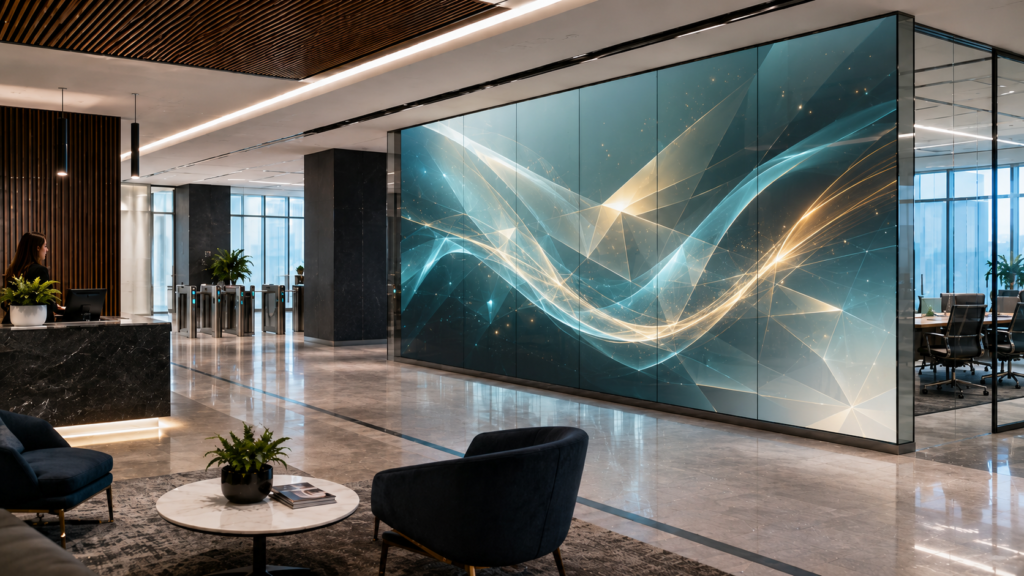
Rear projection film for corporate offices helps companies turn glass walls, lobby partitions, conference room glass, reception areas, and office windows into polished digital display surfaces. Instead of adding bulky screens or relying only on printed lobby graphics, businesses can use rear projection film to display brand videos, welcome messages, company milestones, visitor information, internal communications, event content, and wayfinding visuals directly on glass.
For corporate decision-makers, this matters because office environments shape perception. Clients, investors, employees, recruits, partners, and vendors often form an impression before a meeting ever begins. A modern lobby or conference area can communicate professionalism, innovation, stability, and attention to detail. Therefore, every major touchpoint inside the office should support the brand.
Rear projection film gives companies a way to make existing glass more useful. It can transform architectural glass into a flexible digital display without making the space feel cluttered. Additionally, it supports frequent content updates, which helps marketing, HR, facilities, and executive teams communicate more effectively.
Screen Solutions International offers several projection film options for corporate environments, including Rear Projection Films, Definition Rear Projection Film, Accent Rear Projection Film, Intrigue Rear Projection Film, and Rear Projection Film Samples. SSI also supports related display technologies such as Digital Signage, Transparent OLED Displays, Transparent Displays, LED Video Walls, Interactive Kiosks, and custom experiential displays.
For corporate offices, headquarters, innovation centers, boardrooms, sales centers, training facilities, and executive briefing centers, rear projection film can create a premium digital experience that supports business value.
Why Corporate Offices Need Stronger Visual Communication
Corporate offices are no longer just places to work. They are brand environments. They support recruiting, sales meetings, investor presentations, customer tours, employee engagement, partner events, and internal culture.
However, many offices underuse their physical space. A lobby wall may show a static logo. A glass conference room may serve only as a divider. A reception area may rely on printed signs or a small monitor. As a result, the company misses opportunities to communicate its value.
Rear projection film changes that by turning glass into a digital storytelling surface. As a result, companies can use existing architecture to display relevant content throughout the day.
In addition, digital signage has become a major tool for corporate communication. AVIXA identifies digital signage as a professional AV category that connects content, AV systems, and IT infrastructure. The Digital Signage Federation also supports industry education and best practices for display communication. Therefore, companies that invest in display strategy can use their offices more effectively as communication platforms.
What Is Rear Projection Film for Corporate Offices?
Rear projection film is a specialized film applied to glass, acrylic, or Plexiglas. A projector sits behind the surface and projects the image onto the film. Viewers see the content from the front side.
In practical terms, this means a company can turn a glass wall or partition into a digital display. The display surface can show video, graphics, motion backgrounds, wayfinding information, employee messaging, or branded content. Meanwhile, the projector and hardware stay behind the display area or in a planned equipment location.
Corporate offices can use rear projection film on:
- Lobby glass walls
- Reception area partitions
- Conference room glass
- Boardroom glass panels
- Executive briefing center displays
- Training room dividers
- Innovation lab windows
- Sales center glass
- Visitor check-in areas
- Employee communication zones
- Cafeteria or lounge glass
- Event registration areas
- Elevator lobby glass
Because content can update digitally, rear projection film gives corporate teams more flexibility than printed signage or etched graphics alone.
How Rear Projection Film Improves Corporate Brand Experience
A strong corporate environment should communicate before anyone speaks. Rear projection film helps companies use glass as an active brand asset.
It Creates a Strong First Impression
First, rear projection film can make a corporate lobby feel more modern and intentional. A large glass display can show brand visuals, company values, product videos, customer success stories, or welcome messaging for guests.
For example, a technology company can show innovation-focused visuals. A financial firm can display refined brand motion graphics. A manufacturer can show product footage, factory capabilities, and engineering highlights. A healthcare company can show mission-driven wellness content.
As a result, visitors immediately understand that the company values presentation, communication, and experience.
It Helps Welcome Clients and VIP Guests
Next, corporate teams can use rear projection film to personalize the visitor experience. A lobby glass display can welcome a client, partner, investor group, or interview candidate with custom content.
This can make the visit feel more professional. Additionally, it can reinforce the importance of the meeting before guests even reach the conference room.
It Supports Internal Communication
Corporate offices also need to communicate with employees. Rear projection film can display internal announcements, training reminders, safety messaging, event information, recognition content, or company news.
For example, a headquarters can display quarterly goals, employee achievements, upcoming events, or HR reminders. Because the content can update quickly, internal communication teams can keep messaging fresh.
It Makes Conference Rooms More Useful
Conference room glass often serves only as a physical divider. However, rear projection film can make that glass more functional.
Companies can use it for meeting branding, agenda visuals, training content, privacy effects, or event-specific messaging. In some cases, the display can support presentations or video loops before meetings begin.
Additionally, projection film can help turn a standard meeting room into a more premium briefing environment.
Best Corporate Applications for Rear Projection Film
Rear projection film works well in several business environments. However, it performs best when companies want a clean digital display that integrates into the architecture.
Corporate Lobbies
The lobby is one of the strongest use cases. Companies can use rear projection film to display branded content, visitor messages, company history, awards, product videos, or directional information.
Because the lobby receives clients, employees, vendors, and recruits, it offers high communication value. Therefore, a lobby display can support both marketing and operational goals.
Executive Briefing Centers
Executive briefing centers need premium presentation tools. Rear projection film can create a refined display surface for product stories, customer case studies, agenda content, and customized guest experiences.
For technology firms, manufacturers, defense contractors, healthcare companies, and enterprise service providers, this can help create stronger high-stakes meetings.
Conference Rooms and Boardrooms
Rear projection film can support branded meeting environments. A glass display can show agenda content, welcome visuals, presentation loops, or background imagery.
In boardrooms, the film can help create a modern executive environment without adding a standard screen to every wall.
Innovation Labs and Showrooms
Companies with innovation centers, demo labs, or product showrooms can use rear projection film to show product visuals, process animations, or interactive content.
For example, a manufacturing company can show animated production workflows on glass. A software company can display platform visuals. A product company can use film to create a futuristic demo environment.
Training Facilities
Training centers can use rear projection film for schedules, room assignments, training reminders, branded visuals, and instructional content. Additionally, the display can help create a more engaging environment for onboarding and professional development.
Employee Experience Areas
Corporate lounges, cafeterias, and shared spaces can use projection film for announcements, culture messaging, event promotion, and employee recognition. As a result, the office becomes a more active communication environment.
Rear Projection Film vs. Other Corporate Display Options
Corporate offices can use many display technologies. However, each one serves a different purpose.
| Display Option | Best Corporate Use Case | Main Advantage | Key Consideration |
|---|---|---|---|
| Rear Projection Film | Lobby glass, conference rooms, executive areas | Integrates digital content into glass | Requires projector space behind the surface |
| Standard Digital Signage | Directories, announcements, internal messaging | Easy to update and manage | Can look generic if not designed well |
| LED Video Wall | Large lobby impact walls and command centers | Bright, scalable, dramatic | Larger visible hardware footprint |
| Transparent OLED Display | Premium showrooms and product displays | Futuristic see-through digital effect | Higher-end display category |
| Interactive Kiosk | Visitor check-in, directories, self-service | Supports direct interaction | Requires physical access and workflow planning |
| Printed Graphics | Permanent brand walls and simple signage | Lower initial cost | Hard to update and no motion |
In many corporate offices, the best display plan uses multiple technologies. For example, rear projection film can create a premium lobby glass display, while standard digital signage supports directories. LED video walls can anchor larger event spaces, while transparent OLED displays can support product showcases.
Business Value and ROI for Corporate Offices
From an ROI standpoint, rear projection film creates value in several ways.
First, it improves brand perception. A polished digital lobby can help the company look more modern, credible, and professional. This matters during sales meetings, investor visits, hiring tours, and client presentations.
Second, it makes existing glass work harder. Many offices already include glass walls and partitions. Rear projection film turns those surfaces into communication assets without requiring major structural changes.
Third, it improves content flexibility. Companies can update visuals for campaigns, events, meetings, holidays, employee recognition, and client visits without reprinting graphics.
Fourth, it supports recruiting and employee engagement. A strong office environment can help candidates and employees feel connected to the company’s mission and culture.
Finally, it can improve meeting quality. A customized digital welcome or briefing display can make important meetings feel more prepared, organized, and premium.
Energy and Operational Considerations
Corporate display systems should look impressive, but they also need to operate efficiently. Projectors, media players, control systems, and scheduling tools all affect long-term performance.
ENERGY STAR notes that certified signage displays can help reduce energy use compared with conventional models. The U.S. Department of Energy also promotes cost-effective efficiency improvements for commercial buildings. Although rear projection film uses projection equipment rather than a flat-panel signage display, the same operational logic applies.
Corporate buyers should evaluate:
- Projector brightness
- Projector efficiency
- Daily operating schedule
- Media player reliability
- Content management workflow
- Ventilation needs
- Maintenance access
- Power and cable routing
- IT compatibility
- Security requirements
- Automation controls
Ultimately, the best corporate display system looks good, updates easily, and operates reliably without creating unnecessary maintenance problems.
Content Strategy for Corporate Projection Film Displays
A corporate glass display should not become a random slideshow. Instead, it should support clear business goals.
Use Brand-Consistent Visuals
First, content should match the company’s brand standards. Colors, typography, motion style, photography, and messaging should feel consistent with the rest of the company’s marketing.
Keep Messages Short
Visitors and employees may only glance at the display for a few seconds. Therefore, content should use short messages, strong visuals, and clean layouts.
Rotate Content by Audience
A corporate lobby may serve different audiences throughout the week. For instance, one day may include client visits. Another day may include recruiting events. A third day may include internal meetings. As a result, content should change based on the audience.
Use Motion Carefully
Motion attracts attention. However, too much motion can distract from conversations or reception workflows. Therefore, corporate content should feel polished, calm, and intentional.
Plan a Content Calendar
A content calendar helps keep the display fresh. Companies can schedule content for product launches, quarterly meetings, holidays, employee events, awards, trade shows, and investor visits.
Installation Planning for Corporate Offices
Because corporate offices often have glass-heavy designs, rear projection film can fit well. However, the installation still needs proper planning.
Important planning factors include:
- Glass size and condition
- Film type
- Projector throw distance
- Ambient light levels
- Viewing angles
- Content resolution
- Cable routing
- Projector ventilation
- Access for maintenance
- Office lighting schedules
- Privacy needs
- Safety requirements
- IT and facilities coordination
Additionally, companies should consider how the display looks during both daytime and evening hours. A lobby with strong daylight may need a different projector strategy than an interior conference room.
Common Mistakes Corporate Buyers Should Avoid
Treating the Display Like Decoration Only
Rear projection film can look impressive. However, it should also serve a clear business purpose. Use it for branding, communication, wayfinding, recruiting, client experience, or event support.
Using Too Much Corporate Text
Corporate teams often want to say too much. Unfortunately, long paragraphs do not work well on lobby displays. Instead, use concise messages and strong visuals.
Forgetting About Lighting
Glass reflects light, and projectors need the right conditions. Therefore, companies should test lighting, reflections, and brightness before installation.
Choosing Generic Content
A premium display deserves custom content. Generic stock visuals can weaken the brand experience. Instead, use company-specific visuals, products, people, projects, values, and achievements.
Skipping the Content Owner
Someone needs to manage updates. Without an owner, the display can become stale. Therefore, assign responsibility to marketing, facilities, communications, or an AV partner before launch.
Future Trends in Corporate Display Experiences
Looking ahead, corporate offices will keep becoming more digital, flexible, and experience-driven.
First, companies will use more branded digital environments. Office spaces will need to support visitors, employees, hybrid meetings, and recruiting.
Second, executive briefing centers will become more immersive. Rear projection film, transparent OLED, LED video walls, and interactive displays can help create better storytelling environments.
Third, internal communications will become more location-based. Instead of sending every message through email, companies will use digital displays in key office areas.
Fourth, glass-based displays will become more common in modern office design. Rear projection film fits this trend because many new offices already use glass walls and partitions.
Finally, display systems will become more connected. Content management, scheduling, sensors, and automation will help companies deliver more relevant messaging throughout the workplace.
FAQ
Is rear projection film good for corporate offices?
Yes. Rear projection film works well in corporate offices because it turns glass into a digital display surface. It can support lobby branding, visitor welcomes, internal communication, conference room content, and wayfinding.
Where can companies use rear projection film?
Companies can use rear projection film in lobbies, reception areas, conference rooms, boardrooms, executive briefing centers, training facilities, innovation labs, sales centers, and employee communication areas.
Can rear projection film improve a corporate lobby?
Yes. A glass-based digital display can make a lobby feel more modern, polished, and professional. It can also display brand videos, welcome messages, company milestones, and visitor information.
Can companies update rear projection film content?
Yes. Because the display uses projected digital content, companies can update visuals for meetings, events, client visits, employee announcements, product launches, and seasonal campaigns.
Does rear projection film work in bright offices?
It can, but bright offices require careful planning. Companies should evaluate lighting, glass tint, projector brightness, film type, and viewing angles before installation.
Why Choose Screen Solutions International
Screen Solutions International helps corporate buyers create display systems that support brand impact, visitor experience, employee communication, and operational goals. SSI offers rear projection films as well as transparent OLED displays, LED video walls, digital signage, high-bright displays, interactive kiosks, projection systems, and custom experiential displays.
This matters because corporate projects often require more than one display product. A lobby may need rear projection film, while a boardroom may need a large-format display. A showroom may need transparent OLED, while a training facility may need digital signage and interactive kiosks.
SSI can help companies compare technologies, test samples, and build a display strategy that fits the space, audience, and business objective.
Explore Rear Projection Films, review Projection Film Options, or call 888-631-5880 to discuss your corporate display project.
Final Takeaway
In summary, rear projection film for corporate offices helps businesses turn glass into a branded digital experience. It supports stronger first impressions, better visitor communication, more flexible internal messaging, and a more modern office environment.
Most importantly, it helps companies use existing glass more strategically. Instead of leaving lobby walls, conference room glass, or reception partitions as passive surfaces, rear projection film turns them into active communication tools.
To start planning a corporate rear projection film display, contact Screen Solutions International at 888-631-5880 or explore available solutions at SSIDisplays.com and RearProjectionFilms.com.
Sources
Internal SSI Links
- Rear Projection Films – Screen Solutions International
- Projection Film Options
- Definition Rear Projection Film
- Accent Rear Projection Film
- Intrigue Rear Projection Film
- Rear Projection Film Samples
- Transparent OLED Displays
- Transparent Displays