
Introduction
Rear projection film for car dealerships helps automotive retailers turn showroom glass, service-area windows, sales office partitions, and exterior-facing glass into high-impact digital display surfaces. Instead of relying only on printed posters, static window decals, vehicle hang tags, or standard TV screens, dealerships can use rear projection film to display vehicle launches, model highlights, finance promotions, service offers, trade-in campaigns, EV education, and brand visuals directly on glass.
For dealership owners, general managers, marketing directors, OEM retail teams, and showroom designers, this matters because automotive sales depend heavily on attention, trust, and experience. A customer may compare several dealerships before choosing where to buy or service a vehicle. Therefore, the showroom environment needs to communicate professionalism, value, and confidence as soon as the customer arrives.
Rear projection film gives dealerships a flexible way to make existing glass more valuable. It can transform blank showroom windows into digital sales surfaces. It can also make interior glass partitions more useful for promotions, education, and customer engagement. Most importantly, it allows dealerships to update content quickly as inventory, incentives, seasons, and OEM campaigns change.
Screen Solutions International offers several projection film options for automotive environments, including Rear Projection Films, Definition Rear Projection Film, Accent Rear Projection Film, Intrigue Rear Projection Film, and Rear Projection Film Samples. SSI also supports related display technologies such as Digital Signage, Transparent OLED Displays, Transparent Displays, LED Video Walls, Interactive Kiosks, high-bright displays, and custom experiential displays.
For dealerships that want stronger showroom branding, better customer education, and more flexible promotional messaging, rear projection film can turn glass into a practical sales and marketing asset.
Why Automotive Showrooms Need Better Digital Displays
Car dealerships already operate in a visual business. Vehicles are large, emotional, expensive products. Customers want to see styling, performance, technology, safety, comfort, and value. However, many dealerships still use outdated visual communication tools.
Printed posters often age quickly. OEM campaign graphics may change every month. Finance offers shift frequently. Inventory changes daily. Service specials rotate by season. Additionally, customers increasingly research online before visiting, so they expect the in-person showroom to feel equally polished and informative.
As a result, dealerships need display tools that can change quickly and look premium. Rear projection film supports that need because it turns glass into a digital communication surface.
In addition, automotive showrooms often include large glass windows and partitions. Many dealerships have excellent architectural surfaces that sit underused. Instead of treating those surfaces as passive glass, rear projection film helps make them active sales tools.
What Is Rear Projection Film for Car Dealerships?
Rear projection film is a specialized film applied to glass, acrylic, or Plexiglas. A projector sits behind the surface and projects content onto the film. Customers view the content from the front side.
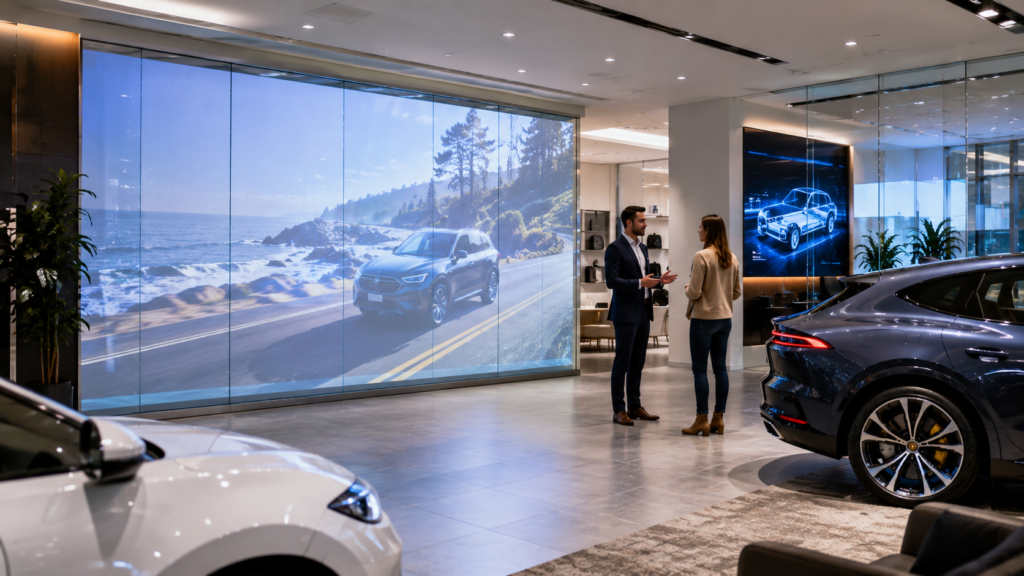
In practical terms, a dealership can use rear projection film to create digital displays on showroom glass, office glass, service waiting area partitions, or promotional windows. The content can include video, motion graphics, model information, dealership branding, incentive reminders, service promotions, and event visuals.
Car dealerships can use rear projection film on:
- Showroom windows
- Sales office glass
- Finance office partitions
- Service department glass
- Waiting room glass walls
- New model launch displays
- EV education areas
- Customer lounge partitions
- Exterior-facing glass
- Event display structures
- VIP delivery areas
- Used vehicle sales offices
- Parts department windows
- Trade-in appraisal zones
Because the projected content can update digitally, dealerships can keep messaging aligned with current sales goals.
How Rear Projection Film Improves the Dealership Experience
A dealership visit can feel overwhelming for customers. They may compare models, trims, financing, warranties, trade-in values, service packages, and technology features. Therefore, the showroom should help simplify the buying journey.
It Creates a Stronger First Impression
First, rear projection film can make a dealership feel more modern and high-end. A large glass display with cinematic vehicle visuals can immediately communicate energy, innovation, and professionalism.
For example, a dealership can show a new SUV driving through mountain roads, an EV charging at home, a truck towing heavy equipment, or a luxury sedan moving through a city at night. These visuals can create emotional context before the salesperson starts the conversation.
As a result, the customer sees more than parked inventory. They see a lifestyle, a use case, and a reason to engage.
It Highlights Current Offers
Next, rear projection film can help dealerships promote current incentives, lease offers, finance specials, trade-in campaigns, service discounts, and seasonal events.
Because these offers change often, digital content gives dealerships more flexibility than printed graphics. A sales manager can update the message for a weekend event, holiday campaign, or OEM incentive period.
It Supports Vehicle Education
Many vehicle features need explanation. Rear projection film can show safety technology, driver assistance systems, EV range concepts, charging options, interior features, cargo flexibility, performance modes, and warranty coverage.
For example, an EV display can explain home charging, public charging, range planning, and battery benefits. Similarly, a truck display can show towing packages, payload features, and worksite use cases.
This helps customers understand value faster.
It Improves Waiting Areas
Service waiting areas are often underused communication spaces. Customers may sit for an oil change, tire rotation, inspection, repair estimate, or warranty service. During that time, dealerships can use rear projection film to display service reminders, tire offers, maintenance packages, accessory promotions, trade-in messages, and new model highlights.
Therefore, the waiting area can support both customer education and revenue opportunities.
Best Dealership Applications for Rear Projection Film
Rear projection film can work throughout the dealership, especially in glass-heavy showrooms and service areas.
New Vehicle Showrooms
The main showroom is the strongest location for rear projection film. Dealerships can use glass displays to promote new models, featured inventory, OEM campaigns, vehicle videos, and showroom events.
Additionally, a showroom display can help create a premium brand experience for customers comparing multiple dealerships.
Exterior-Facing Windows
A dealership’s exterior glass can work after hours. Rear projection film can display vehicle visuals, event promotions, or brand content when the showroom is closed.
Because many dealerships sit on busy roads, exterior-facing glass can help improve visibility during evening traffic.
EV Education Areas
Electric vehicles require customer education. Rear projection film can help explain charging, incentives, range, battery systems, ownership cost, and vehicle technology in a clean visual format.
This can help sales teams answer common questions before a one-on-one conversation begins.
Finance and Insurance Areas
Finance offices can feel stressful for customers. Rear projection film can help present warranty options, protection packages, service plans, and dealership benefits in a polished way. However, dealerships should keep this content clear, compliant, and easy to understand.
Service Waiting Rooms
Service departments can use rear projection film to promote scheduled maintenance, tires, accessories, detailing, recall checks, seasonal service, and trade-in appraisal opportunities.
As a result, service visits can become stronger customer engagement moments.
Vehicle Delivery Areas
A vehicle delivery area can use rear projection film to create a premium handoff experience. Dealerships can display welcome visuals, vehicle feature highlights, brand content, or customer appreciation messaging.
This can help make the final delivery moment more memorable.
Automotive Events and Launch Nights
Dealerships often host model launch events, VIP preview nights, fleet sales presentations, community events, and customer appreciation days. Rear projection film can support event branding, schedule visuals, sponsor content, and presentation backdrops.
Rear Projection Film vs. Other Dealership Display Options
Dealerships can use many types of display tools. However, each one serves a different role.
| Display Option | Best Dealership Use Case | Main Advantage | Key Consideration |
|---|---|---|---|
| Rear Projection Film | Showroom glass, service glass, launch displays | Turns glass into dynamic digital signage | Requires projector space behind the surface |
| Printed Posters | Static promotions and OEM graphics | Familiar and low initial cost | Hard to update quickly |
| Standard TV Displays | Waiting rooms, menus, sales offices | Easy to install and manage | Can look generic |
| LED Video Wall | Large showroom feature wall | High-impact and scalable | Larger visible hardware footprint |
| Transparent OLED Display | Premium vehicle showcases and tech displays | Futuristic see-through content effect | Higher-end display category |
| Interactive Kiosk | Vehicle configuration and lead capture | Supports customer self-service | Requires user interaction planning |
In many dealerships, the best display strategy combines multiple technologies. For example, rear projection film can activate showroom glass, while digital signage can support service menus. An LED video wall can create a dramatic feature area, while transparent OLED can support a premium vehicle technology showcase. Additionally, interactive kiosks can help customers explore trims, accessories, and financing tools.
Business Value and ROI for Car Dealerships
From an ROI standpoint, rear projection film can support several dealership goals.
First, it improves showroom perception. A modern glass display can make the dealership feel more premium, organized, and customer-focused.
Second, it helps promote current offers faster. Since dealership incentives change often, digital content can reduce the delay and expense of replacing printed materials.
Third, it improves customer education. Better visuals can help explain vehicle features, service options, and ownership benefits more clearly.
Fourth, it supports service revenue. Waiting room displays can promote maintenance packages, accessories, tires, detailing, and seasonal services.
Fifth, it increases the value of existing glass. Dealership showrooms often have large glass surfaces. Rear projection film helps those surfaces contribute to sales and marketing performance.
Finally, it can help events feel more professional. Launch nights, VIP deliveries, and customer appreciation events become stronger when the dealership has flexible digital display surfaces.
Choosing the Right Rear Projection Film for a Dealership
Dealerships should choose projection film based on lighting, glass position, viewing distance, and the desired visual effect.
Definition Rear Projection Film
Definition Rear Projection Film works well for dealerships that need clear, vivid visuals on glass or Plexiglas. It can support showroom displays, vehicle videos, and customer-facing promotional content.
Accent Rear Projection Film
Accent Rear Projection Film is a high-brightness film option that can work well in light-controlled environments. It can also fit spaces where a frosted appearance works with the dealership’s interior design.
Intrigue Rear Projection Film
Intrigue Rear Projection Film can create a holographic-style floating image effect. This can work especially well for EV launches, luxury vehicle showcases, performance model reveals, and VIP delivery spaces.
Rear Projection Film Samples
Before installing a full display, dealerships should test Rear Projection Film Samples. Samples help compare brightness, clarity, transparency, and performance in the actual showroom environment.
Content Strategy for Automotive Projection Film Displays
Rear projection film performs best when the content is clear, visual, and sales-focused.
Show the Vehicle in Motion
Cars and trucks look more compelling when customers see them in use. Therefore, dealerships should use driving footage, lifestyle visuals, and feature-focused motion graphics instead of only static vehicle images.
Keep Offers Simple
Finance and lease promotions can become complicated. However, glass displays should communicate quickly. Use short, compliant promotional messages and direct customers to a salesperson or printed detail sheet for full terms.
Rotate Content by Department
A showroom display can focus on new models, while a service display can focus on maintenance. An EV area can focus on charging education, while a delivery area can focus on customer experience.
Match Content to Inventory
If the dealership has strong inventory in a specific category, the display should support that sales goal. For example, promote trucks during contractor season, SUVs before family travel periods, or EVs during local sustainability events.
Update Content Frequently
Customers may visit more than once before buying. Therefore, fresh content helps the showroom feel active and current.
Installation Planning for Automotive Showrooms
Dealership installations need careful planning because showrooms often include bright windows, open layouts, and long viewing distances.
Important planning factors include:
- Glass size and location
- Ambient daylight
- Projector brightness
- Projector throw distance
- Film type
- Viewing angles
- Cable routing
- Power access
- Equipment ventilation
- Cleaning procedures
- Content management workflow
- OEM brand guidelines
- Sales event calendar
- Service access
- After-hours display schedule
Additionally, dealerships should test both daytime and evening performance. Exterior-facing glass may look different at noon than it does after sunset. Therefore, sample testing and projector planning matter.
Common Mistakes Dealerships Should Avoid
Using Too Much Text
Automotive offers can require details, but projection displays should stay simple. Use short visual messages and let staff explain the full offer.
Ignoring Bright Showroom Conditions
Many dealerships have large windows and bright lighting. Therefore, the projector and film must match the environment.
Running Stale Promotions
Outdated finance offers can create customer confusion. Assign someone to update content as campaigns change.
Treating the Display Like a TV
Rear projection film has a different visual effect than a standard screen. Use content designed for glass, motion, transparency, and showroom viewing.
Forgetting the Service Department
The sales showroom matters, but service customers also represent revenue. Service waiting areas can become strong display locations.
Future Trends in Dealership Display Experiences
Looking ahead, automotive retail will continue becoming more digital, visual, and experience-driven.
First, dealerships will use more digital tools to connect online research with in-store visits. Rear projection film can help create a showroom experience that feels as polished as the customer’s online research journey.
Second, EV education will become more important. Customers will need clear explanations about charging, range, incentives, ownership costs, and battery technology.
Third, vehicle delivery experiences will become more premium. Dealerships will use branded digital displays, lighting, and personalized visuals to make the handoff more memorable.
Fourth, service departments will use more digital communication. Waiting areas can display maintenance reminders, accessories, tires, and trade-in opportunities.
Finally, dealerships will blend display technologies. Rear projection film, LED video walls, transparent OLED displays, digital signage, interactive kiosks, and high-bright displays can all work together to create a stronger dealership experience.
FAQ
Is rear projection film good for car dealerships?
Yes. Rear projection film works well for car dealerships because it turns showroom glass and service-area glass into dynamic digital display surfaces. Dealerships can use it for vehicle launches, promotions, service messaging, EV education, and brand visuals.
Can rear projection film help promote vehicle offers?
Yes. Dealerships can use rear projection film to display lease offers, finance promotions, trade-in campaigns, service specials, and event messaging. However, all promotional content should follow applicable advertising and OEM compliance rules.
Does rear projection film work on showroom windows?
Yes. Rear projection film can be applied to glass, acrylic, or Plexiglas depending on the project. Showroom lighting and projector brightness must be reviewed before installation.
Can dealerships update the content?
Yes. Because rear projection film uses projected digital content, dealerships can update campaigns for new models, seasonal promotions, OEM incentives, and service offers.
What dealership areas work best for rear projection film?
Strong locations include showroom windows, sales office glass, service waiting rooms, EV education areas, launch displays, finance areas, and vehicle delivery zones.
Why Choose Screen Solutions International
Screen Solutions International helps dealerships and commercial buyers create display systems that support attention, engagement, and sales performance. SSI offers rear projection films as well as transparent OLED displays, LED video walls, digital signage, high-bright displays, interactive kiosks, projection technologies, and custom experiential displays.
This matters because automotive showrooms often need several display solutions. A front showroom window may need rear projection film. A feature wall may need LED video. A premium vehicle area may need transparent OLED. A service department may need digital signage. SSI can help dealerships compare options and build a complete visual strategy.
Explore Rear Projection Films, review Projection Film Options, or call 888-631-5880 to discuss your dealership display project.
Final Takeaway
In summary, rear projection film for car dealerships helps automotive retailers turn glass into a sales and communication tool. It supports better showroom branding, stronger vehicle promotion, clearer customer education, and more flexible content updates.
Most importantly, it helps dealerships make better use of existing glass. Instead of leaving windows and partitions as passive surfaces, rear projection film turns them into active digital displays that support sales, service, and customer experience.
To start planning a dealership rear projection film display, contact Screen Solutions International at 888-631-5880 or explore available solutions at SSIDisplays.com and RearProjectionFilms.com.
Sources
Internal SSI Links
- Rear Projection Films – Screen Solutions International
- Projection Film Options
- Definition Rear Projection Film
- Accent Rear Projection Film
- Intrigue Rear Projection Film
- Rear Projection Film Samples
- Transparent OLED Displays
- Transparent Displays