
Introduction
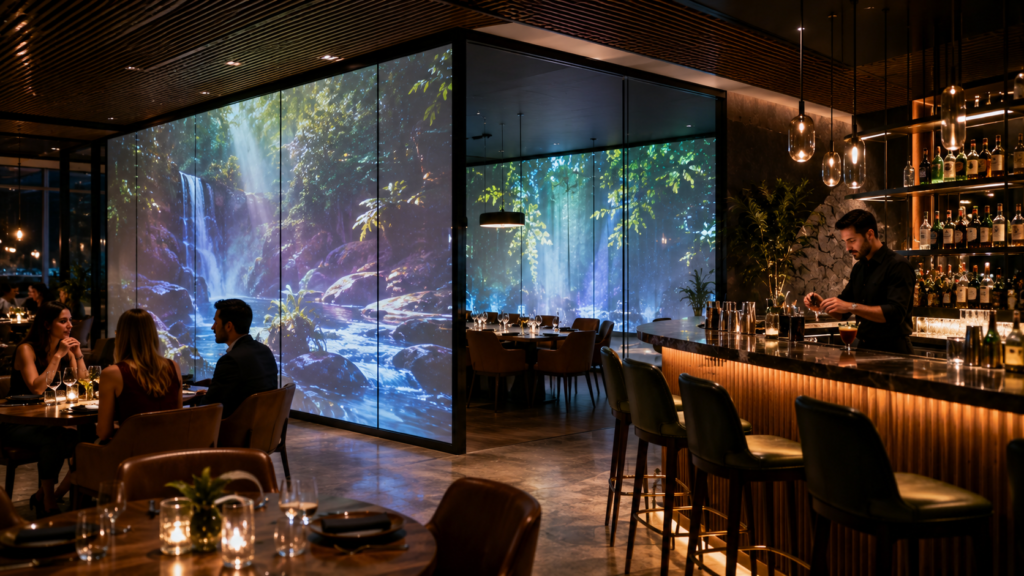
Rear projection film for restaurants and bars helps hospitality venues turn glass walls, windows, partitions, private dining areas, lounge dividers, and entry glass into dynamic digital display surfaces. Instead of using only printed posters, chalkboards, menu inserts, wall-mounted TVs, or temporary event signage, restaurants can use rear projection film to display atmospheric visuals, menu promotions, private event branding, happy hour content, sponsor messaging, seasonal campaigns, and immersive dining visuals directly on glass.
For restaurant owners, bar operators, hospitality groups, franchise teams, designers, and event managers, this matters because visual atmosphere affects customer behavior. Guests do not choose restaurants only for food. They also choose mood, experience, convenience, social value, and the feeling of the space. Therefore, a restaurant’s visual environment can influence perceived quality, dwell time, repeat visits, private event bookings, and social sharing.
Rear projection film gives restaurants and bars a way to make existing glass more useful. It can turn a window, divider, or lounge wall into a flexible digital feature without adding bulky display hardware to the customer-facing side. Additionally, because content can update digitally, venues can change visuals for lunch, dinner, happy hour, brunch, holidays, private events, sports nights, and seasonal promotions.
Screen Solutions International offers several projection film options for restaurant and entertainment spaces, including Rear Projection Films, Definition Rear Projection Film, Accent Rear Projection Film, Intrigue Rear Projection Film, and Rear Projection Film Samples. SSI also supports related display technologies such as Digital Signage, Transparent OLED Displays, Transparent Displays, LED Video Walls, Interactive Kiosks, projection systems, high-bright displays, and custom experiential displays.
For restaurants, bars, lounges, nightclubs, breweries, food halls, entertainment venues, and private event spaces, rear projection film can create stronger atmosphere, better promotions, and a more memorable guest experience.
Why Restaurants and Bars Need Better Visual Experiences
Restaurants operate in a competitive market. Customers can compare menus, reviews, photos, prices, and nearby options within seconds. Because of that, physical venues need to offer something that online browsing cannot fully replace: atmosphere.
A great atmosphere can make a guest stay longer, order another drink, share photos, book a private event, or return with friends. However, many restaurants still rely on static visuals that do not change often. Printed menu boards, posters, banners, and standard TVs can become visual clutter if they do not match the design of the space.
Rear projection film solves this problem by making digital content feel more architectural. Instead of hanging another screen, the venue can turn glass into a visual feature. As a result, the display becomes part of the environment rather than an obvious add-on.
In addition, AVIXA identifies digital signage as a key professional AV category, and organizations like the Digital Signage Federation support education and best practices around digital display communication. Therefore, restaurants that use digital display systems strategically can improve communication, promotions, and guest engagement.
What Is Rear Projection Film for Restaurants and Bars?
Rear projection film is a specialized film applied to glass, acrylic, or Plexiglas. A projector sits behind the surface and projects content onto the film. Guests view the image from the front side.
In practical terms, restaurants can use rear projection film to turn a glass wall, front window, private room divider, or bar partition into a digital display. The projector stays behind the surface or in a planned equipment area, while the visible display remains clean and integrated.
Restaurants and bars can use rear projection film on:
- Front windows
- Host stand glass
- Bar glass partitions
- Lounge dividers
- Private dining room glass
- Event space glass walls
- Wine room glass
- Brewery taproom windows
- Nightclub entry glass
- Rooftop lounge partitions
- Food hall vendor fronts
- Digital art walls
- Sponsor activation areas
- VIP room glass
Because the content comes from a digital source, managers can update visuals quickly without reprinting graphics.
How Rear Projection Film Improves the Guest Experience
A restaurant display should do more than show information. It should support mood, appetite, curiosity, and guest comfort. Rear projection film can help venues create that experience in several ways.
It Creates a More Memorable Atmosphere
First, rear projection film can turn a glass wall into a digital art surface. A seafood restaurant can show subtle ocean visuals. A rooftop bar can display city-light motion graphics. A steakhouse can use warm fire-inspired textures. A cocktail lounge can show abstract liquid visuals, slow-moving patterns, or premium brand content.
As a result, the display supports the mood without overwhelming the guest.
It Helps Promote High-Margin Items
Next, restaurants can use rear projection film to promote profitable menu items, featured cocktails, desserts, limited-time dishes, chef specials, tasting menus, brunch offers, and happy hour promotions.
Because content can change by daypart, the venue can show lunch specials during the day, cocktails in the evening, and late-night promotions after dinner service. Therefore, the display can support revenue at the right moment.
It Improves Private Event Experiences
Private events can create major revenue for restaurants and bars. Rear projection film can help venues offer branded visuals for corporate dinners, weddings, rehearsal dinners, birthdays, sponsor events, watch parties, and VIP gatherings.
For example, a private dining room can display subtle event-themed visuals on glass. A bar can show custom background content for a product launch. A restaurant can use glass displays to create a premium welcome moment for a corporate group.
This can help the venue sell higher-value event packages.
It Supports Better Wayfinding and Guest Flow
Restaurants with multiple spaces may need to guide guests to dining rooms, patios, bars, restrooms, host stands, event rooms, or pickup counters. Rear projection film can display clean directional content without adding temporary signs.
Additionally, content can change for special events, live music nights, holiday service, or private buyouts.
Best Restaurant and Bar Applications for Rear Projection Film
Rear projection film works well in many hospitality layouts. However, it delivers the strongest value where restaurants already use glass as part of the design.
Front Windows
Front windows can attract passing customers. Restaurants can use rear projection film to show food visuals, ambience, chef content, happy hour promotions, seasonal campaigns, or private event messaging.
Because the window faces foot traffic, it can help convert passersby into guests.
Bar Areas
Bars can use rear projection film on glass shelves, partitions, or walls to create mood and promote featured drinks. For instance, a cocktail bar can show slow-moving abstract visuals behind the bar. A brewery can show fermentation visuals, ingredient footage, or taproom promotions.
The goal is not to overload the space. Instead, the display should enhance the atmosphere and support sales.
Private Dining Rooms
Private dining rooms can use rear projection film to create a customizable event backdrop. This gives restaurants a premium selling point for corporate clients and special occasions.
Additionally, private dining content can change by event, making the room feel customized without physical decoration changes.
Lounges and Nightclubs
Lounges and nightclubs rely heavily on visual mood. Rear projection film can create glowing glass effects, motion graphics, sponsor visuals, and VIP room features.
When paired with lighting and music, the display can support a more immersive nightlife environment.
Food Halls and Quick-Service Venues
Food halls and quick-service restaurants can use rear projection film for menu highlights, promotional loops, brand visuals, and queue messaging. Because food hall environments are visually crowded, a glass-based digital display can help a vendor stand out.
Entertainment Venues
Bowling centers, arcades, theaters, comedy clubs, sports bars, and music venues can use rear projection film to promote events, show branded visuals, direct guests, or create themed environments.
Rear Projection Film vs. Other Restaurant Display Options
Restaurants have several display choices. However, each one affects the guest experience differently.
| Display Option | Best Restaurant Use Case | Main Advantage | Key Consideration |
|---|---|---|---|
| Rear Projection Film | Glass walls, windows, bars, private rooms | Creates integrated digital visuals on glass | Requires projector space behind the surface |
| Printed Posters | Static promotions and announcements | Low initial cost | Can clutter the space and age quickly |
| Standard TVs | Sports, menus, entertainment | Easy to install and familiar | May not match premium interiors |
| Digital Menu Boards | Quick-service menus and pricing | Easy content updates | Less atmospheric than custom glass displays |
| LED Video Wall | Large entertainment spaces and stage areas | Bright and dramatic | Larger hardware footprint |
| Transparent OLED Display | Premium showcases and futuristic bar features | See-through digital effect | Higher-end display category |
In many venues, the best approach combines several display tools. For example, a restaurant can use rear projection film on private dining glass, digital menu boards near ordering areas, and LED video walls for entertainment nights. Meanwhile, transparent OLED displays can support premium bottle showcases, dessert displays, or branded activations.
Business Value and ROI for Restaurants and Bars
From an ROI standpoint, rear projection film can support several hospitality goals.
First, it improves guest perception. A polished glass display can make a venue feel more modern, premium, and memorable.
Second, it supports revenue-focused promotions. Restaurants can show high-margin cocktails, desserts, chef specials, events, and seasonal menus at the right time.
Third, it helps sell private events. Customizable digital glass displays can make private rooms feel more valuable and flexible.
Fourth, it reduces reliance on printed materials. Restaurants can update content digitally instead of repeatedly printing posters, table inserts, or temporary signs.
Fifth, it improves use of existing glass. Many restaurants already have windows, partitions, and private-room dividers. Rear projection film turns those surfaces into digital assets.
Finally, it can support social sharing. Guests often photograph visually interesting spaces. A clean, immersive digital glass feature can become part of the venue’s shareable atmosphere.
Choosing the Right Rear Projection Film for Hospitality Venues
Restaurants and bars should choose projection film based on lighting, glass location, viewing distance, content style, and desired effect.
Definition Rear Projection Film
Definition Rear Projection Film works well when restaurants need clear, vivid visuals on glass or Plexiglas. It can support front-window displays, private event visuals, and branded hospitality content.
Accent Rear Projection Film
Accent Rear Projection Film is a high-brightness film option that works well in light-controlled environments. Because many bars, lounges, and restaurants have controlled evening lighting, Accent can be useful for premium hospitality settings.
Intrigue Rear Projection Film
Intrigue Rear Projection Film can create a holographic-style floating image effect. This can work especially well for cocktail lounges, high-end restaurants, entertainment venues, VIP rooms, and experiential brand activations.
Rear Projection Film Samples
Before installing a full display, hospitality teams should test Rear Projection Film Samples. Sample testing helps compare brightness, clarity, transparency, and visual effect inside the real venue.
Content Strategy for Restaurant Projection Film Displays
Rear projection film works best when content feels designed for the space.
Match the Mood
First, the visuals should match the restaurant concept. A fine dining venue may need subtle, elegant visuals. A sports bar may need energetic event content. A cocktail lounge may need abstract motion and low-light ambiance.
Promote the Right Offer at the Right Time
Next, schedule content by daypart. Breakfast, lunch, happy hour, dinner, late night, and weekend brunch may all need different messaging.
Keep Text Minimal
Guests should not have to read long messages while eating or walking by. Therefore, use strong visuals, short phrases, and simple calls to action.
Use Food and Beverage Motion Carefully
Food visuals can increase appetite when they look premium. However, low-quality food photography can hurt perception. Use polished content with strong lighting, clean composition, and realistic color.
Refresh Seasonal Content
Restaurants can update visuals for holidays, sports seasons, limited-time menus, patio season, local events, and private bookings.
Installation Planning for Restaurants and Bars
Hospitality installations must balance aesthetics, safety, maintenance, and guest flow.
Important planning factors include:
- Glass size and location
- Ambient lighting
- Projector brightness
- Projector throw distance
- Film type
- Viewing angles
- Power access
- Cable routing
- Ventilation
- Cleaning procedures
- Fire and safety requirements
- Staff workflow
- Content schedule
- Private event needs
- Noise and heat considerations
- Maintenance access
Additionally, restaurants should consider how the display looks during different service periods. A front window may perform differently during lunch than it does at night. Therefore, testing matters.
Common Mistakes Restaurants Should Avoid
Making the Display Too Busy
Restaurants should avoid chaotic visuals that distract guests from conversation and dining. Instead, content should enhance the atmosphere.
Using Generic Stock Content
Generic visuals can make a premium installation feel cheap. Whenever possible, use custom food, beverage, brand, or location-based content.
Ignoring Lighting
Glass and projection both respond to lighting conditions. Therefore, restaurants should test the display at lunch, dinner, and evening service.
Forgetting Private Event Potential
A restaurant may install rear projection film for atmosphere, but it can also help sell events. Therefore, build a content workflow that supports private bookings.
Failing to Assign Content Ownership
Someone should manage updates. Without a content owner, the display can become stale or show outdated promotions.
Future Trends in Restaurant and Bar Display Experiences
Looking ahead, restaurants and bars will continue using digital technology to create stronger guest experiences.
First, more venues will use digital atmosphere as part of interior design. Instead of static artwork only, restaurants will use digital glass, LED, projection, and interactive displays.
Second, private dining will become more customizable. Rear projection film can help restaurants offer branded environments for corporate groups and special events.
Third, menu promotion will become more time-based. Displays can change automatically for lunch, happy hour, dinner, and late night.
Fourth, experiential dining will continue to grow. Projection film, projection mapping, LED video walls, and transparent OLED displays can help venues create immersive themed experiences.
Finally, restaurants will use display technology to create social-media-friendly spaces. Guests are more likely to share venues that feel visually unique.
FAQ
Is rear projection film good for restaurants and bars?
Yes. Rear projection film works well for restaurants and bars because it turns glass into a digital display surface. Venues can use it for atmosphere, promotions, private events, wayfinding, and branded visuals.
Where can restaurants use rear projection film?
Restaurants can use rear projection film on front windows, bar glass, private dining room glass, lounge partitions, event space walls, food hall vendor fronts, and VIP room glass.
Can rear projection film help promote specials?
Yes. Restaurants can use rear projection film to promote happy hour, featured cocktails, chef specials, desserts, brunch offers, seasonal menus, and private events.
Does rear projection film work in low-light bars?
Yes. Rear projection film can work especially well in controlled-light environments such as bars, lounges, and private dining rooms. Film type and projector brightness should still be tested before installation.
Can restaurants update the content for events?
Yes. Since rear projection film uses projected digital content, restaurants can update visuals for private events, holidays, sports nights, brand activations, and seasonal campaigns.
Why Choose Screen Solutions International
Screen Solutions International helps restaurants, bars, hospitality groups, and commercial buyers create display systems that support atmosphere, promotion, engagement, and revenue. SSI offers rear projection films as well as transparent OLED displays, LED video walls, digital signage, high-bright displays, interactive kiosks, projection systems, and custom experiential displays.
This matters because hospitality venues often need more than one display type. A restaurant may need rear projection film for private-room glass, digital signage for menus, LED displays for entertainment nights, and transparent OLED for premium product showcases. SSI can help teams compare options and build a display strategy that fits the venue, audience, and business goals.
Explore Rear Projection Films, review Projection Film Options, or call 888-631-5880 to discuss your restaurant or bar display project.
Final Takeaway
In summary, rear projection film for restaurants and bars helps venues turn glass into a premium digital atmosphere. It supports stronger ambience, better promotions, private event value, and more flexible guest communication.
Most importantly, it helps restaurants make better use of existing glass. Instead of leaving windows, dividers, and private-room partitions as passive surfaces, rear projection film turns them into active visual features that support customer experience and revenue.
To start planning a restaurant or bar rear projection film display, contact Screen Solutions International at 888-631-5880 or explore available solutions at SSIDisplays.com and RearProjectionFilms.com.
Sources
Internal SSI Links
- Rear Projection Films – Screen Solutions International
- Projection Film Options
- Definition Rear Projection Film
- Accent Rear Projection Film
- Intrigue Rear Projection Film
- Rear Projection Film Samples
- Transparent OLED Displays
- Transparent Displays