01
Request and Test Samples
Order a sample kit and test films on your Nevada windows or panels in the actual lighting to see brightness, clarity and viewing effects before you commit.
Bring vibrant projected visuals to Nevada glass spaces with easy-to-apply rear projection film and custom film solutions for varied venues.
Nevada’s distinct mix of shopping districts, high-rise venues, convention centers and entertainment spots provide unlimited opportunities for standout projection on glass. Rear projection film from Rear Projection Films (a division of Screen Solutions International) easily turns storefront windows, acrylic panels, and inside glass partitions into digital canvases. Whether you’re in downtown Las Vegas, Reno, Henderson, or planning a traveling exhibit, projection film brings new creative options for dynamic signage and immersive experiences.
All projection films are shipped from our California office in custom sizes, with sample kits available for real-world testing in your actual lighting conditions. Our team offers technical guidance for film selection, projector setup, and installation, so you can confidently plan for any audience or room—whether it’s a museum in summer, a trade show booth during Reno’s winter, or retail displays facing the Nevada sun. From frosted to high-contrast to translucent or see-through, find a projection film matched to your space and visual goals.
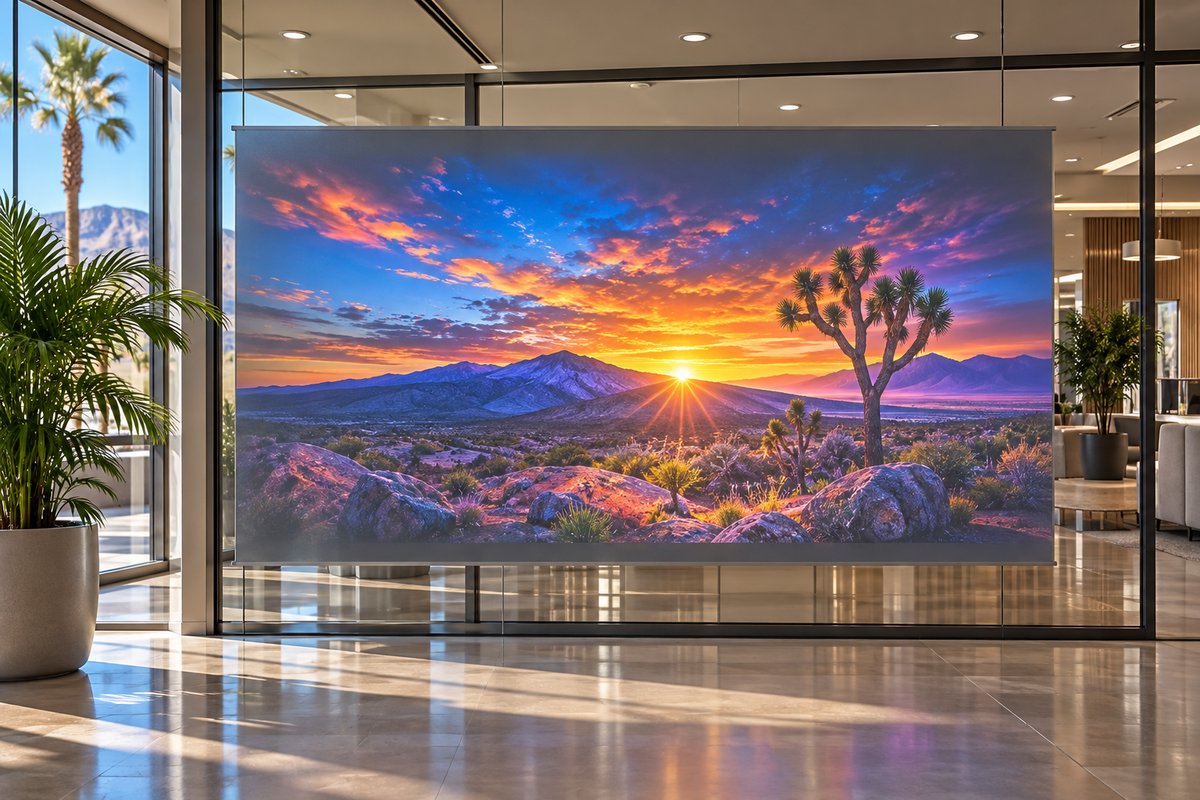
Order a sample kit and test films on your Nevada windows or panels in the actual lighting to see brightness, clarity and viewing effects before you commit.
Pick a film type based on your space’s lighting and the viewing effect you want—then specify custom sizing for your storefront window, wall, or acrylic partition.
Apply the film to the inside of your glass or acrylic and position your projector behind it, adjusting angle and settings for the best image.
Bright, eye-catching projection draws shoppers to display windows at Nevada malls, outdoor retail centers, and boutique shops—day or night.
Create flexible exhibits, interactive wayfinding, or real-time presentations on glass walls and partitions at Nevada’s museums, events, and convention halls.
Enhance visitor experience and transform ordinary glass into dynamic digital signage in casinos, hotel lobbies, building entrances, or boardrooms.
A versatile film for most projects, ideal for retail, visitor attractions, and venues throughout Nevada. Applied to the inside of glass, it delivers clear images for a range of settings.
Choose this frosted white film for general-purpose display windows, corporate offices, or whenever a soft diffused look complements Nevada’s ambient daylight.
This dark gray film is made for high-brightness images in rooms with lots of ambient light—perfect for busy retail corridors, large museums or trade show halls.
Use DualView film for installations requiring projection that can be seen from both sides, such as centrally located glass dividers or two-way traffic areas.
This translucent film creates a spectacular ‘floating image’ effect, adding visual impact to art installations and creative event booths in Nevada’s exhibition spaces.
Sample kits are available so you can test appearance, brightness, and color with your glass and projector before specifying a large custom cut.
Nevada’s main electric utility for site planning, outage info, and new display power needs.
Review city requirements for filming and display projections in Las Vegas to ensure your project aligns with local regulations.
Check here for information about film permits and related requirements for events or projections in unincorporated Clark County.
Access updated local weather forecasts so you can schedule and prepare indoor or event displays with confidence.
Nevada experiences bright sun for much of the year, with wide variations in daylight hours between summer and winter. Glass storefronts in downtown Las Vegas or Reno are often exposed to strong natural light, especially when facing south or west. For these locations, consider high-contrast films like Definition or Definition Pro, which provide enhanced image visibility in the presence of ambient light.
In hospitality and entertainment corridors—such as those found in Las Vegas, Henderson, or Sparks—venue lighting may shift throughout the day. For lobby, bar, or flexible-use spaces, frosted Accent film can deliver appealing visuals with a soft, inviting glow, especially in after-dark settings.
Museums, science centers, and convention venues across Nevada benefit from the creative versatility of projection on internal glass partitions. Spaces with controllable lighting can use almost any film type, including the floating-image Intrigue film for spectacular visual experiences.
When planning outdoor-facing displays, it’s important to test samples in the sunglare and at night, since seasons and location orientation greatly affect how the projection film performs.
Planning for projection displays in Nevada means accounting for dependable electricity for your projector. NV Energy serves most of the state and should be referenced for any large loads or for checking outdoor and special event power needs.
Permit and approval processes are managed by local city or county offices, and requirements vary widely depending on the nature and location of your installation. If your display is visible from public spaces or part of an event, consult with the local building, signage, or film permit office to confirm what’s required. Las Vegas and Clark County provide detailed resources to help clarify when and where permits might be necessary.
Weather is more of a consideration for event staff and install teams than for the film itself, which is always mounted to indoor-facing glass. Still, keep an eye on the region’s dramatic summer heat, occasional winter cold snaps, and rare storms when planning major AV projects.
As every venue and use case may differ, it’s always best to consult with an AV installer or integrator familiar with Nevada codes and logistics—technical guidance is readily available as you plan your project.
One frequent planning mistake is underestimating the effect of intense desert sunlight or casino lighting on projection film brightness and image quality. Always test several samples at your actual site and time of operation before specifying a film type.
Ensure you have enough room for the projector behind the glass, especially for installations in narrow storefronts or against fixed walls; short-throw projectors are often used for window displays.
Install the projection film only on the inside of the glass or acrylic, as it is not formulated for outdoor application or direct weather exposure. Clean the surface thoroughly and avoid trapping dust or air bubbles during installation.
Do not use anti-glare or reflection-reducing films as a projection surface—they are a separate product category designed for different goals. Always select from actual projection films for digital displays, and reach out to us for technical guidance if unsure.
Rear projection film can be used throughout Nevada on storefront glass, museum partitions, convention center displays, and corporate environment panels. It’s applied inside the glass or acrylic and is suitable for use in metro areas like Las Vegas, Reno, Henderson, or anywhere you have glass surfaces and rear access to position a projector.
For installations exposed to strong natural daylight—such as storefronts or sunlit lobbies—choose a high-contrast film like Definition or Definition Pro. These films enhance visibility and image quality, even with abundant ambient light. Sample kits are available so you can test performance in your actual lighting conditions before ordering a large piece.
Permit requirements depend on your project’s location, the type of display, and local regulations. If your projection will be seen from public streets, used at an event, or is part of a sign, check with your local city or county permit office before setting up. Resources for Las Vegas and Clark County are linked above.
Consider your venue’s ambient lighting, the type of image effect you want, and whether you need single- or double-sided viewing. Our Accent film suits most general uses, while Definition is better for bright locations and Intrigue for creative displays. Contact us for technical help or to request a sample kit for onsite testing.
Projection films should always be installed on the interior side of glass or clear acrylic. Outdoor exposure is not recommended. This protects the film from weather and ensures optimal image clarity and durability.
Rear projection films work with a variety of projectors, including standard and short-throw types, as long as they are positioned behind the glass where the film is applied. Factors like projector brightness, distance, and room lighting will affect the final image. For advice, reach out to our team with your specific site details.