01 · Order Samples
Test Films Under Your Lighting
Request a projection film sample kit and evaluate performance on your glass or acrylic surfaces in your actual space.
Unlock eye-catching projection displays on glass and acrylic surfaces from San Diego to San Francisco with custom rear projection film from Rear Projection Films.
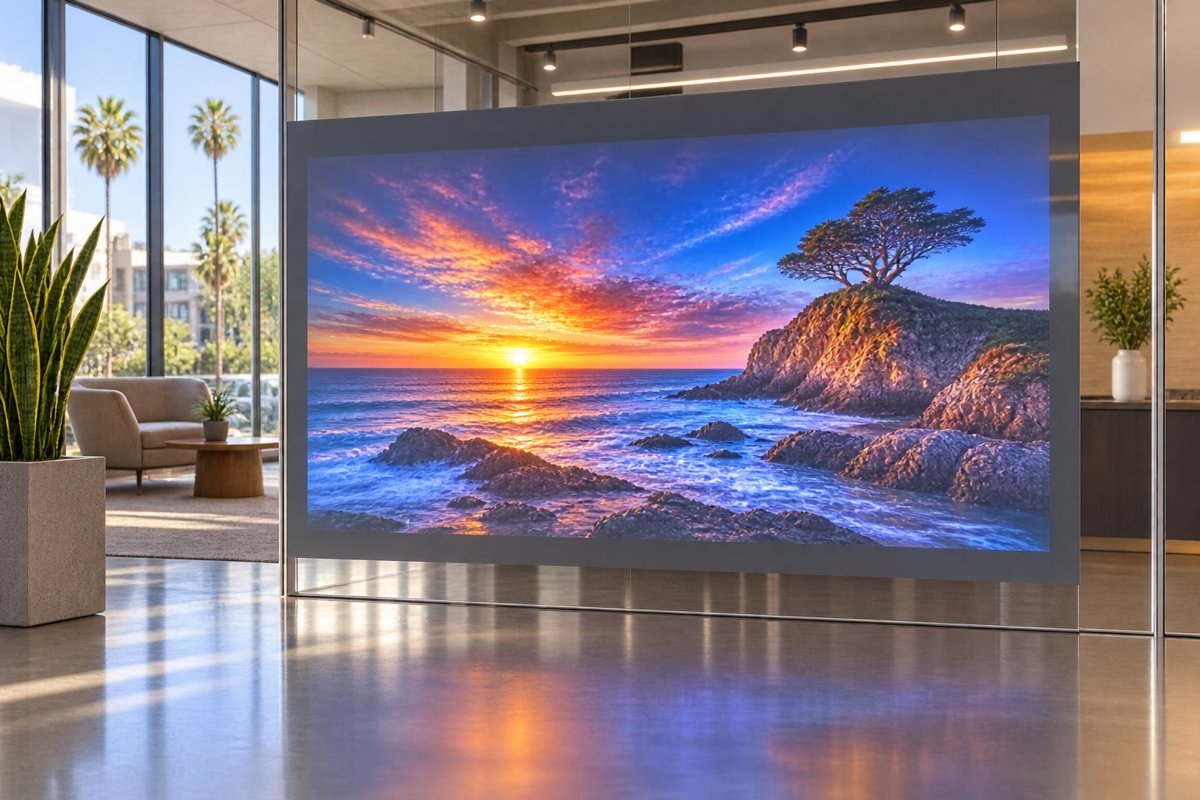
Bring dynamic content to your glass storefronts, lobby partitions, and attraction entrances with rear projection film—engineered for California’s diverse venues and changing light conditions. Whether your project is in a sunny coastal city or a bustling downtown, our projection films let you transform ordinary glass into a bright digital canvas using a projector positioned behind the glass.
At Rear Projection Films, a division of Screen Solutions International, our California office cuts and ships custom-fit projection films to projects statewide. With sample kits available, you can test the projection quality yourself in your unique environment—from retail districts in Los Angeles to exhibit halls in the Bay Area—before you buy the materials for your installation.
Request a projection film sample kit and evaluate performance on your glass or acrylic surfaces in your actual space.
Measure your window or partition and consider the location of your projector, taking into account ambient light and foot traffic.
Order your preferred film type in a custom-cut size, then apply it to the inside of your glass and set up your projector for bright, vivid visuals.
Project seasonal marketing, brand animations, or real-time messages directly on street-facing windows in busy California shopping districts or inside lifestyle centers.
Turn glass or acrylic partitions into interactive interpretive displays and event info screens at science centers, museums, and themed attractions statewide.
Stand out at conventions in Los Angeles or San Diego and welcome visitors to lobby areas on West Coast campuses using glass-based digital signage.
Best for most California retail or exhibit projects seeking a bright, standard projection surface on glass or acrylic. Applies to indoor glass panels and works well for signage or branding.
Great for creating a crisp, modern background day or night—ideal for California’s mixed natural and artificial light. Choose this for an even diffusion effect and when projecting text, graphics, or video content.
Optimal for spaces with high ambient light like modern showrooms, malls, and bright lobbies. Use this dark gray film when you need extra contrast and deeper blacks under intense California sunlight.
For passing foot traffic on both sides of a glass wall or window, select DualView. Ideal for busy shopping corridors, airports, or when both interior and exterior viewers need a clear display—works with short-throw and off-axis projectors.
Choose Intrigue for creating almost-transparent, ‘floating’ visuals—perfect for futuristic lobby effects, museum interactives, or high-design retail spaces.
Unsure which film suits your needs? Order a sample kit to test different options in your real environment, under California’s sunlight and interior lighting.
Reference California’s major electric utility to understand available power options for permanent or temporary projection installations.
Review requirements for building, electrical, or signage permits for projection installations and consult your local office before beginning any project.
Monitor local weather and environmental factors that may affect daytime or evening projection visibility or setup on glass.
California offers diverse opportunities for rear projection film, from sun-filled retail streets in Orange County to the frequently foggy mornings of the Bay Area. In summer, prolonged daylight hours and large windows call for high-contrast or Definition film types in most exposed locations. For evening events and winter installations, all surfaces perform well—just account for street or ambient lighting.
Museums and education centers can use floating-image or Intrigue films to make displays feel futuristic and interactive for guests, seamlessly blending information with the surroundings. Accent films create a frosted, privacy-enhancing screen by day and a luminous display surface by night, which suits galleries and premium retail.
Trade show exhibitors and convention centers in cities like Los Angeles, Anaheim, and Sacramento often need installations that can compete with ambient venue lights. For these environments, choosing darker, high-contrast films ensures content stands out, even during peak event hours.
Always test your film samples in the exact location and lighting to confirm performance before moving forward with a full installation.
Plan your projection layout with California’s power infrastructure in mind. Most major metro areas offer reliable power, but if you are operating a large display or running temporary event setups, confirm voltage and utility accessibility through providers like Pacific Gas & Electric Company.
Consider how changing conditions—sun, fog, coastal dampness, or temperature swings—could impact both projector performance and glass clarity. Daytime displays, especially on street-level windows, may face higher glare or ambient light interference, so choose your film accordingly and schedule tests during operating hours.
Before any installation, review permit requirements with your local building, sign, or event office. Every city and county has its own process for approving visual displays, electrical modifications, and glass work. Make sure to check the latest requirements on the LA County Public Works site or your region’s permitting office.
When selecting and applying projection film, remember it must be installed on the inside of the glass (never outdoors), and projectors should be positioned safely and out of public reach.
A frequent issue is underestimating the effect of California’s variable lighting conditions on projection clarity. Always test film and projector combinations with a sample kit in your actual environment, both during daylight and evening operational hours.
Improper measurement or film application can lead to creases, bubbles, or poorly aligned screens. Use precision tools, ensure your glass is thoroughly cleaned, and practice with a small sample before committing to the full install.
Do not try to use anti-glare film or untreated glass as a projection surface, as this will lead to weak, washed-out images. Only official Rear Projection Films types are engineered for this purpose.
For public-facing or high-traffic areas, be mindful of projector placement and cable routing for both safety and the best display experience. Consult technical guidance if your setup requires off-axis or short-throw projection, such as with DualView film.
Rear projection film can be applied to any smooth, clean glass or acrylic panel where there is access to the back side for projector placement. This includes storefront windows, corporate lobby walls, exhibit cases, and partition glass. Before installation, ensure the surface is free from dirt, oil, or previous film layers for optimal adhesion.
Selecting the right film depends on your lighting conditions, audience viewing direction, and visual goals. Use Accent film for frosted privacy screens, Definition films for bright spaces, Intrigue for floating effects, and DualView if viewers will see your display from both sides. Ordering a sample kit lets you test options directly on your glass before you order a custom size.
Rear projection film is applied to the interior (protected) side of the glass and works with a projector set up behind the surface. For windows or doors exposed to California’s weather, always install the film on the inside to shield it from environmental impacts. Outdoor film application is not recommended; always test indoors first.
Rear Projection Films can work with most standard projectors placed behind the glass. DualView films are compatible with short-throw or off-axis setups. We recommend consulting our technical guidance to match your chosen projector to your space and film type for optimal results. Test with your projector during your sample phase to ensure image quality in your location.
Permit requirements for projection film installation vary based on your project’s specifics and local jurisdiction. If you are installing a large or public-facing display, check with your city or county’s building, sign, or event office before starting. Public venues, street-facing retail, and convention displays often have additional requirements.
Many customers successfully install film themselves after practicing with a sample, but precision is important for a smooth appearance. For complex glass layouts or if you are new to projection, technical guidance is available to support your planning, projector selection, and installation process. Always follow instructions closely and test before final application.