
Introduction
Rear projection film gives businesses a smarter way to turn ordinary glass into a powerful commercial display surface. Instead of adding bulky screens, heavy display cabinets, or permanent digital signage structures, companies can apply projection film to glass, acrylic, or Plexiglas and create bright, modern, high-impact visuals from behind the surface.
For commercial buyers, this matters because every square foot of customer-facing space has value. Storefront windows, lobby glass, museum partitions, showroom dividers, conference rooms, and event spaces can all become revenue-driving display areas. As a result, rear projection film helps brands increase visibility, improve customer engagement, and create memorable visual experiences without sacrificing architectural design.
In addition, rear projection film supports flexible content. Businesses can display promotions, product videos, wayfinding, brand storytelling, event visuals, training content, or interactive experiences. When paired with the right projector, content strategy, and installation plan, it becomes a practical display solution for retail, hospitality, museums, healthcare, corporate spaces, trade shows, and entertainment venues.
Screen Solutions International offers several projection film options for different environments, including Rear Projection Films, Definition Rear Projection Film, Accent Rear Projection Film, and Intrigue Rear Projection Film. For buyers comparing display technologies, SSI also offers related solutions such as Transparent OLED Displays, Transparent Displays, and custom experiential display systems.
If your business wants to turn glass into a dynamic marketing asset, rear projection film deserves serious consideration.
What Is Rear Projection Film?
Rear projection film is a specialized display film applied to a transparent surface, such as glass, acrylic, or Plexiglas. A projector sits behind the surface and sends the image forward onto the film. Viewers see the content from the front side, while the projection equipment stays hidden or placed out of the customer’s direct path.
This setup creates a clean, floating-display effect. Because the display surface can blend into the existing architecture, rear projection film works well in spaces where standard screens feel too bulky or visually disruptive.
For example, a retailer can apply projection film to a storefront window and show product videos after dark. A museum can add film to a glass partition and display educational content without building a permanent wall. Similarly, a corporate lobby can turn glass into a branded welcome display for visitors, investors, and employees.
Rear projection film works especially well when businesses want:
- A modern digital display without a traditional screen
- A clean, architectural appearance
- Flexible content updates
- High visual impact in customer-facing areas
- A display surface that integrates into glass
- A premium, futuristic look
Because of this flexibility, rear projection film bridges the gap between digital signage, projection mapping, and architectural display design.
Why Businesses Choose Rear Projection Film
Commercial display projects usually come down to three core questions: Will it attract attention? Will it fit the space? Will it justify the investment?
Rear projection film answers those questions well because it turns existing surfaces into display assets. Instead of adding a separate screen, the business uses glass it already has. Therefore, the installation can feel more integrated and less intrusive.
1. It Increases Customer Engagement
Customers notice motion, brightness, and unique presentation formats. Rear projection film helps businesses create visual moments that stand apart from static signs, posters, and standard monitors.
For retail stores, this can mean more foot traffic. For showrooms, it can mean stronger product storytelling. And for hotels and event venues, it can mean a more premium guest experience. Additionally, digital content can change based on season, promotion, event, or audience.
Because AVIXA recognizes digital signage as a major part of professional AV, businesses increasingly view display technology as part of the customer experience, not just a decorative add-on. Rear projection film fits that trend because it combines visual impact with flexible content delivery.
2. It Protects the Display Equipment
Since the projector sits behind the viewing surface, the customer-facing side remains clean and protected. This can help in public environments where people may touch, lean on, or crowd around displays.
In addition, the front-facing surface can remain easier to clean than a typical exposed display system. That makes rear projection film useful in high-traffic spaces such as malls, airports, museums, corporate lobbies, and hospitality venues.
3. It Preserves Design Intent
Architects, designers, and brand managers often dislike bulky hardware. Rear projection film solves that problem by allowing digital content to appear on glass without making the display feel heavy.
As a result, the space can remain open, elegant, and modern. The technology supports the design instead of fighting it.
4. It Supports Fast Content Changes
Printed graphics require production, shipping, installation, and removal. Rear projection film, however, lets businesses update content digitally.
That means a marketing team can change promotions, seasonal campaigns, product launches, event messaging, or educational visuals without replacing the physical display surface. Over time, this flexibility can improve ROI because the display keeps serving new campaigns.
Rear Projection Film vs. Traditional Digital Displays
Rear projection film does not replace every display technology. However, it offers unique advantages when glass integration, architectural design, and visual novelty matter.
| Display Option | Best Use Case | Main Advantage | Key Limitation |
|---|---|---|---|
| Rear Projection Film | Glass displays, windows, lobbies, museums, retail | Turns glass into a digital display surface | Requires projector placement behind the surface |
| LED Video Wall | Large-format, high-brightness display areas | Excellent scale and brightness | Higher hardware footprint |
| LCD Commercial Display | Standard menu boards, directories, basic signage | Familiar and easy to deploy | Less unique visual impact |
| Transparent OLED | Premium product showcases and futuristic retail | Combines digital content with see-through glass | Higher-end display category |
| Printed Signage | Static promotions and permanent graphics | Low upfront cost | Limited flexibility and no motion |
For many commercial buyers, the best solution may combine several display types. As an example, a flagship store could use rear projection film in the front windows, an LED video wall in the main interior, and a Transparent OLED Display near a hero product showcase.
This blended approach creates a stronger customer journey. First, the window attracts attention. Next, interior displays reinforce the brand. Finally, interactive or transparent displays create a premium product moment.
Best Commercial Applications for Rear Projection Film
Rear projection film works across many industries. However, it performs best when businesses want to transform glass into an active communication tool.
Retail Storefronts
Retailers can use rear projection film to turn storefront windows into moving displays. This helps attract pedestrians, promote new products, and create after-hours visibility.
For example, a fashion retailer can show runway-style product videos on the front glass. A beauty brand can display product demos. A sneaker store can show launch countdowns or lifestyle content. As a result, the window becomes more than a barrier; it becomes a media surface.
Corporate Lobbies
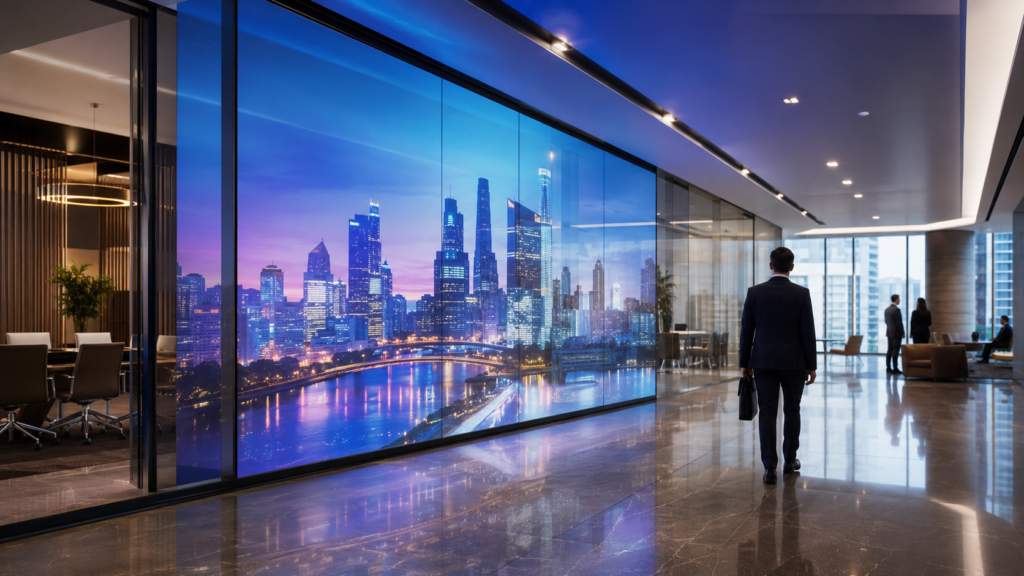
Corporate offices can use projection film to welcome guests, show brand videos, display company milestones, or support internal communications. Because the display integrates with glass, the lobby still feels refined and open.
Additionally, the content can change for investors, VIP visitors, employee events, or product announcements.
Museums and Educational Spaces
Museums, galleries, and educational institutions can use rear projection film for exhibit storytelling, wayfinding, donor recognition, and immersive interpretation. Since glass surfaces already appear in many exhibit environments, projection film can add media without disrupting the space.
For museums that need flexible and non-permanent exhibit tools, this can be especially useful.
Hotels and Hospitality Venues
Hotels can use rear projection film in lobbies, conference centers, restaurants, lounges, and event spaces. It can display welcome messages, event schedules, brand visuals, or atmospheric content.
Because guests respond to premium visual details, projection film can elevate the perceived value of the space.
Trade Shows and Events
At trade shows, attention matters. Rear projection film can create futuristic booth windows, floating product visuals, or branded glass partitions. In addition, it pairs well with other SSI display technologies, including Transparent OLED rentals and custom experiential displays.
Choosing the Right Rear Projection Film
Not every film works the same way. Therefore, buyers should match the film to the environment, lighting conditions, content type, and viewing expectations.
SSI offers multiple projection film options, including:
Definition Rear Projection Film
Definition Rear Projection Film is designed for clear, vivid rear projection setups. It adheres to glass or Plexiglas and creates a clean display effect. This makes it useful for commercial displays that need sharp visuals and strong viewing performance.
Accent Rear Projection Film
Accent Rear Projection Film is a high-brightness film option that works especially well in light-controlled environments or dusk-to-dawn window display applications. Because it blends with architectural privacy films, it can also support clean design integration.
Intrigue Rear Projection Film
Intrigue Rear Projection Film creates a more holographic-style appearance. It is a strong option for brands that want a futuristic visual effect for showrooms, events, retail displays, or experiential installations.
Projection Film Samples
Before committing to a full installation, businesses can start with Rear Projection Film Samples. This helps decision-makers compare film appearance, clarity, finish, and projector compatibility before scaling the project.
ROI: How Rear Projection Film Creates Business Value
Rear projection film can support ROI in several ways. First, it improves the visibility of customer-facing spaces. A blank window or unused glass wall does little for revenue. However, a digital display surface can promote offers, explain products, and strengthen brand recall.
Second, it reduces reliance on printed promotional materials. Instead of repeatedly printing posters, banners, and seasonal graphics, businesses can update content digitally. Over time, this can reduce production waste, speed up campaign changes, and make marketing more responsive.
Third, rear projection film can help extend the value of existing real estate. Storefront windows, lobby partitions, and glass walls already occupy valuable space. By turning those surfaces into media assets, a business gets more performance from the same footprint.
Finally, rear projection film can improve perceived brand quality. Customers often associate premium display experiences with innovation, professionalism, and attention to detail. Therefore, a strong visual installation can influence how people feel about the brand before they ever speak to a salesperson.
Energy and Operational Considerations
Commercial buyers should always consider operating costs. Digital displays, projectors, lighting, media players, and control systems all affect long-term performance.
ENERGY STAR notes that certified signage displays can use more efficient panel technologies and help reduce operating costs compared with conventional options. The U.S. Department of Energy also emphasizes cost-effective solutions that improve efficiency in commercial buildings. Because of this, buyers should evaluate display brightness, projector efficiency, operating schedule, cooling needs, and control systems before installation.
A smart rear projection setup should include:
- The right projector brightness for the lighting environment
- A practical content schedule
- Proper ventilation for equipment
- Easy access for maintenance
- Efficient on/off controls or automation
- A media system that supports quick content updates
These details matter because the best display is not just visually impressive. It is also reliable, manageable, and cost-effective to operate.
Common Mistakes to Avoid
Choosing Film Without Testing Samples
Many buyers select film based only on photos. However, lighting, glass tint, projector brightness, and viewing distance can change the final result. Therefore, sample testing helps reduce risk.
Ignoring Ambient Light
Rear projection film can look excellent, but the environment matters. Bright sunlight, uncontrolled glare, and poor projector placement can reduce impact. For high-light environments, buyers should discuss projector output, film type, and possible anti-glare strategies.
Using Weak Content
Strong hardware cannot fix weak content. Short, clear, high-contrast visuals usually work better than cluttered graphics. Additionally, motion should support the message rather than distract from it.
Forgetting Maintenance Access
Projectors, media players, and cables need service access. A clean design still needs practical planning behind the scenes.
Treating the Display as a One-Time Install
The best ROI comes from ongoing content updates. Therefore, businesses should plan a content calendar before launch.
Future Trends in Rear Projection Film Displays
Rear projection film will continue to evolve as businesses demand more immersive and flexible display experiences. Several trends are already shaping the market.
First, more brands will combine projection film with interactive technology. Touch overlays, sensors, cameras, and AI-driven content can turn glass into a responsive customer experience.
Second, projection film will play a larger role in experiential retail. As stores compete with online shopping, physical spaces need to offer something memorable. Rear projection film helps create that “stop and look” moment.
Third, architects and designers will keep integrating media into built environments. Instead of adding screens after construction, teams will plan digital surfaces earlier in the design process.
Finally, businesses will use more hybrid display ecosystems. Rear projection film, LED video walls, transparent OLED, high-bright displays, kiosks, and projection domes can all work together to create a complete visual journey.
FAQ
Is rear projection film good for storefront windows?
Yes. Rear projection film works well for storefront windows, especially when businesses want moving visuals, promotional content, or after-hours display impact. However, lighting conditions and projector brightness must match the environment.
Can rear projection film be applied to glass?
Yes. Rear projection film can be applied to glass, acrylic, or Plexiglas, depending on the project. Clean surface preparation and proper installation are important for the best result.
Does rear projection film work during the day?
It can, but performance depends on ambient light, film type, projector brightness, and window orientation. For bright areas, buyers should consult SSI before choosing a film and projector setup.
What businesses use rear projection film?
Retail stores, museums, hotels, corporate offices, healthcare facilities, trade show exhibitors, showrooms, restaurants, and entertainment venues can all use rear projection film.
Can rear projection film show video?
Yes. Rear projection film can show full-motion video, graphics, branding, promotions, wayfinding, and other digital content when paired with the right projector and media source.
Why Choose Screen Solutions International
Screen Solutions International helps businesses create high-impact display systems for retail, commercial, institutional, government, military, and private-sector environments. SSI offers more than rear projection film alone. The company also supports digital signage, transparent displays, projection systems, LED display products, interactive technologies, and custom experiential display solutions.
This matters because many projects need more than a film order. Buyers often need help choosing the correct film, projector, display surface, installation approach, and supporting technology. SSI can help teams compare options and build a solution that fits the space, audience, budget, and business goal.
Explore SSI’s Rear Projection Films, compare Projection Film Options, or call 888-631-5880 to discuss your project.
Final Takeaway
Rear projection film helps businesses turn glass into a valuable digital display surface. It supports stronger customer engagement, better use of existing architecture, faster content updates, and a more premium brand experience.
For commercial buyers, the value is clear. Instead of treating glass as empty space, rear projection film turns it into a flexible communication platform. Whether you need a retail window display, corporate lobby feature, museum exhibit, hotel experience, or trade show activation, the right film and projector setup can create a memorable result.
To start planning your project, contact Screen Solutions International at 888-631-5880 or explore rear projection film options through SSIDisplays.com and RearProjectionFilms.com.
Sources
Internal SSI Links
- Rear Projection Films – Screen Solutions International
- Projection Film Options
- Definition Rear Projection Film
- Accent Rear Projection Film
- Intrigue Rear Projection Film
- Rear Projection Film Samples
- Transparent OLED Displays
- Transparent Displays