01 · Step One
Request Sample Kits
Try a selection of films with a sample kit to preview brightness, contrast and image quality in your space’s actual lighting.
Brighten windows, partitions, and acrylic surfaces across Florida with custom rear projection films from Rear Projection Films, a division of Screen Solutions International.
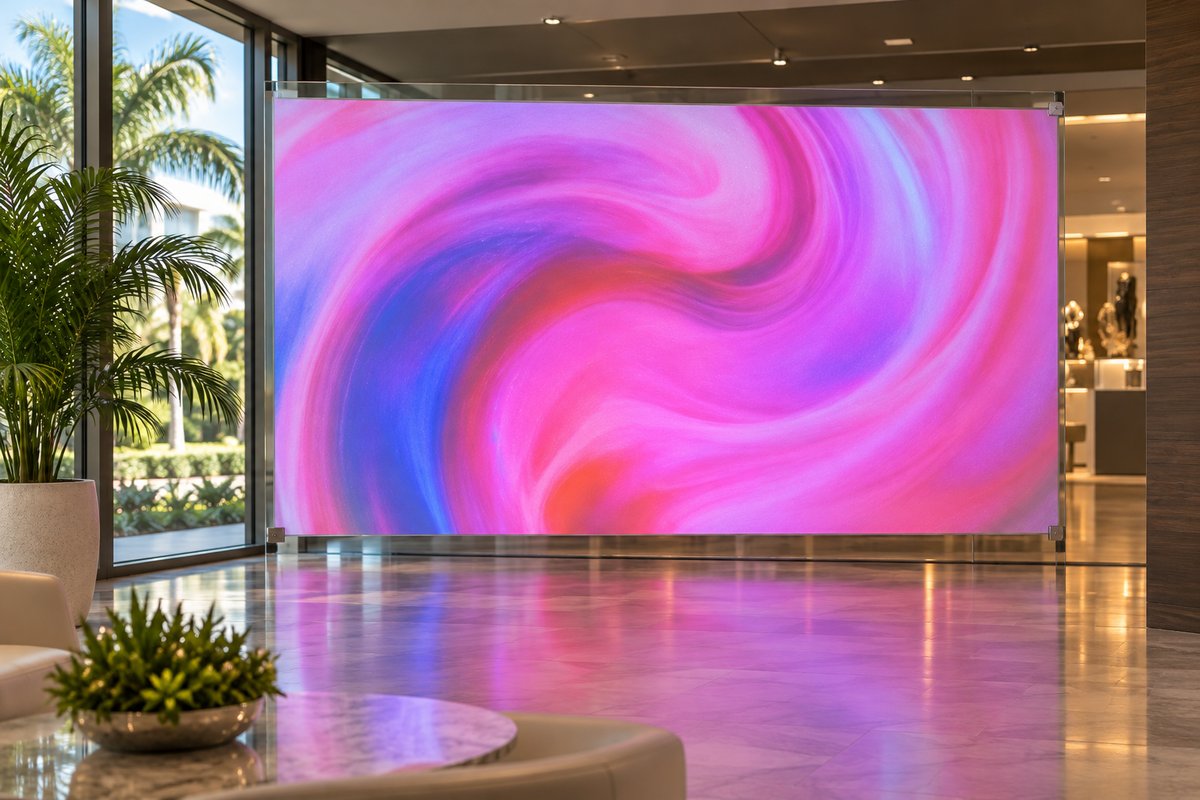
From Miami’s Art Deco districts to Orlando’s busy convention centers and Tampa’s shopping promenades, Florida venues are defined by their open, light-filled architectures. Rear projection film gives you the ability to transform nearly any glass or acrylic surface into a dynamic, high-contrast projection screen—without shutting out that signature Florida sunshine. Whether your project lands in a coastal retail storefront, a modern corporate lobby, or a bustling museum atrium, custom-cut rear projection films unlock creative, flexible display options suited for year-round use.
As a division of Screen Solutions International, Rear Projection Films ships custom-cut projection film options from our California office to clients across Florida and beyond. Our films are designed for easy indoor application and are tested to deliver vivid imagery—even in ambient-light conditions typical of the Sunshine State. Explore our range of film types, order a sample kit to trial real lighting on your glass, and receive technical advice for selecting the right film and projector setup for your venue.
Try a selection of films with a sample kit to preview brightness, contrast and image quality in your space’s actual lighting.
Decide which windows, glass walls or acrylic panels to use and measure the area for a perfect custom fit.
Choose your film type and order the exact size you need. Expert guidance on selection and installation is available from our technical team.
Welcome shoppers and cruise guests in Miami, Orlando, and Tampa with dynamic digital signage or animated visuals directly on glass—perfect for all seasons and promotions.
Bright, high-contrast films enliven science centers, museum galleries, and visitor attraction lobbies statewide, delivering crisp content even in sunlit spaces.
Create attention-grabbing floating visuals and branded content at Florida’s many conventions, expo centers, or business lobbies using projection film on glass or acrylic walls.
For most window and partition projects where you want a solid image with clean resolution, this standard rear projection film works across a wide variety of Florida venues and is applied to glass or acrylic indoors.
Accent film offers a frosted white appearance for even diffusion and soft edges, suiting boutique storefronts and all-purpose retail environments from Naples to Jacksonville.
Choose Definition film when your Florida location has lots of daylight—like open-air malls or glass-wrapped venues. Its dark gray tint delivers crisp contrast under high ambient light.
DualView allows viewers to see images from both sides, making it ideal for Miami’s pedestrian-rich districts and for corridor-facing glass, using standard or short-throw projectors.
Intrigue’s discreet, nearly invisible finish makes images appear to float. Use it for dramatic exhibits, corporate entries, or art installations needing a minimalist look.
Not sure which film will work best for your Florida atmosphere? Order a sample kit to compare films in your setting and decide with confidence.
Explore permit application guidelines for building, glass film, signage, and special event displays in the City of Miami.
Get information on building, electrical, zoning, and signage permit procedures for projects in Miami-Dade County.
Florida’s year-round tourist traffic and bustling street life make glass displays a prized asset across metro areas from Miami and Fort Lauderdale to Orlando and Jacksonville. Storefronts, hotel lobbies, and convention halls commonly feature expansive glass, ideal for leveraging rear projection film for both permanent and pop-up displays.
With subtropical light and variable weather throughout the year, displays in Florida often face dynamic lighting—bright, direct sun one moment, overcast skies the next. Rear projection film options such as Definition and DualView thrive in these conditions, maintaining image clarity despite high ambient or changing light.
Museums and science centers throughout Florida’s cultural districts can use floating-image films like Intrigue to add interactivity and drama to glass partitions and information kiosks—capturing the attention of both residents and out-of-state visitors.
For event-driven venues, especially in Miami Beach and Orlando’s major convention centers, portable acrylic panels coated with rear projection film offer flexibility to consistently stand out, whether your display is for a day or a season.
Every rear projection film setup begins with careful site planning. Assess the available space behind the glass for safe projector placement and ensure access to power. If using DualView in a corridor or on a partition visible from both sides, ensure open sightlines and select a projector capable of short-throw or off-axis projection when space is tight.
Permitting and approval requirements often differ in each Florida county, city, or event venue. Common considerations include building and signage codes, event rules, and possible glass film regulations. Before beginning, check with the local building, sign, or event office for details, as policies are project dependent.
Large window and glass wall displays may draw more regulatory review in historic districts or hurricane-prone coastal cities. It’s best to involve local authorities early, especially if the installation will be part of a public-facing display or brand activation.
Our team at Rear Projection Films provides technical advice on integration and can recommend projection film types best suited for your lighting, content needs, and venue goals.
A frequent mistake is relying on anti-glare films for projection—these products are intended to reduce surface reflections but are not compatible as projection film substrates. Always use designated rear projection films for best image quality.
Misjudging ambient light levels can spell trouble for displays placed near expansive Florida windows. Always test with a sample kit before committing, as film and projector results may vary based on the time of day, sun angle, and interior lighting.
Overlooking clearance for projector placement is another common issue. Rear projection films depend on a projector situated behind the display, so plan for adequate space, ventilation, and secure mounting solutions.
Finally, don’t skip checking with your local permitting or code enforcement office before your installation, particularly for larger or eye-catching displays—requirements can change by building, district, or event type.
Rear projection film from Rear Projection Films is designed for use on indoor-facing glass or clear acrylic surfaces. For best results, ensure the surface is clean, smooth, and accessible from the rear so a projector can be positioned behind it. Weather, sunlight, and humidity may affect lighting and content visibility; testing a sample in your setting is always recommended.
High-contrast films such as Definition and DualView are well-suited to Florida environments with high ambient light. They deliver vivid, clear images even with strong sunshine or interior lighting. For extra-bright spaces, bring a sample kit to the location and test different films throughout the day to see which meets your needs.
Yes, all rear projection films require a projector to produce a visible image. The projector must be placed behind the glass or acrylic coated with the film. For two-sided viewing with DualView film, short-throw or off-axis projectors can be used in narrower or multi-directional spaces.
Permit requirements can vary based on your installation location, project type, and venue (retail, events, corporate, etc.). Local building, sign, and event offices set their own guidelines, and requirements are project-dependent. Always check with the appropriate local authority before ordering or installing your display.
Anti-glare films are intended to reduce reflections on screens and glass, not to serve as projection surfaces. For bright, clear projection, always use purpose-designed rear projection films as detailed on this page.
Rear Projection Films offers technical guidance to help you select the right film for your specific lighting, content, and venue requirements. Ordering a sample kit and testing multiple options in your actual conditions is the best way to ensure the optimal look and performance for your location.