
Introduction
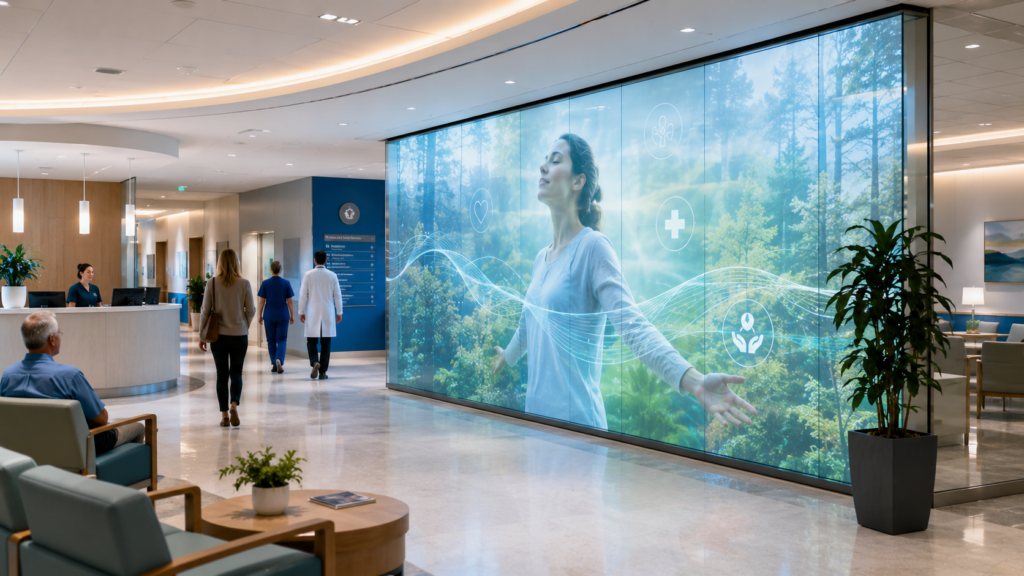
Rear projection film for healthcare facilities helps hospitals, clinics, medical offices, dental practices, wellness centers, and specialty care facilities turn glass into clean, professional digital communication surfaces. Instead of relying only on printed posters, bulletin boards, wall-mounted monitors, or temporary signs, healthcare teams can use rear projection film to display patient information, wayfinding content, service promotions, wellness education, waiting room messaging, and branded visuals directly on glass.
For healthcare decision-makers, this matters because communication affects the patient experience. Patients and visitors often arrive with stress, questions, uncertainty, or time pressure. Therefore, every clear message helps. A well-placed digital display can reduce confusion, support wayfinding, educate patients, highlight services, and make a medical environment feel more modern and organized.
More importantly, rear projection film offers a unique advantage because it integrates into glass, acrylic, or Plexiglas surfaces. As a result, healthcare facilities can add dynamic digital messaging without making the space feel cluttered or overly commercial. The technology can support patient experience while still preserving a clean architectural appearance.
Screen Solutions International offers multiple projection film options for healthcare environments, including Rear Projection Films, Definition Rear Projection Film, Accent Rear Projection Film, Intrigue Rear Projection Film, and Rear Projection Film Samples. SSI also supports related display products such as Digital Signage, Transparent OLED Displays, Transparent Displays, Interactive Kiosks, High Bright Displays, and custom experiential display systems.
Because of this, hospitals and clinics that want clearer communication, better use of glass, and a more polished patient experience, rear projection film can become a valuable part of the facility’s display strategy.
Why Healthcare Facilities Need Stronger Visual Communication
Healthcare environments can be difficult to navigate. Patients may need to find registration, imaging, urgent care, outpatient surgery, labs, pharmacy, billing, elevators, specialty clinics, waiting areas, or parking validation. Meanwhile, visitors may need directions to patient rooms, information desks, cafeterias, chapels, or family waiting areas.
As a result, clear visual communication reduces friction. It also helps staff spend less time answering repetitive directional questions. In addition, healthcare facilities need to share important messages about services, wellness programs, appointment flow, insurance reminders, safety procedures, community events, telehealth options, and patient education.
In addition, better visual communication can make healthcare environments feel more organized, especially when patients need fast answers during stressful visits.
Digital signage already plays a growing role in healthcare communication. AVIXA notes that hospitals and clinics use digital signage for patient information, wait times, wayfinding, health promotion, and education. The organization also identifies digital signage as a professional AV category that connects AV, IT, and content strategy.
Rear projection film fits directly into that communication trend. However, it offers a more architectural presentation than a standard monitor. Instead of adding another black rectangle to a wall, healthcare teams can turn existing glass into a digital display surface.
What Is Rear Projection Film for Healthcare?
Rear projection film is a specialized display film applied to glass, acrylic, or Plexiglas. A projector sits behind the surface and projects content onto the film. Patients and visitors see the content from the front side.
This setup allows healthcare facilities to use glass walls, partitions, windows, and interior panels as digital display surfaces. The projector and media system remain behind the viewing area or in a controlled location, while the display surface stays clean and easy to view.
Healthcare facilities can use rear projection film on:
- Main lobby glass
- Registration area partitions
- Waiting room glass walls
- Clinic entrance windows
- Elevator lobby glass
- Wayfinding panels
- Patient education zones
- Pharmacy glass
- Wellness center entrances
- Dental office reception areas
- Imaging center waiting areas
- Specialty clinic dividers
- Donor recognition walls
- Staff communication areas
Because the content comes from a projector and media source, facilities can update messages digitally. That makes the display more flexible than printed signage.
How Rear Projection Film Improves the Patient Experience
Patients do not judge a healthcare facility only by clinical care. They also notice the environment, communication, waiting experience, cleanliness, and ease of navigation. Rear projection film can support those experience factors in several ways.
It Reduces Confusion in High-Traffic Areas
Hospitals and clinics often have complex layouts. Clear digital wayfinding can help patients and visitors understand where to go next. A glass display near registration can show department directions, appointment check-in reminders, elevator guidance, or clinic-specific information.
Because rear projection film can sit on glass in a visible location, it helps facilities communicate without adding bulky signs. Additionally, content can update throughout the day if room assignments, hours, or instructions change.
It Makes Waiting Rooms More Useful
Waiting rooms create an important communication opportunity. Patients may spend several minutes or longer in those areas. Therefore, facilities can use rear projection film to show wellness tips, service information, community health campaigns, appointment preparation reminders, or educational content.
For example, a clinic can display content about preventive screenings, vaccination reminders, physical therapy services, patient portal instructions, or telehealth options. As a result, the waiting room becomes more than a holding area. It becomes a patient education touchpoint.
It Supports a More Modern Brand Image
A clean digital display on glass can make a healthcare facility feel more organized, advanced, and patient-centered. This can matter for specialty clinics, dental offices, cosmetic practices, wellness centers, imaging centers, children’s hospitals, outpatient surgery centers, and private medical groups.
Patients often notice whether a facility feels current. Rear projection film can help modernize the environment without requiring a large construction project.
It Helps Promote Services Without Feeling Cluttered
Healthcare facilities need to promote services carefully. A lobby packed with posters can feel messy. However, a controlled digital display can rotate messages cleanly.
A clinic can highlight:
- New service lines
- Preventive care programs
- Patient portal enrollment
- Telehealth visits
- Pharmacy services
- Wellness classes
- Imaging services
- Physical therapy
- Dental services
- Cosmetic treatments
- Community health events
- Insurance or billing reminders
Because content can rotate, the facility does not need to crowd the wall with too many printed notices.
Best Healthcare Applications for Rear Projection Film
Rear projection film works best when healthcare facilities need visible, flexible, and polished communication on glass.
Hospital Main Lobbies
A main hospital lobby can use rear projection film on large glass panels to show welcome messaging, campus maps, donor recognition, department directions, service announcements, or community health campaigns.
This can improve the first impression and help visitors orient themselves quickly.
Clinic Waiting Rooms
Clinics can use glass projection displays to show appointment reminders, wellness information, provider introductions, patient education, or service highlights. This can make waiting time feel more productive.
Dental and Orthodontic Offices
Dental offices can use rear projection film to create a clean, modern patient experience. Displays can show treatment education, before-and-after style visuals without patient-identifying content, oral health tips, financing options, and appointment instructions.
Because many dental practices compete on patient comfort and brand perception, a modern glass display can support a premium environment.
Imaging and Diagnostic Centers
Imaging centers can use rear projection film to explain MRI, CT, ultrasound, X-ray, or mammography procedures. This can help reduce anxiety by explaining what patients should expect.
Additionally, the display can share preparation instructions, check-in flow, and post-visit information.
Pediatric Healthcare Facilities
Children’s hospitals and pediatric clinics can use projection film to create friendlier visual environments. Gentle animations, educational characters, calming scenery, or interactive content can help reduce stress for children and families.
The key is to keep the content appropriate, soft, and reassuring.
Wellness Centers and Specialty Clinics
Wellness centers, physical therapy clinics, dermatology offices, eye care centers, and cosmetic practices can use rear projection film to promote services and support a premium brand experience.
For example, a dermatology clinic can show educational skincare content. A physical therapy center can show motion exercises or recovery program information. A wellness center can display calming visuals and membership services.
Donor Recognition and Foundation Areas
Hospitals and healthcare foundations often need donor recognition displays. Rear projection film can turn glass into an elegant digital donor wall that updates as campaigns grow. This creates a premium recognition area without relying only on etched plaques or printed panels.
Rear Projection Film vs. Other Healthcare Display Options
Healthcare facilities have several display choices. Each option works best in a different scenario.
| Display Option | Best Healthcare Use Case | Main Advantage | Key Consideration |
|---|---|---|---|
| Rear Projection Film | Glass lobbies, waiting rooms, clinic partitions | Clean digital messaging integrated into glass | Requires projector space behind the surface |
| Standard Digital Signage | Directories, waiting rooms, menus, announcements | Easy to deploy and update | Can look generic if overused |
| Interactive Kiosk | Check-in, wayfinding, registration, patient forms | Supports direct patient interaction | Requires cleaning and user workflow planning |
| LED Video Wall | Large hospital lobby or donor area | High-impact large-format visuals | Larger hardware footprint |
| Transparent OLED Display | Premium healthcare showcases or donor recognition | Futuristic see-through digital effect | Higher-end display category |
| Printed Signage | Permanent instructions and regulatory notices | Simple and low-cost | Hard to update and can clutter walls |
In many healthcare projects, the best solution combines display types. For example, rear projection film can create a premium lobby feature, while standard digital signage handles department directories. Interactive kiosks can support check-in, while printed signs remain useful for required notices and permanent instructions.
Business Value and ROI for Healthcare Facilities
Rear projection film can create business value in several ways.
First, it improves communication efficiency. If patients can find directions, understand appointment flow, and see relevant information quickly, staff may spend less time answering repeated questions.
Second, it supports patient education. Healthcare organizations constantly need to promote preventive care, screenings, medication adherence, wellness programs, and service awareness. Digital content gives teams a flexible way to share those messages.
Third, it improves facility perception. A modern visual system can make a clinic or hospital feel more professional and patient-focused. This can support reputation, referrals, and patient satisfaction.
Fourth, it improves content flexibility. Printed posters require production and installation. Rear projection film allows digital content updates for seasons, campaigns, departments, and community health initiatives.
Finally, it can help healthcare facilities make better use of existing glass. Many medical buildings already use glass partitions, lobbies, and waiting room dividers. Rear projection film turns those surfaces into functional communication tools.
Energy and Operational Considerations
Healthcare facilities need reliable, efficient systems. Hospitals and medical buildings often operate for long hours, so display systems should support operational goals.
ENERGY STAR notes that certified signage displays can offer the same core functionality as standard models while using more efficient, cooler-running technologies. The U.S. Department of Energy also emphasizes cost-effective solutions that improve efficiency and reduce commercial building operating costs.
Although rear projection film uses projectors rather than flat-panel signage displays, the same operational thinking applies. Healthcare buyers should evaluate projector efficiency, operating schedule, brightness needs, ventilation, maintenance access, and control automation.
A smart healthcare display setup should include:
- Appropriate projector brightness
- Scheduled operating hours
- Secure media control
- Reliable content playback
- Proper ventilation
- Simple staff content workflow
- Maintenance access
- Clear cleaning procedures
- IT and facilities coordination
These details help the system remain reliable and cost-effective.
Content Strategy for Healthcare Projection Film Displays
Healthcare content should be clear, calm, and useful. The goal is not to overwhelm patients. Instead, the display should reduce anxiety, improve clarity, or support better decisions.
Use Plain Language
Patients may feel stressed or distracted. Therefore, content should avoid unnecessary medical jargon. Short phrases, simple directions, and clean visuals work best.
Prioritize High-Value Messages
Facilities should focus on messages that help patients take action. Examples include appointment check-in steps, wayfinding, preventive screening reminders, wellness campaigns, and patient portal instructions.
Keep Visuals Calm
Healthcare environments benefit from calming design. Soft motion, natural imagery, clean typography, and uncluttered layouts usually work better than aggressive advertising visuals.
Rotate Content by Department
A large facility can schedule content based on location. A cardiology clinic can show heart health tips. A pediatric waiting room can show family-friendly education. A dental office can show oral care reminders.
Review Content for Compliance
Healthcare organizations should review display content internally before publishing. Avoid showing protected health information. In addition, follow facility policies for patient privacy, accessibility, branding, and medical claims.
Installation Planning for Healthcare Environments
Healthcare installations require careful planning because spaces often have strict operational, safety, and cleanliness requirements.
Important planning factors include:
- Glass size and location
- Film type
- Projector throw distance
- Ambient light levels
- Cleaning requirements
- Viewing distance
- ADA and accessibility considerations
- Infection control policies
- Cable routing
- Equipment ventilation
- Maintenance access
- IT security
- Content approval workflow
- Daily operating schedule
Facilities should also evaluate how the display will affect patient flow. A beautiful display should not create congestion, block visibility, or confuse visitors.
Common Mistakes Healthcare Facilities Should Avoid
Using Too Much Text
Healthcare messages often become long. However, projected glass displays work best with short, clear content. Use simple headlines, brief instructions, and visual support.
Ignoring Patient Stress
A healthcare display should not feel loud or chaotic. Use calming visuals and helpful messages that support the patient experience.
Forgetting Privacy Requirements
Never display patient names, appointment details, or protected health information unless the facility has a compliant system and approved use case. Most public-facing displays should use general information only.
Choosing Film Without Testing the Space
Lighting, glass tint, viewing distance, and projector brightness affect performance. Healthcare facilities should test samples before full installation.
Treating the Display as a One-Time Project
Digital displays need content updates. A stale display loses value. Assign responsibility for updates before launch.
Future Trends in Healthcare Display Experiences
Healthcare communication will continue becoming more digital, personalized, and location-based.
First, healthcare facilities will use more digital wayfinding. Large medical campuses need better tools to help patients navigate complex spaces.
Second, waiting rooms will become stronger education environments. Clinics and hospitals can use digital displays to promote preventive care, explain services, and support community health campaigns.
Third, more medical facilities will integrate display systems with content management platforms. This can help teams update messages across departments and locations.
Fourth, interactive displays will grow. Projection film can pair with touch overlays, sensors, mobile triggers, or kiosks to support more active patient engagement.
Finally, healthcare facilities will keep balancing technology with comfort. The best displays will feel useful, calm, and human-centered rather than overwhelming.
FAQ
Is rear projection film good for healthcare facilities?
Yes. Rear projection film works well in healthcare facilities because it turns glass into a clean digital communication surface. Hospitals, clinics, dental offices, wellness centers, and specialty practices can use it for wayfinding, patient education, service promotion, and lobby visuals.
Where can hospitals use rear projection film?
Hospitals can use rear projection film in main lobbies, registration areas, waiting rooms, elevator lobbies, clinic entrances, donor recognition areas, and patient education zones.
Can rear projection film help patient wayfinding?
Yes. Rear projection film can display directions, department information, maps, check-in instructions, and daily updates. This can help patients and visitors navigate the facility more easily.
Is rear projection film appropriate for waiting rooms?
Yes. Waiting rooms are strong locations for rear projection film because patients have time to view educational content, wellness reminders, service information, and appointment instructions.
Can healthcare facilities update the content?
Yes. Since the display uses a projector and media source, healthcare teams can update content digitally. This supports seasonal campaigns, department-specific messaging, and changing service information.
Why Choose Screen Solutions International
Screen Solutions International helps healthcare organizations and commercial buyers choose display systems that support real communication goals. SSI offers rear projection films as well as digital signage, transparent OLED displays, LED video walls, high-bright displays, interactive kiosks, projection systems, and custom experiential displays.
This matters because healthcare facilities often need a complete display strategy. A hospital lobby may need rear projection film, while a campus directory may need digital signage. A check-in area may need interactive kiosks, while a donor recognition area may need a premium transparent display or LED feature.
SSI can help teams compare options, test samples, and build a display system that supports patient experience, operational efficiency, and long-term business value.
Explore Rear Projection Films, review Projection Film Options, or call 888-631-5880 to discuss your healthcare display project.
Final Takeaway
Rear projection film for healthcare facilities helps hospitals, clinics, and medical offices turn glass into useful digital communication space. It supports better wayfinding, clearer patient education, stronger service awareness, and a more modern facility experience.
For healthcare decision-makers, the value is practical. Rear projection film can reduce communication friction, improve the waiting experience, support brand perception, and help facilities use existing glass more effectively.
To start planning a healthcare rear projection film display, contact Screen Solutions International at 888-631-5880 or explore available solutions at SSIDisplays.com and RearProjectionFilms.com.
Sources
Internal SSI Links
- Rear Projection Films – Screen Solutions International
- Projection Film Options
- Definition Rear Projection Film
- Accent Rear Projection Film
- Intrigue Rear Projection Film
- Rear Projection Film Samples
- Transparent OLED Displays
- Transparent Displays