
Introduction
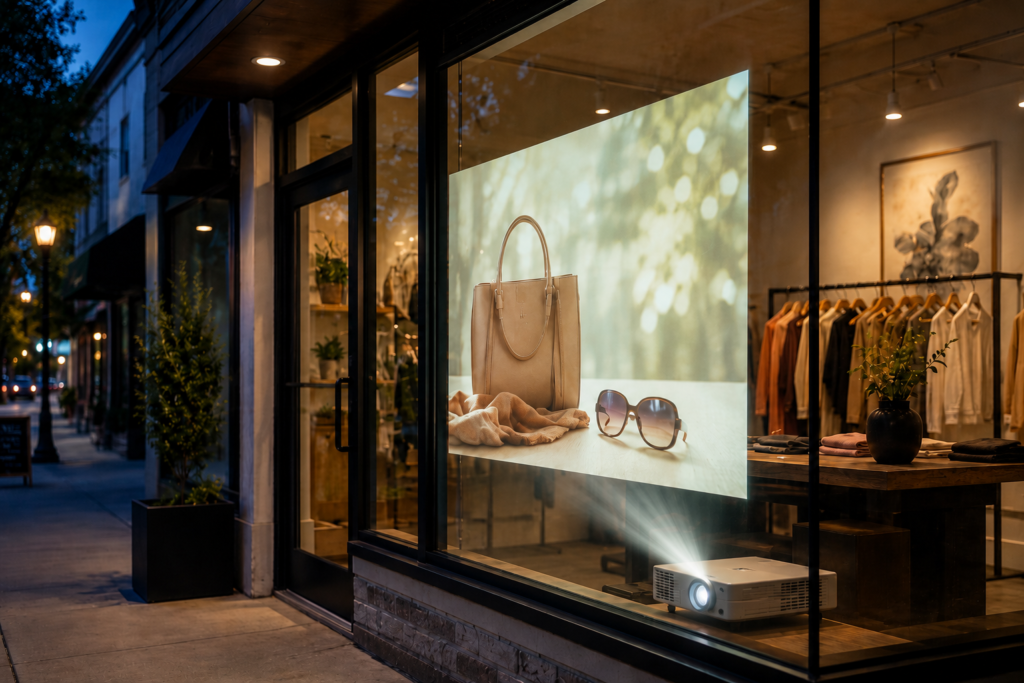
Rear projection film for small business storefronts gives local retailers, service businesses, restaurants, studios, salons, clinics, and showrooms a smarter way to turn window glass into a digital display. Instead of relying only on printed posters, decals, A-frame signs, or wall-mounted TVs, small businesses can use rear projection film to display promotions, videos, seasonal campaigns, service highlights, and brand visuals directly on glass.
For small business owners, this matters because storefront windows are valuable marketing space. A window faces pedestrians, drivers, shoppers, neighbors, and returning customers every day. However, many storefronts do not use that space effectively. A printed poster may advertise one offer, but it cannot move, rotate, update, or create the same visual impact as digital content.
As a result, rear projection film changes that. It allows a business to apply projection film to glass, place a projector behind the surface, and show digital visuals that customers see from the outside. As a result, the storefront can become more active, flexible, and attention-grabbing.
However, this does not mean every small business needs an oversized display or a complicated installation. In many cases, the smartest approach is a focused display zone, clear content, the right film type, and a practical projector setup. With good planning, therefore, rear projection film can help small businesses look more professional without overwhelming the space.
RearProjectionFilms.com helps buyers understand how rear projection film works in real commercial environments. Screen Solutions International supports projects through SSIDisplays.com with rear projection films, film samples, anti-glare film, transparent displays, digital signage, LED video walls, projector enclosures, interactive kiosks, and custom experiential display systems.
If your small business has window glass, that glass may be able to do more than show the inside of the store. It can help sell the business before customers walk in.
Why Small Businesses Should Think Differently About Storefront Glass
A storefront window is more than a design feature. It is one of the first marketing surfaces a customer sees. Yet many small businesses leave it underused or cluttered.
For example, a storefront may have old decals, faded posters, handwritten notices, seasonal signs, or mismatched promotional graphics. While those materials may communicate information, they can also make the business look less polished.
Digital content gives small businesses more flexibility. A window display can promote a morning special, show a service package in the afternoon, and run brand visuals after closing. In addition, owners can update content without waiting for print production.
Rear projection film helps small businesses use glass as a digital display surface while keeping the customer-facing side clean. The projector sits behind the glass, and the visual appears on the film. Therefore, the window becomes an active media surface instead of a static sign holder.
What Types of Small Businesses Can Use Rear Projection Film?
Rear projection film can work for many small commercial spaces. The best fit depends on the window location, lighting, content goal, and projector placement.
Strong candidates include:
- Boutique retail stores
- Salons and spas
- Coffee shops
- Fitness studios
- Dental offices
- Medical clinics
- Real estate offices
- Car detail shops
- Jewelry stores
- Furniture showrooms
- Art galleries
- Restaurants and bars
- Pet stores
- Optical shops
- Phone repair stores
- Specialty food shops
- Event venues
- Wellness studios
Each business can use the same technology in a different way. A salon may promote services and before-and-after style visuals. A dental office may show patient-friendly education. A boutique can display product videos. Meanwhile, a real estate office can show property visuals or neighborhood highlights.
Because rear projection film supports digital content, the display can evolve as the business changes.
Budget-Friendly Ways to Use Rear Projection Film
Small businesses do not always need to cover an entire window wall. Often, a smaller display zone creates a cleaner and more cost-effective result.
Use One Focused Window Section
A business can apply rear projection film to one section of glass instead of the entire storefront. This creates a clear digital feature without making the window feel crowded.
For example, a boutique could use one vertical panel for new arrivals. A café could use one horizontal section for seasonal drinks. Similarly, a clinic could use one clean display area for service information.
Start With Simple Content
High-quality content does not need to be complicated. A strong loop can include product images, short motion graphics, service highlights, and one clear call to action.
Small businesses should avoid trying to show everything at once. A short loop with three to five simple scenes usually works better.
Test Samples Before Ordering
Sample testing helps small businesses avoid costly mistakes. Rear projection film can look different depending on glass, lighting, projector brightness, and content style.
Before ordering a full installation, buyers can test Rear Projection Film Samples from SSI to compare film appearance and visibility.
Choose the Projector Carefully
A lower-cost projector may work in a controlled interior setting, but a bright storefront may need more output. Therefore, the projector should match the window size, lighting conditions, and operating hours.
Plan for Evening Impact
Many small businesses get excellent value from evening and after-hours visibility. Even if daytime sunlight makes projection more challenging, rear projection film can perform strongly during dusk, evening, and nighttime conditions when the right setup is used.
Rear Projection Film vs. Printed Window Signs for Small Businesses
Printed signs still have a place. They are simple, familiar, and affordable. However, rear projection film offers more flexibility and visual impact.
| Feature | Rear Projection Film | Printed Window Signs |
|---|---|---|
| Content Updates | Digital updates through media source | Requires reprinting |
| Visual Impact | Motion, video, and light | Static graphics |
| After-Hours Value | Can run when business is closed | Passive visibility |
| Design Flexibility | Content can change by day or season | Fixed design |
| Customer Attention | Strong motion-based appeal | Depends on print design |
| Long-Term Use | Reusable display surface | Materials replaced over time |
| Best Use | Promotions, branding, videos, campaigns | Hours, permanent info, simple offers |
For many small businesses, the best strategy uses both. Printed signage can handle permanent information, while rear projection film handles changing promotions and visual storytelling.
Best Content Ideas for Small Business Rear Projection Displays
Content should match the business goal. Since small businesses often need fast customer action, the message should stay simple.
Strong content ideas include:
- New product arrivals
- Seasonal promotions
- Service packages
- Appointment reminders
- Before-and-after visuals
- Brand story loops
- Customer experience visuals
- Event announcements
- Limited-time offers
- Menu highlights
- Gift card promotions
- Loyalty program reminders
- Local partnership visuals
- Holiday campaigns
- QR code callouts when appropriate
The best content answers a customer question quickly. What do you sell? Why should I come in? What is new? What offer matters today?
Because shoppers may only glance at the display, content should use large visuals and minimal text.
How to Design Content for Small Business Windows
Small business storefront displays need to communicate fast. The design should be clean, bold, and readable from the sidewalk or parking lot.
Use:
- Large images
- High contrast
- Short phrases
- Simple motion
- Clear product visuals
- Bright focal points
- Easy-to-read layouts
- One message per scene
Avoid:
- Small text
- Long paragraphs
- Crowded layouts
- Too many offers at once
- Low-contrast designs
- Busy backgrounds
- Fast flashing animation
- Content copied directly from social media without resizing
A window display should work from a distance. If the owner cannot understand the message from across the sidewalk, the content needs simplification.
Choosing the Right Film for a Small Business Storefront
The right film depends on the storefront design, lighting, and desired visual effect.
Definition Rear Projection Film
Definition Rear Projection Film is a strong option when the business needs clearer contrast and vivid content on glass or Plexiglas. It can support polished storefront promotions and commercial display visuals.
Accent Rear Projection Film
Accent Rear Projection Film can work well in controlled lighting or dusk-to-dawn storefront applications. For many small businesses, this can support evening display value.
Intrigue Rear Projection Film
Intrigue Rear Projection Film creates a more holographic-style visual effect. It can be useful for businesses that want a premium or futuristic look, such as salons, boutiques, galleries, tech shops, and showrooms.
Anti-Glare Film Support
Some storefronts face reflections from sunlight, cars, streetlights, or nearby glass. In those cases, anti-glare support may help reduce front-side reflections. Anti-glare film does not replace rear projection film, but it can support visibility in certain environments.
Where to Place a Rear Projection Film Display
Placement matters. The best display location should match how customers approach the storefront.
Before choosing the location, review:
- Pedestrian walking direction
- Parking lot view
- Street visibility
- Window reflections
- Interior projector space
- Power access
- Store layout
- Display height
- Furniture or product displays
- Sunlight direction
- Nighttime visibility
A display near eye level often performs better than one placed too high or too low. However, window size and projector placement may affect the final layout.
Additionally, do not block the entire view into the business unless that is the design goal. Many small businesses benefit from a display zone that attracts attention while still allowing customers to see inside.
Projector Planning for Small Businesses
The projector is a key part of the system. Small businesses should not choose a projector only by price. Instead, they should match the projector to the space.
Important projector questions include:
- Is there enough room behind the glass?
- How large will the image be?
- How bright is the storefront?
- Will the display run during daytime or mostly at night?
- Can the projector be mounted safely?
- Will customers or staff hear projector noise?
- Is there enough ventilation?
- Can staff access the projector for maintenance?
- Will cables be hidden or protected?
- Does the projector match the content resolution?
A short throw projector may help when space behind the glass is limited. A brighter projector may help when the display needs to compete with ambient light. For long daily use, a commercial-grade or laser projector may offer better reliability.
Common Mistakes Small Businesses Should Avoid
Trying to Cover Too Much Glass
A smaller, cleaner display area often looks better than a huge installation with weak brightness or cluttered content.
Using Too Much Text
Customers walking by will not read long copy. Use short phrases and strong visuals.
Ignoring Daylight
Storefront lighting changes throughout the day. Test samples and projector performance during real operating hours.
Buying Film Without Testing Samples
Sample testing helps confirm film choice, transparency, brightness, and visual style before ordering more material.
Forgetting Content Updates
A digital display should stay fresh. Plan monthly, seasonal, or campaign-based updates.
Placing the Projector Where Staff Cannot Access It
Hidden equipment still needs maintenance. Keep the setup clean but serviceable.
Simple Launch Plan for a Small Business Rear Projection Display
A small business can approach the project in stages.
| Step | Action |
| 1 | Choose the business goal |
| 2 | Pick the window or glass section |
| 3 | Measure the display area |
| 4 | Test rear projection film samples |
| 5 | Choose film type |
| 6 | Select projector and placement |
| 7 | Create simple high-contrast content |
| 8 | Test day and night visibility |
| 9 | Install and align the system |
| 10 | Set a content update schedule |
This staged approach keeps the project manageable.
How Rear Projection Film Can Support ROI
Rear projection film can support small business ROI in several ways.
First, it helps attract attention. Motion and light can make a storefront more noticeable than static signs.
Next, it supports faster content updates. A business can change campaigns without reprinting window graphics.
In addition, it can promote higher-value services or products. A salon can feature premium treatments. A café can promote seasonal drinks. A clinic can highlight service packages. A retail store can show new arrivals.
Finally, it can improve brand perception. A clean digital storefront display can make a small business look more modern, organized, and professional.
The display does not need to be huge to create value. It needs to be clear, visible, and connected to a business goal.
Future Trends for Small Business Storefront Displays
Small businesses will continue looking for better ways to compete for local attention. Rear projection film fits that need because it turns existing glass into a flexible display surface.
First, more small businesses will use digital storefronts to update promotions faster. Next, owners will create more daypart-specific content, such as morning, afternoon, evening, and weekend campaigns. Additionally, interactive storefront displays may become more common as touch, QR codes, sensors, and mobile engagement tools become easier to deploy.
Meanwhile, anti-glare support and projector planning will become more important as businesses use displays in brighter storefronts. Strong content design will also matter because customers expect polished visuals.
Over time, rear projection film can help small businesses bring bigger-brand display impact into smaller commercial spaces.
FAQ
Is rear projection film good for small business storefronts?
Yes. Rear projection film can help small businesses turn storefront glass into digital display space for promotions, product videos, brand visuals, and after-hours messaging.
Does a small business need to cover the whole window?
No. Many small businesses get better results by using one focused display area instead of covering the entire storefront.
Can rear projection film work after business hours?
Yes. Rear projection film can work well after hours because the display can continue showing digital content while the business is closed.
What kind of content works best?
Short, high-contrast visuals work best. Use large product images, simple motion, brief text, and one message per scene.
Should I order samples first?
Yes. Rear projection film samples help confirm film type, brightness, transparency, glare, and viewing performance before a full installation.
Why Choose Screen Solutions International
Screen Solutions International helps businesses choose rear projection film solutions that match real commercial spaces. SSI offers rear projection films, film samples, anti-glare film, transparent displays, digital signage, LED video walls, high-bright displays, interactive kiosks, projector enclosures, and custom experiential display systems.
For small businesses, that experience matters because the right setup should fit the space, budget, lighting, content, and customer path. A practical rear projection film system can help a storefront look more polished and perform better without unnecessary complexity.
For rear projection education and ideas, visit RearProjectionFilms.com. To review product options and project support, visit SSIDisplays.com. For project help, call 888-631-5880.
Final Takeaway
Rear projection film for small business storefronts can turn ordinary window glass into a flexible digital display. It helps businesses attract attention, promote offers, update content faster, and improve storefront perception.
In summary, small businesses do not need to overcomplicate the project. A focused display area, the right film, a properly matched projector, simple content, and sample testing can create a strong result. By using rear projection film strategically, storefront glass can become one of the most useful marketing tools in the business.
To start planning a small business rear projection film display, visit RearProjectionFilms.com or call Screen Solutions International at 888-631-5880.
Sources
Internal SSI Links
- SSIDisplays.com
- Rear Projection Films
- Projection Film Options
- Rear Projection Film Samples
- Definition Rear Projection Film
- Accent Rear Projection Film
- Intrigue Rear Projection Film
- Anti-Glare Film
- Projector Enclosures