
Introduction
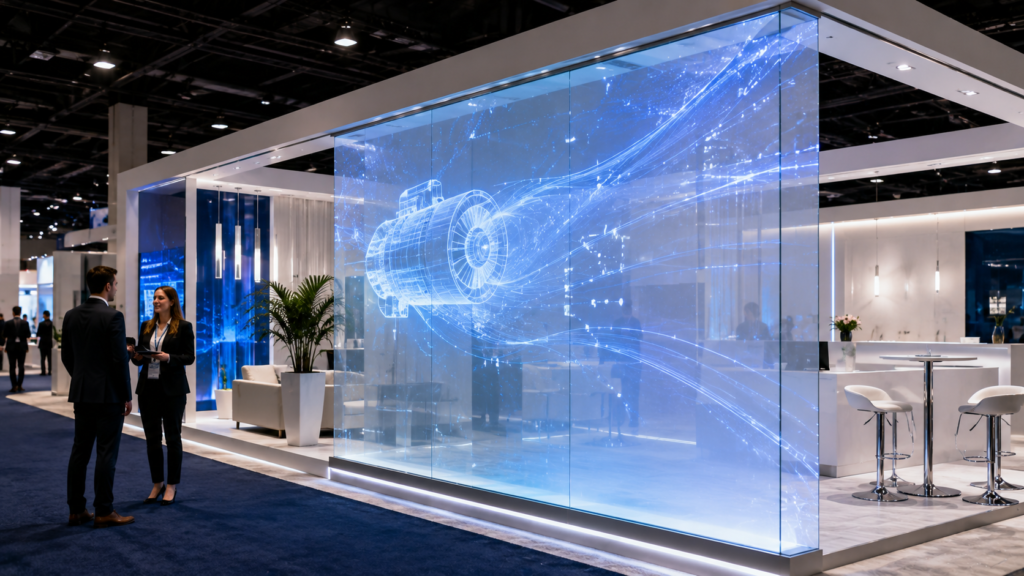
Rear projection film for trade shows helps exhibitors turn booth glass, acrylic panels, transparent dividers, and display structures into high-impact digital media surfaces. Instead of depending only on printed banners, pop-up graphics, standard monitors, or basic backdrops, companies can use rear projection film to create motion-driven displays that attract attention from the aisle.
For trade show marketers, event managers, booth builders, AV teams, and sales leaders, this matters because attention is the first battle on the show floor. If attendees do not stop, the sales team cannot start a conversation. Therefore, booth visuals must work quickly. They need to communicate the brand, show the offer, create curiosity, and make the space feel worth visiting.
Rear projection film gives exhibitors a clean and flexible way to do that. It can show product videos, animated brand visuals, demo loops, launch content, sponsor messaging, interactive graphics, and futuristic holographic-style effects on glass or acrylic. Additionally, the projection equipment can stay behind the display surface, which helps keep the front of the booth open, polished, and professional.
Screen Solutions International offers multiple projection film options for event environments, including Rear Projection Films, Definition Rear Projection Film, Accent Rear Projection Film, Intrigue Rear Projection Film, and Rear Projection Film Samples. SSI also supports related trade show display technologies such as Transparent OLED Displays, Transparent Displays, Rent Transparent OLEDs for Trade Shows, Digital Signage, LED Video Walls, and custom experiential displays.
For exhibitors that need more booth traffic, better product storytelling, and stronger event ROI, rear projection film can turn a standard booth surface into an active digital attraction.
Why Trade Show Booths Need Stronger Visual Impact
Trade shows are crowded, competitive, and expensive. Companies invest in booth space, travel, freight, labor, booth design, sponsorships, lead capture systems, sales teams, and follow-up campaigns. Because of that, every attendee interaction matters.
However, many booths still look similar. They use fabric walls, printed graphics, tabletop monitors, product stands, and basic signage. While those tools can work, they often fail to create a strong visual reason for attendees to stop.
Rear projection film helps solve this problem. It adds motion, depth, light, and premium visual appeal to booth architecture. As a result, the booth can stand out from the aisle without needing to become visually chaotic.
In addition, trade show attendees often walk quickly. They scan booths in seconds. Therefore, digital content needs to communicate instantly. A glass-based projection display can create the kind of “what is that?” moment that pulls people closer.
What Is Rear Projection Film for Trade Shows?
Rear projection film is a specialized display film applied to glass, acrylic, or Plexiglas. A projector sits behind the surface and projects content onto the film. Attendees view the content from the front side of the booth.
In practical terms, this means a booth builder can turn a transparent panel, product display wall, or acrylic structure into a digital screen. The result can feel more integrated than a traditional monitor because the display becomes part of the booth design.
Trade show teams can use rear projection film on:
- Booth entrance panels
- Acrylic display walls
- Product showcase glass
- Freestanding transparent panels
- Conference room glass
- Sponsor walls
- Demo station dividers
- Registration counters
- Presentation backdrops
- Pop-up retail structures
- Brand activation displays
- VIP meeting areas
- Event stage side panels
Additionally, because the content runs digitally, exhibitors can change messaging during the show. A booth can run brand content in the morning, product demos during peak traffic, and reception visuals during an evening event.
How Rear Projection Film Helps Increase Booth Traffic
Booth traffic depends on visibility, curiosity, relevance, and timing. Rear projection film can support each of these factors.
It Creates Movement in the Aisle
First, rear projection film allows exhibitors to show motion graphics and video on glass. Since motion attracts attention, attendees are more likely to notice the display while walking past.
For example, a software company can show animated workflows. A medical device company can show product features. A manufacturing company can show process footage. A luxury brand can show cinematic lifestyle visuals. As a result, the display helps start the conversation before the sales team speaks.
It Makes the Booth Feel More Premium
Next, glass-based digital displays can make a booth feel more custom and high-end. Standard monitors often feel familiar, while projection film on glass feels more architectural and experiential.
This matters because attendees often judge brands quickly. A premium booth environment can make the company feel more innovative, established, and worth exploring.
It Supports Product Storytelling
Many products need explanation. Rear projection film can show product benefits, internal components, use cases, timelines, comparisons, or customer outcomes through short visual loops.
For example, a company selling complex equipment can use a projected glass panel to show how the product works internally. Similarly, a healthcare company can show a procedure workflow without crowding the booth with printed diagrams.
It Keeps the Booth Open
Trade show booths need open sightlines. If a booth feels blocked, attendees may keep walking. Rear projection film can help because the display integrates into glass or acrylic panels while maintaining a lighter, more open appearance.
Additionally, the projector can stay behind the surface, which keeps the customer-facing side cleaner.
Best Trade Show Applications for Rear Projection Film
Rear projection film can work in many booth formats. However, it performs especially well when brands want a memorable visual feature.
Product Launch Displays
Product launches need attention. Rear projection film can create a dramatic reveal zone using glass or acrylic. Exhibitors can show teaser content, countdown visuals, feature highlights, or cinematic product videos.
Because the content can change quickly, the booth team can adjust messaging for different show days or audience segments.
Demo Stations
Demo stations often need supporting visuals. Rear projection film can show short loops behind or beside a product demo. This helps attendees understand the product before a rep explains details.
For example, a technology demo station can show a simplified interface animation. A hardware company can show performance data visually. A manufacturing company can show before-and-after process improvements.
Sponsor and Partner Walls
Event sponsors need visibility. Rear projection film can create a premium sponsor wall that feels more valuable than a printed panel. Sponsors can appear in motion loops, branded animations, or event welcome visuals.
This can also create a stronger photo opportunity for attendees.
VIP Meeting Spaces
Many exhibitors build private meeting rooms inside larger booths. Rear projection film can add branded glass walls, meeting welcome visuals, or subtle atmospheric content to make the space feel more polished.
For high-value client meetings, this detail can improve the perception of preparation and professionalism.
Brand Activations
Experiential booths can use projection film as part of an interactive activation. When paired with sensors, touch overlays, cameras, RFID, NFC, or mobile triggers, the glass display can react to attendee behavior.
This can make the booth more memorable and increase dwell time.
Event Registration and Check-In
Rear projection film can also support registration desks, check-in counters, and event welcome areas. It can display brand visuals, directional content, session highlights, or sponsor messages without relying on printed boards.
Rear Projection Film vs. Other Trade Show Display Options
Trade show teams often compare display technologies based on impact, flexibility, transport requirements, and cost.
| Display Option | Best Event Use Case | Main Advantage | Key Consideration |
|---|---|---|---|
| Rear Projection Film | Glass or acrylic booth features | Creates integrated digital visuals on transparent surfaces | Needs projector space behind the surface |
| Printed Booth Graphics | Basic brand messaging and backwalls | Reliable and familiar | No motion and harder to update |
| Standard Monitor | Product demos and looping videos | Easy to source and deploy | Looks common on show floors |
| LED Video Wall | Large high-impact booth visuals | Bright, scalable, and dramatic | Higher structure and logistics needs |
| Transparent OLED Display | Premium product showcases and futuristic demos | See-through digital display effect | Higher-end display category |
| Interactive Kiosk | Lead capture and guided product exploration | Supports direct attendee action | Requires user flow planning |
In many cases, the best trade show booth combines multiple display tools. For example, rear projection film can create a digital glass feature at the front of the booth. Meanwhile, an LED video wall can anchor the backwall, transparent OLED can support a product showcase, and interactive kiosks can capture leads.
Business Value and ROI for Exhibitors
From an ROI standpoint, rear projection film can support trade show goals in several ways.
First, it can help increase booth traffic. Strong visual motion attracts attention, and more qualified traffic can create more sales conversations.
Second, it can improve product communication. Instead of relying only on staff explanations, exhibitors can use visual storytelling to make benefits easier to understand.
Third, it can reduce dependence on printed graphics. While print still has a role, digital content lets exhibitors update messaging across multiple shows, product launches, and campaigns.
Fourth, it can make sponsorship and partner messaging more valuable. Motion-based digital sponsor content often feels more premium than static printed logos.
Finally, it can help the booth feel more memorable. After attendees visit dozens of booths, a glass-based digital display may help the brand stand out in follow-up conversations.
Choosing the Right Rear Projection Film for Trade Shows
Trade show environments vary. Some halls are bright and some booths have controlled lighting. Some displays need a subtle premium look, while others need a dramatic futuristic effect. Therefore, film selection matters.
Definition Rear Projection Film
Definition Rear Projection Film works well when exhibitors want clear, vivid projected visuals on glass or Plexiglas. It can support polished brand videos, product loops, and presentation visuals.
Accent Rear Projection Film
Accent Rear Projection Film is a high-brightness film option that can work well in light-controlled environments. Additionally, its frosted visual appearance can integrate well with booth privacy panels and glass-style structures.
Intrigue Rear Projection Film
Intrigue Rear Projection Film can create a holographic-style floating image effect. This can work especially well for product launches, futuristic demos, technology showcases, automotive concepts, healthcare innovations, luxury retail activations, and experiential booth designs.
Rear Projection Film Samples
Before building the full booth, exhibitors should test Rear Projection Film Samples. Sample testing helps teams compare brightness, viewing angle, clarity, transparency, and visual effect before committing to a show-floor installation.
Content Strategy for Trade Show Projection Film Displays
The booth display surface is only as strong as the content. Therefore, exhibitors need short, visual, high-impact media designed specifically for show-floor behavior.
Lead With the Benefit
Attendees should understand the value quickly. Instead of starting with a long brand story, lead with the outcome: faster operations, better engagement, lower cost, improved safety, stronger visibility, or a more premium customer experience.
Use Short Loops
Trade show attendees may only watch for a few seconds. As a result, short loops usually perform better than long videos. A 10- to 30-second loop can communicate the main idea repeatedly without requiring a fixed start time.
Design for Distance
Content must work from the aisle. Use large visuals, high contrast, and simple composition. Avoid small text because attendees may not be close enough to read it.
Match Content to the Sales Conversation
The display should make the sales team’s job easier. If reps need to explain a product feature, the display should show that feature visually. If the goal is lead capture, the display should create curiosity and invite a next step.
Refresh Content Across Shows
Many exhibitors attend multiple events each year. Instead of using the same content repeatedly, update visuals by event, audience, product launch, or campaign. This helps the booth feel current.
Installation Planning for Trade Shows
Trade show installations need practical planning because setup time, venue rules, labor requirements, and freight all affect success.
Important planning factors include:
- Booth dimensions
- Glass or acrylic panel size
- Film type
- Projector placement
- Projector throw distance
- Ambient hall lighting
- Power access
- Cable routing
- Media player location
- Ventilation
- Rigging and booth structure
- Union labor rules when applicable
- Setup and teardown workflow
- Shipping protection
- Content testing before the show
Additionally, exhibitors should test the full display before shipping. A pre-show test can reveal brightness issues, alignment needs, content formatting problems, or mounting challenges before the team reaches the venue.
Common Mistakes Exhibitors Should Avoid
Waiting Until the Last Minute
Trade show deadlines move fast. Rear projection film displays need planning for panels, projectors, content, wiring, and booth structure. Therefore, start early.
Using Too Much Text
Show-floor displays should not carry long paragraphs. Instead, use simple visuals, short benefit statements, and motion.
Ignoring Projector Placement
Rear projection film needs projector space behind the surface. If the booth design does not include that space, the installation can become difficult.
Choosing Content That Looks Like a Web Ad
Trade show content needs to feel cinematic and spatial. Generic ads may not create enough impact. Instead, design content specifically for large glass or acrylic display surfaces.
Forgetting Staff Training
The sales team should know how to use the display in conversation. Otherwise, the technology becomes decoration instead of a sales tool.
Future Trends in Trade Show Display Experiences
Looking ahead, trade show booths will continue becoming more immersive, digital, and interactive.
First, more exhibitors will use glass-based media surfaces to create premium booth architecture. Rear projection film fits this trend because it integrates digital content into booth materials.
Second, hybrid display ecosystems will become more common. Exhibitors will combine rear projection film, LED video walls, transparent OLED displays, interactive kiosks, and digital signage to create layered experiences.
Third, content personalization will increase. Booth teams may change content by audience segment, meeting type, product interest, or event day.
Fourth, interactive booth technology will expand. Projection film can pair with sensors, touch systems, mobile interactions, RFID, NFC, and camera-based triggers to increase engagement.
Finally, exhibitors will focus more on measurable outcomes. Display systems will need to support lead generation, dwell time, meeting quality, sponsor value, and post-show follow-up.
FAQ
Is rear projection film good for trade shows?
Yes. Rear projection film works well for trade shows because it turns glass or acrylic booth surfaces into dynamic digital displays. It can help attract attention, explain products, support demos, and create a premium booth experience.
Can rear projection film be used on acrylic booth panels?
Yes. Rear projection film can be applied to acrylic or Plexiglas surfaces depending on the project requirements. Exhibitors should test samples before final booth fabrication.
Does rear projection film help increase booth traffic?
It can help. Motion, light, and glass-based visuals can make a booth more noticeable from the aisle. However, results depend on booth design, content quality, location, lighting, and the offer.
Can exhibitors update the content during the show?
Yes. Because the display uses a projector and media source, exhibitors can update or change content for different show days, product demos, presentations, or private events.
What kind of content works best?
Short product videos, animated benefits, launch visuals, demo loops, sponsor content, and high-impact brand motion graphics work well. Content should use large visuals and minimal text.
Why Choose Screen Solutions International
Screen Solutions International helps exhibitors, booth builders, agencies, and commercial buyers create high-impact display systems for trade shows and events. SSI offers rear projection films as well as transparent OLED displays, digital signage, LED video walls, high-bright displays, interactive kiosks, projection technologies, and custom experiential displays.
This matters because trade show booths often need more than one display type. A front glass panel may need rear projection film. A product showcase may need transparent OLED. A backwall may need LED video. A lead capture zone may need an interactive kiosk. SSI can help teams compare options and build a booth display strategy that supports attention, engagement, and ROI.
Explore Rear Projection Films, review Projection Film Options, or call 888-631-5880 to discuss your trade show display project.
Final Takeaway
In summary, rear projection film for trade shows helps exhibitors turn booth glass and acrylic into crowd-attracting digital displays. It can increase visual impact, support product storytelling, improve booth perception, and create a more memorable event experience.
Most importantly, it helps turn booth architecture into a sales tool. Instead of using glass or acrylic only as a divider, exhibitors can use rear projection film to create motion, depth, and engagement right where attendees walk by.
To start planning a trade show rear projection film display, contact Screen Solutions International at 888-631-5880 or explore available solutions at SSIDisplays.com and RearProjectionFilms.com.
Sources
Internal SSI Links
- Rear Projection Films – Screen Solutions International
- Projection Film Options
- Definition Rear Projection Film
- Accent Rear Projection Film
- Intrigue Rear Projection Film
- Rear Projection Film Samples
- Transparent OLED Displays
- Transparent Displays
- Rent Transparent OLEDs for Trade Shows