
Introduction
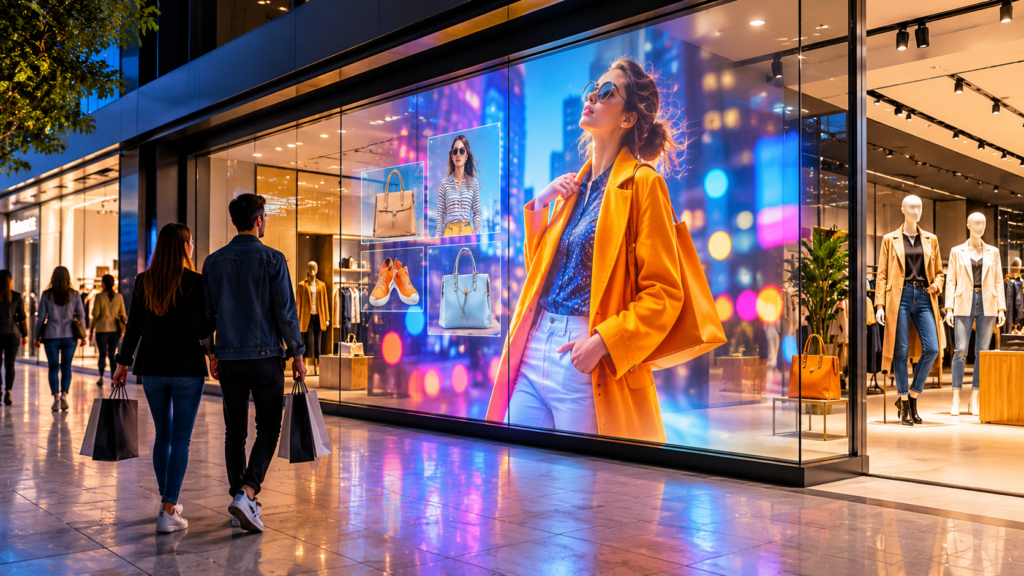
Rear projection film for retail storefronts helps businesses turn ordinary window glass into a high-impact digital display. Instead of relying only on posters, printed banners, static decals, or standard monitors, retailers can project dynamic video, product visuals, promotions, seasonal campaigns, and brand content directly onto glass.
For commercial buyers, this creates a major advantage. Storefront windows already sit in one of the most valuable positions in retail: the first point of contact between the customer and the brand. However, many retailers underuse that space. A blank window may show products, but it does not always stop foot traffic. A printed sign may communicate a sale, but it cannot move, change, animate, or adapt to different campaigns.
Rear projection film changes that. It allows retailers to transform glass into a digital media surface while keeping the storefront clean, modern, and premium. As a result, the store can attract more attention, improve customer engagement, and create stronger visual storytelling before shoppers even walk through the door.
Screen Solutions International offers several projection film options for retail environments, including Rear Projection Films, Definition Rear Projection Film, Accent Rear Projection Film, Intrigue Rear Projection Film, and Rear Projection Film Samples. Retailers can also pair rear projection film with other SSI display products, including Digital Signage, Transparent OLED Displays, Interactive Kiosks, and Custom Experiential Displays.
For storefronts, showrooms, pop-up shops, flagship locations, and mall retail spaces, rear projection film offers a strong blend of visual impact, flexibility, and business value.
Why Retail Storefronts Need More Than Static Signage
Retail competition keeps getting tougher. Online shopping gives customers speed, selection, and convenience. Therefore, physical stores need to deliver more than inventory. They need to create an experience that pulls people in.
A storefront window plays a critical role in that experience. It must communicate quickly. It must show value. Most importantly, it must earn attention in a crowded environment.
Traditional window displays still matter. Mannequins, product arrangements, lighting, and printed graphics can all support merchandising. However, static displays have limits. They cannot adjust instantly to a flash sale and they cannot show product movement. They cannot rotate through multiple campaigns in one day, nor can they deliver the same level of motion-driven impact that digital content provides.
Rear projection film gives retailers a more flexible tool. A single glass surface can promote a new product in the morning, display a lifestyle video in the afternoon, and show a seasonal sale after dark. In addition, the content can support brand storytelling instead of only pushing discounts.
This matters because modern retail depends on experience. AVIXA highlights the role of AV technology in creating customer engagement, brand loyalty, and more compelling in-store environments. Digital signage organizations also continue to support education, networking, and standards around connected display deployments, which shows how important display strategy has become to commercial spaces.
What Is Rear Projection Film for Retail?
Rear projection film is a specialized display film applied to glass, acrylic, or Plexiglas. A projector sits behind the glass and projects content onto the film. Customers view the image from the front side of the storefront.
This configuration creates a clean and polished look. The projector and supporting hardware stay behind the viewing surface, while the window remains the visible display area. As a result, the technology does not need to dominate the storefront design.
Retailers can use rear projection film to show:
- Product videos
- Sale promotions
- Brand campaigns
- Seasonal visuals
- Launch countdowns
- Social media-style clips
- Store announcements
- Lifestyle content
- Event graphics
- Interactive display content when paired with sensors or touch systems
Because the glass remains part of the architecture, the storefront can still feel open and premium. Additionally, rear projection film can work across different retail categories, including apparel, footwear, jewelry, cosmetics, electronics, automotive showrooms, furniture, luxury goods, sporting goods, and specialty retail.
How Rear Projection Film Helps Increase Foot Traffic
Foot traffic starts with attention. If shoppers do not notice the store, they do not enter the store. Rear projection film helps retailers create motion, color, and visual contrast in the storefront window, which can help the location stand out from nearby competitors.
Motion Attracts the Eye
People naturally notice movement. Therefore, a storefront with video content often has a stronger chance of catching attention than a static window display. A short product video, animated promotion, or cinematic brand loop can give customers a reason to pause.
Once a shopper pauses, the store has a better opportunity to influence them. Even a few extra seconds of attention can help communicate the offer, product category, or brand personality.
Content Can Match the Time of Day
A major advantage of rear projection film is content scheduling. For example, a coffee shop can promote breakfast items in the morning and dessert items in the evening. A clothing retailer can show office looks during weekday mornings and nightlife outfits on Friday evening. A mall retailer can run gift-focused visuals during holiday shopping periods.
This flexibility makes the storefront more relevant. Instead of showing one printed message for weeks, the retailer can adjust the display to the moment.
Storefronts Can Keep Working After Hours
Many storefronts go dark after closing. However, rear projection film can keep a window active after business hours. A retailer can display brand videos, product teasers, QR-driven calls to action, or upcoming launch content even when the doors are closed.
As a result, the storefront continues working as a marketing asset beyond normal selling hours.
Business Benefits of Rear Projection Film for Retailers
Rear projection film is not just a visual upgrade. It can support clear business objectives when retailers use it strategically.
Stronger Promotional Flexibility
Printed graphics take time and money to produce. They also create delays when campaigns change. Rear projection film allows retailers to update content digitally, which helps marketing teams respond faster.
For example, a store can promote:
- Limited-time offers
- New arrivals
- Clearance events
- Loyalty program signups
- Product launches
- Influencer collaborations
- Holiday campaigns
- In-store events
Because content can change quickly, retailers can test different messages and improve performance over time.
Better Use of Existing Glass
Storefront glass already exists. However, it often acts only as a viewing surface or architectural boundary. Rear projection film turns that same glass into a revenue-supporting communication tool.
This improves space efficiency. Retailers do not need to add a large freestanding display or block merchandise areas with extra hardware. Instead, they can use the window itself.
Premium Brand Perception
Customers judge a store before they enter. A modern digital window display can make the brand feel more advanced, polished, and premium. This can matter especially for luxury retail, technology products, cosmetics, automotive showrooms, and high-end lifestyle brands.
The display does not need to feel loud or gimmicky. In fact, simple cinematic content often works best. Clean product visuals, elegant motion graphics, and lifestyle footage can elevate the storefront without overwhelming the shopper.
Reduced Dependence on Printed Campaigns
Rear projection film does not eliminate print in every store. However, it can reduce the need for frequent window poster changes. Over time, this may reduce printing, shipping, installation labor, and material waste.
Additionally, digital content gives retailers more control. A brand can update one campaign file across multiple locations instead of coordinating physical sign changes store by store.
Rear Projection Film vs. Other Retail Display Options
Retailers often compare rear projection film with commercial displays, LED walls, transparent OLED, and printed graphics. Each option has a place. However, rear projection film offers a unique balance of glass integration and digital flexibility.
| Retail Display Option | Best Use Case | Main Benefit | Key Consideration |
|---|---|---|---|
| Rear Projection Film | Storefront windows, mall glass, showroom partitions | Turns glass into a dynamic digital display | Needs projector space behind glass |
| Printed Window Graphics | Static sales, seasonal branding, decals | Low initial cost | No motion or instant updates |
| Standard LCD Display | Menu boards, product screens, directories | Familiar and easy to manage | Looks like a traditional screen |
| LED Video Wall | Large-format interior display impact | Bright and scalable | Larger hardware footprint |
| Transparent OLED Display | Premium product showcases | Digital content with see-through display effect | Higher-end display category |
| Interactive Kiosk | Self-service, product lookup, lead capture | Customer interaction and data capture | Requires user engagement area |
For many retailers, the strongest approach combines multiple technologies. For example, a flagship store could use rear projection film in the front window, an LED video wall inside the store, and a transparent OLED display near a hero product. Additionally, an interactive kiosk can help shoppers browse inventory, request assistance, or join a loyalty program.
Best Retail Use Cases for Rear Projection Film
Rear projection film works well in several retail scenarios. However, the best use case depends on the location, lighting, audience, and merchandising goals.
Fashion and Apparel Stores
Fashion retailers can use projection film to show moving lookbooks, seasonal collections, runway-style footage, or lifestyle campaigns. Since apparel often sells through aspiration, motion content can communicate mood and style more effectively than a static poster.
For example, a storefront can show a model walking through different outfits while mannequins display matching products nearby. This creates a stronger connection between content and merchandise.
Sneaker and Streetwear Retail
Sneaker drops and streetwear launches depend on hype. Rear projection film can support countdowns, animated launch visuals, limited-edition product reveals, and event-style storefronts.
Additionally, content can change quickly for new releases. This makes the window feel active and current.
Jewelry and Luxury Retail
Luxury brands need visual impact without clutter. Rear projection film can create elegant, floating product visuals on glass while preserving a clean storefront. Jewelry retailers can show close-up product videos, craftsmanship content, or brand heritage visuals.
Because the effect feels premium, it can support a higher-end customer experience.
Electronics and Technology Stores
Technology retailers can use rear projection film to demonstrate product features, show interface videos, compare models, or launch new devices. Motion content helps explain technical products quickly.
In addition, the display itself reinforces the idea of innovation.
Automotive Showrooms
Auto dealerships and vehicle showrooms can use rear projection film on glass walls or showroom windows to display vehicle videos, financing promotions, feature highlights, or brand campaigns. This can create more energy around showroom traffic while keeping the space open and polished.
Pop-Up Retail and Events
Pop-up stores need to make a strong impression fast. Rear projection film can help temporary retail environments feel more custom, immersive, and high-end. Because projection film can be applied to clear surfaces, it can support portable glass-style display concepts and event structures.
Choosing the Right Rear Projection Film for a Retail Storefront
Retail storefronts vary widely. A mall storefront, street-facing window, luxury boutique, airport retail space, and car showroom all have different lighting conditions. Therefore, choosing the right film matters.
Definition Rear Projection Film
Definition Rear Projection Film works well when the retailer needs clear, vivid image presentation on glass or Plexiglas. It is a strong option for polished commercial displays where image quality matters.
Accent Rear Projection Film
Accent Rear Projection Film is described by SSI as a high-brightness film option that works best in light-controlled environments or from dusk to dawn in window displays. Therefore, it can be useful for retail windows that need strong evening impact or controlled lighting conditions.
Intrigue Rear Projection Film
Intrigue Rear Projection Film creates a holographic-style floating image effect on glass, acrylic, or Plexiglas. SSI notes that Intrigue can showcase full-motion video or static images while creating a captivating holographic appearance. This makes it a strong option for retailers that want a futuristic or premium visual effect.
Film Samples
Retailers should test before scaling. Rear Projection Film Samples help buyers compare appearance, transparency, brightness, and visual effect in the real environment.
Content Strategy: What Should Retailers Show?
The film and projector create the display surface. However, the content drives the result. Retailers should avoid cluttered graphics and focus on clear, high-impact messages.
Keep Each Message Simple
A storefront viewer may only give the display a few seconds of attention. Therefore, content should communicate quickly. Retailers should use short phrases, bold visuals, clear products, and strong contrast.
Use Video to Show Product Value
Motion content works especially well when it demonstrates product use. For example, a cosmetics brand can show makeup application clips. A furniture retailer can show room transformations. A sports retailer can show athletes using featured gear.
Match Content to Campaign Goals
Every content loop should support a clear goal. That goal may be foot traffic, product awareness, event promotion, appointment booking, or brand storytelling.
Use QR Codes Carefully
QR codes can help drive shoppers to product pages, appointment forms, loyalty signups, or online catalogs. However, they must appear long enough for scanning and should not crowd the design. For best results, pair the QR code with a simple reason to scan.
Installation and Planning Considerations
A successful retail projection film display needs more than film. Buyers should plan the full system before installation.
Key planning factors include:
- Glass size and condition
- Film type
- Projector brightness
- Projector throw distance
- Ambient light levels
- Viewing distance
- Content resolution and format
- Media player or content system
- Maintenance access
- Power and cable routing
- Store hours and display schedule
- Safety and code requirements
Additionally, retailers should consider how the display looks from both inside and outside the store. The best installations feel intentional from every customer angle.
Common Mistakes Retailers Should Avoid
Choosing the Wrong Film for the Lighting Conditions
A storefront with heavy sunlight needs careful planning. If the projector cannot compete with ambient light, the display may look weak. Therefore, retailers should discuss lighting and test samples before installation.
Overloading the Window With Too Much Content
Retailers often want to show everything at once. However, too much content reduces impact. A stronger strategy uses simple visuals, short loops, and focused messaging.
Forgetting the Customer Viewing Path
A display should match how people walk past the store. In a mall, shoppers may approach from both directions. On a street, traffic may move quickly. Therefore, content should work from common viewing angles and distances.
Treating the Display Like a Static Poster
Rear projection film works best when content changes regularly. If the same video runs for months, customers may stop noticing it. A content calendar helps keep the display fresh.
Ignoring Maintenance Access
Projectors need ventilation and occasional service. Media players need updates. Cables need clean routing. Smart planning keeps the installation reliable.
Future Trends in Retail Rear Projection Film
Retailers will continue looking for ways to make physical stores more engaging. Rear projection film fits several major trends.
First, more retailers will combine digital signage with data-driven content scheduling. Stores can adjust content by time of day, season, inventory, or local promotion.
Second, interactive storefronts will become more common. Projection film can pair with touch, motion sensors, cameras, RFID, or mobile triggers. This can turn the window into a customer engagement tool instead of a passive display.
Third, premium brands will use more transparent and glass-based display experiences. Rear projection film, transparent OLED, and see-through display systems all support futuristic retail design.
Finally, retailers will keep blending online and offline shopping. A storefront display can promote products, drive QR scans, show social content, and connect shoppers to e-commerce pages after hours.
FAQ
Is rear projection film good for retail storefront windows?
Yes. Rear projection film is a strong option for retail storefront windows because it turns glass into a dynamic digital display surface. It can show promotions, product videos, brand visuals, and seasonal campaigns.
Can rear projection film attract more foot traffic?
It can help. Motion, brightness, and unique glass-based visuals can make a storefront more noticeable. However, results depend on content quality, location, lighting, and offer strength.
Does rear projection film work in bright storefronts?
It can, but bright windows require careful projector and film selection. Retailers should test film samples and discuss ambient light conditions before installation.
Can retailers update the content easily?
Yes. Content can be updated digitally through the media source or content management system. This makes rear projection film more flexible than printed window graphics.
What type of stores use rear projection film?
Fashion stores, jewelry retailers, electronics stores, automotive showrooms, cosmetics brands, mall retailers, pop-up shops, and luxury boutiques can all use rear projection film.
Why Choose Screen Solutions International
Screen Solutions International helps commercial buyers choose display systems that fit real business goals. SSI offers rear projection films as well as related technologies such as digital signage, transparent OLED displays, LED video walls, projection systems, interactive kiosks, and custom experiential displays.
For retail projects, that broader product knowledge matters. A storefront may need rear projection film, while the interior may need LED displays, transparent OLED showcases, or interactive product stations. SSI can help retailers compare options and build a complete display strategy instead of buying disconnected parts.
Explore Rear Projection Films, review Projection Film Options, or call 888-631-5880 to discuss your retail storefront project.
Final Takeaway
Rear projection film for retail storefronts gives businesses a powerful way to turn glass into a sales-driving digital display. It attracts attention, supports flexible campaigns, improves brand perception, and helps retailers use existing storefront space more effectively.
For retailers competing in busy malls, downtown streets, airports, showrooms, and lifestyle centers, the storefront has to work harder. Rear projection film helps that glass become more than a window. It becomes a digital brand experience.
To start planning a retail projection film display, contact Screen Solutions International at 888-631-5880 or explore available solutions at SSIDisplays.com and RearProjectionFilms.com.
Sources
Internal SSI Links
- Rear Projection Films – Screen Solutions International
- Projection Film Options
- Definition Rear Projection Film
- Accent Rear Projection Film
- Intrigue Rear Projection Film
- Rear Projection Film Samples
- Transparent OLED Displays
- Rent Transparent OLEDs for Trade Shows