A Practical Guide to Rear Projection Film Displays in Pennsylvania
Considering rear projection film for your Pennsylvania storefront or venue? Discover tips on film types, sizing, projector brightness, power, mounting, and sign display permits.
Choosing the Right Rear Projection Film for Your Setting
Pennsylvania’s retail, museum, and corporate venues span bustling city centers in Philadelphia and Pittsburgh, dynamic university districts, and expansive suburban campuses. For any of these environments, selecting the proper rear projection film is the foundation for a compelling storefront window display or interactive museum exhibit. Not all projection films perform the same: each is engineered for specific glass types, lighting conditions, and viewing needs.
The general-purpose Accent film creates a bright, frosted image effect that’s highly visible for most retail windows and information displays. In brightly lit urban locations (such as Center City Philadelphia, or convention centers with sun exposure), high-contrast Definition films help resist washout from ambient daylight by producing deeper black levels. When you want an image to appear to float or the glass to remain highly transparent, explore Intrigue film for a nearly invisible presentation. For lobbies, conference centers, or pop-up installations where visibility from both sides is key, DualView projection film enables two-way display with either short-throw or off-axis projectors.
Rear Projection Films, a division of Screen Solutions International (SSI), serves projects statewide with a variety of projection films—each custom cut for your project and shipped from California. To truly know which film suits your glass in daylight, order projection film samples and test firsthand at your specific location.
Sizing Your Film to Fit Pennsylvania’s Storefronts and Glass Walls
Correct sizing is essential, whether your installation is in a historic downtown facade, a corporate atrium, or a trade show booth. Begin by determining your projection image area, which depends on your content layout and available sightlines. As glass types and frame systems vary widely across Pennsylvania—from ornate Philadelphia storefronts to modern campus buildings—measure the interior face of the glass where the film will be applied, not the exterior, as the film adheres inside for protection from weather and traffic.
Consider the minimum glass border needed to avoid projecting into window frames or mullions, which can disrupt the display. If your glass includes etchings or decals, plan your projection area accordingly. For oversized displays, it’s possible to butt several film panels edge-to-edge. Rear Projection Films provides custom cutting and technical guidance on edge alignment for intricate layouts.
When in doubt, request a physical sample cut to your proposed dimensions to test effects onsite before ordering a full installation. Using sample film also reveals how sunlight, interior lighting, and glass type impact image clarity in your chosen location.
Matching Projector Brightness and Film Choice to Pennsylvania’s Daylight
Pennsylvania’s weather and daylight can change rapidly, especially in transitional seasons. When planning window projection, knowing your site’s daylight exposure is key to setting up a visible display. For highly sunlit glass—such as south-facing retail windows on Walnut Street or glass-walled conference rooms with open views—choose a high-contrast film like Definition. For variable or controlled lighting, general-purpose Accent film delivers a diffuse, crisp image.
Always match film choice to the projector’s brightness output and the natural light at your location. Early afternoon sun, holiday lights, and reflections from neighboring buildings can all influence visibility. Consult the NWS local forecast for up-to-date conditions as you schedule your installations or plan for seasonal window campaigns. Testing film and projected content at different times of day helps dial in optimal performance.
If your display is for an event or temporary exhibition, plan ahead: test your projector’s throw distance and alignment with the selected film under real ambient light conditions, noting if additional blinds or shading is practical in your space. Technical guidance is available to help you match film and projector to your environment.
Planning Projector Power Setup and Managing Utilities
Setting up power for a rear projection system in Pennsylvania means considering both existing infrastructure and local utility requirements. Storefronts and older museum spaces may have limited nearby outlets or shared circuits; always verify load capacity before adding a projector to avoid tripping breakers.
If running dedicated power is needed, consult a qualified electrician and coordinate with your electric utility. In central and eastern Pennsylvania, PPL Electric Utilities offers detailed information about service upgrades, metering, and commercial power reliability—resources that support planning for permanent or high-wattage display setups. During temporary events, ensure cable routing does not obstruct walkways, and consider backup surge protection for your electronics.
For mobile exhibits at conventions, communicate with event venue staff early about power location and timing—most trade show halls regulate extension cord use and overnight power. Use energy-efficient projectors where possible to minimize costs and environmental impact, and confirm that your projector’s cooling is adequate for continuous operation.
Installation, Mounting, and Technical Guidance
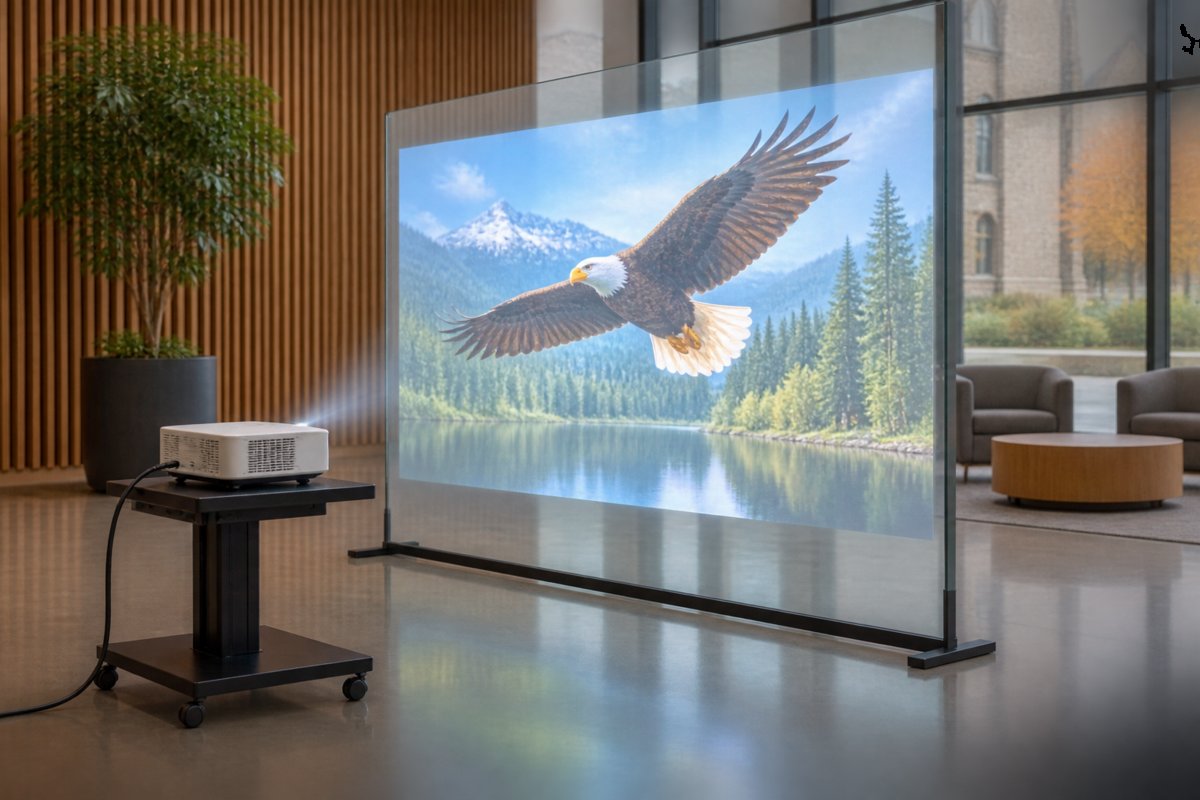
Proper mounting of both film and projector ensures that your window display is crisp, safe, and secure for the long term. Rear projection films are applied to the interior surface of glass or acrylic, preserving the film and allowing easy upgrades or replacements. Make certain that the glass is thoroughly cleaned and free of any oils, adhesives, or residue before applying the film.
The projector is typically placed behind the glass, aligned to project onto the film’s surface area. For DualView film, you may use either rear or off-axis projection, and content can be visible from both street and interior sides. Consider anti-glare measures if your glass faces harsh lighting, but only use approved screen finishes—never anti-glare films (these handle reflections, not image projection itself).
Mounting options vary: projectors can be ceiling-mounted, placed on shelves, or hidden within pedestal enclosures, provided air circulation is maintained. Discuss mounting constraints with your A/V integrator, especially in older buildings with tall windows or custom glass details. Technical guidance is offered for unique installations, from initial drawings to final adjustments.
Navigating Permits and Compliance for Sign and Display Installations
Signage, displays, and window projections in Pennsylvania may be subject to local regulations, which vary by borough, city, and building management. Retail and museum teams in Philadelphia, Pittsburgh, and Harrisburg should review requirements before installing permanent or semi-permanent window displays. If your installation is visible from the street, or includes commercial branding, permits may be needed for signage, illuminated displays, or events.
The City of Philadelphia, for example, includes provisions for special events and temporary signage—review the Special Event Permit supporting documents as a starting point. Always check with your local building, sign, or event office for your project’s specific compliance steps, as restrictions can differ for historic structures, districts, or business zones. Architect or landlord approvals may also be required for modifications to windows or electrical systems.
For traveling exhibits or pop-up experiences, obtain confirmation from venue management or event organizers regarding any display, safety, or electrical use policies. It is best practice to document your installation plan and be prepared to respond to inspection or compliance requests as your project moves forward.
Testing Film Options: The Value of Sample Kits
Ordering a projection film sample kit is the most reliable way to ensure your chosen rear projection film performs as intended in your environment. With Pennsylvania’s distinct seasonal changes—bright summer light and shorter winter days—testing allows you to optimize film type, image color, and projector output for your glass.
Sample kits arrive cut to size, so you can evaluate each film option directly on your window, partition, or acrylic surface. Check the viewing angle, color saturation, and brightness at different hours and weather conditions. This firsthand testing reduces the risk of surprises after installation, and supports better decision-making for retailers, museums, or A/V partners working across diverse Pennsylvania settings.
Rear Projection Films provides technical guidance on using and comparing samples to your projector type and mounting scenario. Only by testing in live conditions can you confidently move forward with a full-size film order tailored to your project’s unique needs.
FAQs: Practical Considerations for PA Projection Film Projects
Can rear projection film be applied to historic or decorative storefront glass?
Yes, rear projection film can be custom cut for a wide variety of glass types, including in historic districts. However, verify with property management and local signage authorities if any restrictions apply. Testing with samples is recommended to assess compatibility with colored, etched, or textured glass.
How does local daylight impact display visibility in different Pennsylvania cities?
Display visibility depends on both film type and daily light levels, which can vary by orientation, urban density, and season across Pennsylvania’s cities. High-contrast films perform better in direct sun or brightly lit rooms. Use the official NWS local forecast to anticipate sunlight, and test your content at peak daylight hours for best results.
Do I need a permit for a rear projection window display?
Permit requirements depend on your city, building type, and whether your display is temporary, commercialized, or visible to the public. Refer to the Philadelphia special event permit documents and consult your local sign or building office to confirm project-specific needs.
Moving Forward: Bringing Brilliant Projection to Pennsylvania Glass
From bustling commercial corridors to cutting-edge museums, projection film transforms glass into dynamic storytelling surfaces. Whether you’re crafting a new storefront display in Allentown, launching an interactive science exhibit in Pittsburgh, or setting up a welcoming lobby in King of Prussia, custom-sized rear projection film opens creative possibilities while supporting compliance and technical reliability.
With Rear Projection Films, you have access to Accent, Definition, Intrigue and DualView projection films, each supporting Pennsylvania’s diverse institutional and commercial needs. Sample kits, custom sizes, and technical advice help simplify your project from planning through to installation.
Ready to discuss your storefront or exhibition display? Request a projection film quote today to explore the best film options for your space.
- PPL Electric Utilities – Power planning and upgrades for commercial installations
- NWS Local Forecast (Philadelphia / Mt Holly) – Monitor local daylight and weather timing for projection events
- Special Event Permit supporting documents – Philadelphia permits and approvals for public-facing displays