
Introduction
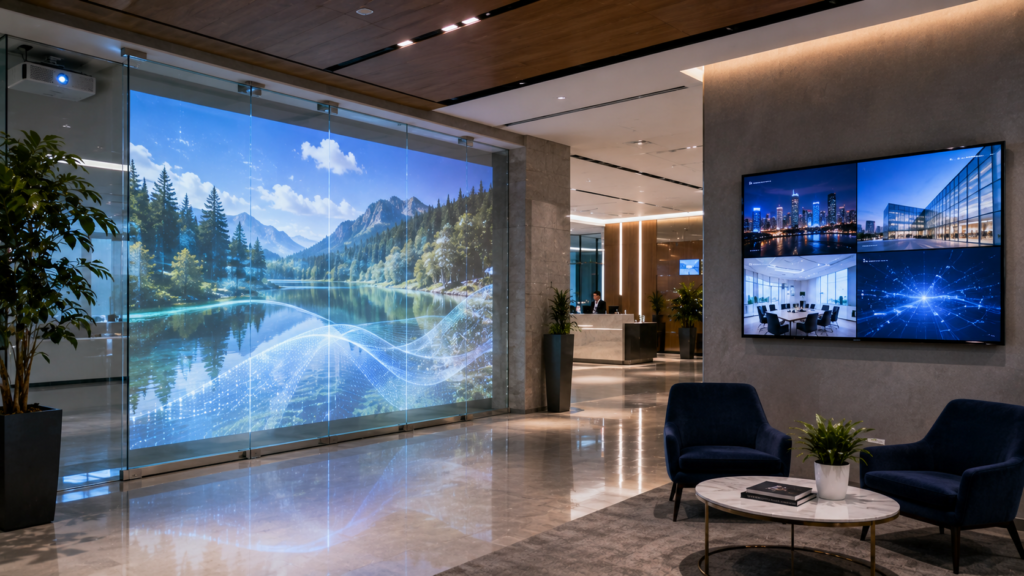
Commercial display films help businesses turn ordinary glass, screens, and customer-facing surfaces into more powerful visual communication tools. Whether a company wants to project onto glass, reduce screen glare, improve storefront visibility, create a digital lobby feature, or make a trade show booth stand out, the right film can make the display look cleaner, brighter, and more professional.
That is where SSIDisplays.com, RearProjectionFilms.com, and AntiGlareFilms.com work together.
Each site can support a different part of the buyer journey. SSIDisplays.com gives commercial buyers access to a broader display technology catalog from Screen Solutions International, including projection films, anti-glare film, transparent displays, digital signage, LED display products, touch solutions, projector enclosures, and custom display systems. RearProjectionFilms.com focuses more directly on rear projection film education, use cases, and glass projection applications. AntiGlareFilms.com supports buyers who need to reduce glare, reflections, and visual washout on screens or glass-based displays.
Together, these websites create a stronger ecosystem for businesses that need better display performance. Instead of treating projection film, anti-glare film, and commercial display hardware as separate decisions, buyers can think of them as connected parts of one visual strategy.
For retail stores, hotels, hospitals, museums, car dealerships, trade show booths, restaurants, corporate offices, and public venues, this matters. A display must do more than turn on. It must attract attention, remain readable, support the brand, and perform in real-world lighting conditions.
Why Display Film Matters for Commercial Buyers
A commercial display only works if people can see it clearly. However, many businesses struggle with lighting, glare, reflections, glass placement, and poor viewing angles. As a result, even expensive display systems can lose impact.
For example, a retail store may install a beautiful window display, but sunlight may wash it out. A dealership may use showroom glass for digital visuals, but reflections may reduce readability. A healthcare lobby may display patient information, but overhead lighting may create glare. Similarly, a trade show booth may use glass or acrylic panels, but the content may not stand out under bright venue lighting.
Therefore, display film selection matters. The right film can improve how content appears on glass, acrylic, Plexiglas, LCD screens, LED screens, or other commercial display surfaces. In addition, film can help businesses get more value from existing architecture.
Instead of adding bulky screens everywhere, businesses can use glass, windows, and partitions as part of the display system.
How SSIDisplays.com Fits Into the Display Film Strategy
SSIDisplays.com is the broader Screen Solutions International platform. It is the best starting point for commercial buyers who need more than one display product or who are still comparing options.
For example, a buyer may start by looking for rear projection film. However, after reviewing the project, they may also need anti-glare film, a projector enclosure, a transparent OLED display, a touch overlay, or digital signage hardware. SSIDisplays.com gives that buyer a larger product ecosystem to explore.
Screen Solutions International offers solutions for:
- Rear projection films
- Dual view projection films
- Anti-glare film
- Transparent OLED displays
- Transparent displays
- Digital signage
- LED video walls
- Digital spheres
- LED floors
- Interactive kiosks
- Touch overlays
- High-bright displays
- Projector enclosures
- Custom experiential displays
Because of this broader catalog, SSIDisplays.com works well for buyers who need a complete commercial display strategy rather than a single product.
For instance, a museum may need rear projection film for one exhibit, transparent OLED for another exhibit, and anti-glare film for an interactive screen. A dealership may need rear projection film for showroom glass, digital signage for service menus, and anti-glare film for high-light customer areas. A hotel may need rear projection film in the lobby, LED displays in the ballroom, and anti-glare film on guest-facing screens.
In short, SSIDisplays.com helps connect the full display ecosystem.
How RearProjectionFilms.com Supports Glass Projection Projects
RearProjectionFilms.com should serve as the focused education and conversion site for buyers interested in projecting onto glass or acrylic. This site can explain rear projection film use cases, benefits, industries, installation considerations, and display ideas in a more targeted way.
Rear projection film is a specialized film applied to glass, acrylic, or Plexiglas. A projector sits behind the surface and projects content onto the film. Viewers see the image from the front side. As a result, businesses can turn glass into a digital display surface without placing a traditional screen in front of the audience.
This makes rear projection film useful for:
- Retail storefront windows
- Corporate lobbies
- Museum exhibits
- Hotel glass walls
- Healthcare waiting rooms
- Automotive showrooms
- Trade show booths
- Restaurant partitions
- Entertainment venues
- Interactive display areas
Additionally, rear projection film gives businesses a clean architectural look. Instead of adding a monitor that feels like an afterthought, companies can make the display feel built into the environment.
For many projects, RearProjectionFilms.com should answer the buyer’s main question: “How can I turn this glass surface into a high-impact display?”
How AntiGlareFilms.com Supports Visibility and Readability
AntiGlareFilms.com fills an important role because glare can hurt display performance. Even when a business chooses the right screen or projection film, lighting conditions can still create reflections, eye strain, or poor readability.
Anti-glare film helps reduce unwanted reflections and improve viewing comfort. It can support displays in bright environments, customer-facing windows, workstations, kiosks, lobbies, service counters, retail locations, ATMs, gas pumps, and other high-light areas.
This matters because glare directly affects user experience. If customers cannot read the message, the display fails. Additionally, if patients struggle to see directions, the sign creates friction. If a shopper cannot see a promotion through reflective glass, the storefront loses selling power.
AntiGlareFilms.com can help educate buyers on questions such as:
- How does anti-glare film work?
- When should a business add anti-glare film?
- Can anti-glare film help with LCD, LED, or plasma screens?
- Can anti-glare film pair with rear projection film?
- What environments create the most glare?
- How does glare affect customer experience?
- Why should commercial buyers test samples before ordering?
Most importantly, AntiGlareFilms.com can help buyers understand that display performance is not only about brightness. It is also about visibility, comfort, contrast, and environmental control.
Why Rear Projection Film and Anti-Glare Film Work Well Together
Rear projection film and anti-glare film can work together when a project needs both digital impact and better readability. Rear projection film creates the display surface. Meanwhile, anti-glare film can help manage reflections and improve visibility in challenging lighting conditions.
For example, a storefront window display may need rear projection film to show digital content on glass. However, if the window faces heavy daylight or bright exterior reflections, anti-glare film may help improve the viewing experience.
Likewise, a dealership showroom may use rear projection film to display vehicle promotions on glass. However, showroom lights, exterior windows, and reflective surfaces can create visual interference. Adding anti-glare strategy to the project can help the display perform better.
This combination can be useful for:
- Retail storefronts
- Car dealership windows
- Corporate lobby glass
- Museum exhibit displays
- Trade show booth glass
- Healthcare waiting room glass
- Restaurant and bar partitions
- High-light commercial interiors
Therefore, buyers should not think about rear projection film and anti-glare film as competing options. Instead, they should think about them as complementary tools.
Commercial Applications Across All Three Websites
The strongest SEO opportunity comes from showing how these three websites support real commercial environments.
Retail Stores
Retailers can use rear projection film to turn storefront glass into digital advertising space. At the same time, anti-glare film can help improve readability in bright windows or mall environments. SSIDisplays.com can support the broader retail display system with digital signage, transparent OLED, and interactive kiosks.
Corporate Offices
Corporate offices can use rear projection film for lobby branding, visitor welcome messages, conference room glass, and executive briefing centers. Anti-glare film can support lobby displays, touchscreen directories, and employee communication screens. Additionally, SSIDisplays.com can help buyers explore other technologies such as LED video walls and transparent displays.
Healthcare Facilities
Healthcare facilities need clear communication. Rear projection film can turn glass walls into patient education or wayfinding displays. Anti-glare film can improve screen readability in waiting rooms, check-in areas, and bright lobbies. Meanwhile, SSIDisplays.com can support larger healthcare display systems, including kiosks and digital signage.
Museums and Exhibits
Museums can use rear projection film for exhibit storytelling, artifact interpretation, and immersive glass displays. Anti-glare film can help reduce reflections on interactive screens or glass exhibit surfaces. SSI’s broader product lineup can also support transparent OLED exhibits, projection systems, and custom experiential displays.
Hotels and Hospitality
Hotels can use rear projection film in lobbies, restaurants, ballrooms, and event spaces. Anti-glare film can improve guest-facing displays in bright areas. Additionally, SSIDisplays.com can support hotel display needs with digital signage, LED video walls, interactive kiosks, and custom display systems.
Trade Shows and Events
Trade show exhibitors can use rear projection film on glass or acrylic booth panels to attract attention. Anti-glare film can help manage harsh venue lighting and improve visibility. For larger booths, SSI can also support transparent OLED rentals, LED displays, and interactive technologies.
Comparison Table: Which Site Supports Which Need?
| Buyer Need | Best Website to Visit | Why It Helps |
|---|---|---|
| Explore full commercial display solutions | SSIDisplays.com | Best for buyers comparing films, displays, signage, kiosks, and custom systems |
| Learn about projecting onto glass | RearProjectionFilms.com | Best for rear projection film education, use cases, and glass display ideas |
| Reduce glare on screens or glass | AntiGlareFilms.com | Best for anti-glare education, screen readability, and reflection reduction |
| Buy or compare projection film products | SSI Projection Film Options | Best for seeing rear projection, dual view, and anti-glare options together |
| Test film before a larger order | Rear Projection Film Samples | Best for comparing film performance in the real project environment |
| Improve bright display visibility | Anti-Glare Film | Best for glare reduction on rear projection films and display screens |
Common Mistakes Buyers Should Avoid
Choosing a Display Product Without Considering Lighting
Lighting can change everything. Before buying film or display hardware, businesses should evaluate daylight, overhead lights, reflections, viewing distance, and glass angle.
Treating Anti-Glare Film as an Afterthought
Anti-glare film should be part of the early planning conversation. If glare becomes a problem after installation, fixing it later can cost more time and money.
Using Rear Projection Film Without Testing Samples
Rear projection film can look different depending on the projector, glass, ambient light, and content. Therefore, sample testing helps reduce risk.
Using Generic Content
A strong display surface still needs strong content. Businesses should use high-contrast visuals, simple messaging, and content designed for the environment.
Forgetting the Full Display System
Film is one part of the solution. Buyers should also plan projector placement, media playback, content management, screen brightness, installation, maintenance, and operating schedule.
Future Trends in Commercial Display Films
Looking ahead, businesses will continue using glass and screens in more strategic ways.
First, storefronts will become more digital. Retailers, restaurants, and showrooms will use glass as an active display surface rather than a passive window.
Second, glare reduction will become more important. As more screens move into bright public areas, businesses will need anti-glare solutions to keep content readable.
Third, interactive glass displays will become more common. Rear projection film can pair with touch technology, sensors, cameras, RFID, NFC, and mobile triggers to create more engaging experiences.
Fourth, hybrid display systems will grow. Businesses will combine rear projection film, anti-glare film, transparent OLED, LED video walls, digital signage, and interactive kiosks to create complete visual environments.
Finally, buyers will focus more on ROI. They will want displays that attract attention, improve communication, reduce friction, and support measurable business outcomes.
Why Choose Screen Solutions International
Screen Solutions International gives commercial buyers access to display film products, digital display technologies, and custom experiential solutions under one ecosystem. That matters because most real-world projects do not need only one product. They need the right combination of film, hardware, content, installation planning, and support.
SSIDisplays.com helps buyers explore the larger display technology catalog. RearProjectionFilms.com helps buyers understand how to turn glass into projected display space. AntiGlareFilms.com helps buyers improve visibility and reduce reflection problems that can weaken display performance.
Together, these websites help businesses create better display experiences from planning to installation.
For project support, call 888-631-5880 or visit:
Final Takeaway
Commercial display films can help businesses turn glass, screens, and customer-facing surfaces into stronger visual communication tools. Rear projection film creates dynamic digital displays on glass. Anti-glare film helps improve visibility and reduce reflection problems. SSIDisplays.com connects those film solutions with a broader catalog of commercial display technologies.
In summary, these three websites work best as a connected system. SSIDisplays.com supports the full display solution. RearProjectionFilms.com supports glass projection education and use cases. AntiGlareFilms.com supports glare reduction and screen readability.
For retailers, hotels, healthcare facilities, corporate offices, museums, dealerships, restaurants, and trade show exhibitors, that combination can improve customer experience, display performance, and long-term business value.
Sources
Internal Links
- SSIDisplays.com
- SSI Projection Film Options
- SSI Rear Projection Films
- Definition Rear Projection Film
- Accent Rear Projection Film
- Intrigue Rear Projection Film
- Rear Projection Film Samples
- Anti-Glare Film
- Ultra Clear Anti-Glare Film
- RearProjectionFilms.com
- Transparent Interactive Rear Projection Displays
- AntiGlareFilms.com
- Benefits of Anti-Glare Film