A Michigan Guide to Rear Projection Film for Glass Displays
Discover how to plan and install rear projection film in Michigan. This guide covers film selection, sizing, brightness, power, mounting, and permits for glass and acrylic displays.
Why Rear Projection Film for Michigan Glass Displays?
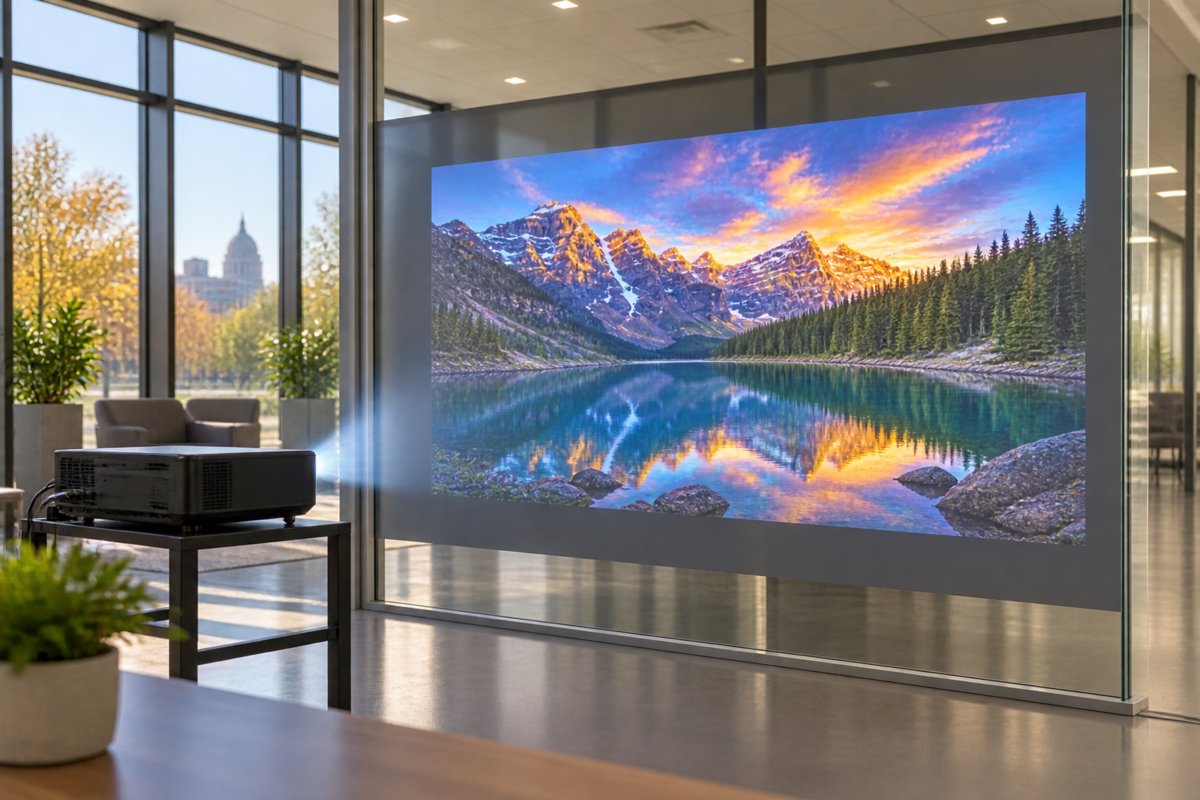
Across Michigan, from Detroit’s bustling retail avenues to vibrant university museums in Ann Arbor and dynamic convention spaces in Grand Rapids, glass surfaces offer high-impact opportunities for digital projection displays. Rear Projection Films, a division of Screen Solutions International (SSI), ships custom-cut projection film nationwide—including the films showcased in this guide. With options that transform storefronts, visitor-center glass, and event booths into dynamic screens while maintaining a clean architectural appearance, rear projection film opens new creative possibilities for retailers, attractions, and brand marketers in the state.
Rear projection film sticks to glass or acrylic, becoming a bright display when lit by a projector from behind. In Michigan, where local daylight, snow reflections, and indoor lighting all vary with the season, correct planning ensures your content pops at every hour. This practical guide covers every step: selecting film types, sizing and placement, balancing your projector with local daylight conditions, planning for electrical power, mounting, and understanding permit needs for your project.
Choosing the Right Rear Projection Film for Your Project
Not all projection films are created equal—the setting and lighting in your Michigan location will influence which film delivers the best visuals. For retail and hospitality storefronts, the frosted white Rear Projection Accent Film is a general-purpose film suited for most standard glass displays, easily turning windows into bright, full-color screens. Busy lobbies or exhibit halls with bright lights or direct sun may do better with a high-contrast, dark gray option such as Rear Projection Definition Film, which helps images look crisp even in more challenging ambient light.
If you plan to create an eye-catching, floating effect—like logos or art installations in glass partitions—the translucent Rear Projection Intrigue Film may be the best fit. For unique applications, such as trade show displays where you want viewers on both sides of the glass to see the content, DualView Projection Film enables two-way visibility, working well with short-throw or off-axis projectors and attracting foot traffic from every angle.
With environmental conditions in Michigan ranging from intense summer brightness to cloudy winter afternoons, take advantage of projection film samples to physically test films on-site before you commit. This hands-on testing can help you determine which option delivers the sharpest imagery in your specific window or glass display.
Sizing the Projection Film for Michigan Glass and Acrylic
Proper sizing is essential for a seamless visual effect and smooth installation. Film from Rear Projection Films is custom cut to your project dimensions, ensuring a clean edge-to-edge fit on storefront windows, glass walls, acrylic partitions, and more. If your display is part of a multi-panel curtain wall common in downtown Detroit, or a single door sidelight in Grand Rapids, start by accurately measuring the visible area of your glass. Include several inches of margin if glass is framed or mullioned, but avoid covering seals or gaskets unless needed.
For oversized locations or custom shapes, provide the required width and height so the film can be precisely cut. Review plans for any logos or cutout areas in advance, allowing the film to be fabricated accordingly. If you’re testing film samples, stick them directly to the intended glass surface and preview different aspect ratios and coverage amounts in real light and at intended viewer distances to ensure the display will catch attention from passing pedestrians or visitors.
If you are working with a museum or exhibit space requiring temporary or removable displays, film can also be applied to portable acrylic sheets. Confirm that the mounting surface is clean, smooth, and free of dust or fingerprints prior to installation for the best possible clarity and adhesion.
Matching Projector Brightness to Michigan Daylight
One of the keys to a successful storefront window projection film installation is balancing projector brightness with Michigan’s variable daylight. Areas with full sun exposure—such as Lansing’s street-level retail or Kalamazoo’s main drags—require higher-brightness projectors, especially when using darker films like Definition. Those facing north windows, or in lobbies and convention centers with significant overhangs, may be able to use standard projectors or lighter Accent film types.
For the most accurate planning, check real-time sunlight and ambient light levels for your location using the National Weather Service. This resource offers up-to-date forecasts and current conditions to anticipate when direct sun or cloud cover might affect your display visibility. Projectors with flexible brightness settings help optimize visuals and power during Michigan’s ever-changing weather.
Before ordering film, use projection film samples and test with your existing or candidate projector. Place the projector behind the glass with film applied, experiment in different weather and lighting conditions, and view from intended audience distance—making careful note of any hot spots, fade, or color shifting under different sun angles or times of day. This testing ensures you choose both the right film type and projector brightness for your Metro Detroit, Ann Arbor, or West Michigan installation.
Planning Electrical Power for Your Projection Display
Reliable power is crucial for consistent operation of glass displays using projection film. If your Michigan location is in an older storefront, museum, or temporary event venue, assess available outlets and power capacity beforehand. Many projectors can run on standard voltage, but check your equipment requirements and account for any additional gear, such as media players or control devices, that will share the same circuit.
For permanent installations—like corporate lobbies in Troy or institutional displays in East Lansing—consult with your facilities team or a licensed electrician to ensure circuits are adequate and that cabling will be neatly routed. Trade shows and temporary activations, such as those set up in Detroit’s TCF Center or suburban event halls, may require power drop requests or coordination with event electricians. Refer to the National Weather Service if severe weather or outages might interfere with power availability during planned display times.
Finally, consider backup or surge protection if your operation is critical, and plan for convenient access to projector controls or ventilation as required by your equipment. Hide extension cords securely and keep all power away from high-traffic areas to maintain both visual impact and safety.
Mounting, Projector Placement, and Display Setup
The mounting approach for your projection film will influence the clarity and durability of your display. Films from Rear Projection Films are designed for straightforward application to clean interior glass or acrylic surfaces. Start by cleaning the glass thoroughly to remove oily residues and dust, which can degrade image quality. Then, align the custom-cut film to your marked measurements, applying with a squeegee or soft applicator from the center outward to avoid air pockets. Follow manufacturer guidelines for best results.
Determine projector position based on the film used and visitor viewing paths. For typical retail and museum settings, the projector is placed behind the glass in a protected area, ensuring alignment with the film’s display zone. Off-axis mounting is possible with certain films, such as DualView projection film, which works well in tight spaces or multi-angle venues.
For temporary setups—like trade-show booths—mount both projector and film to removable structures using lightweight acrylic panels. Secure all equipment to avoid vibration or shifting, especially if foot traffic or transit is anticipated. Periodically inspect installed films for dust or smudges and clean gently with approved products to maintain a pristine image.
Michigan Sign and Window Display Permitting Guidance
Permitting and signage requirements for projection film installations in Michigan vary by municipality, venue, and project type. Factors include the intended duration (temporary versus permanent), whether the film features advertisements, and local zoning for digital or illuminated signage. In Detroit, Grand Rapids, and other major cities, your project may fall under local sign codes, while trade shows and conventions often have venue-specific rules managed by event organizers.
Start by checking with the relevant local building, sign, or event office before planning your installation. For public-facing storefronts in busy business districts, additional signage restrictions may apply. Museum and gallery installations often have different requirements dependent on whether displays are for public art, education, or sponsorship. If your site is in a historic district or central business zone, additional reviews or permissions may be necessary.
Because requirements are project-dependent and subject to change, always confirm up-to-date procedures for your specific city or county. Reference the local government website or reach out to building officials for guidance, allowing sufficient time for application and review, if any. For trade shows or temporary events, consult the exhibitor manual or venue manager for their current policies.
Sample Kits and Technical Guidance for Michigan Projects
Because lighting, glass types, and ambient conditions vary widely from Traverse City to Kalamazoo, Rear Projection Films recommends ordering projection film samples to test prior to a full purchase. By testing in the real environment where your display will operate, you can compare how products like Accent, Definition, DualView, and Intrigue films perform behind your specific window glass or acrylic. Testers see firsthand which film type maintains vivid color and clarity in both bright daylight and Michigan’s frequent overcast conditions.
Rear Projection Films provides technical guidance on film selection, projector placement, and installation approaches. If you’re considering a complex multi-location rollout, integrating several storefronts in places like Ann Arbor or Lansing, or planning a high-visibility public installation, reach the team by phone or email for advice tailored to your project details. Custom sizes are available, cut and shipped from the California office to ensure a ready fit for your unique glass measurements.
Film application and test results are highly influenced by local seasonal weather and daylight patterns, so adding a sample test during every planning phase helps ensure a visually striking and reliable display for visitors year-round.
Frequently Asked Questions
Where should I apply rear projection film—for inside or outside glass?
Rear projection film is designed to be applied to the inside surface of glass or acrylic for the best image protection and visual clarity. This also helps protect the display against Michigan’s varied weather conditions throughout the year, as the film is never exposed directly to outdoor elements.
Can I use rear projection film outdoors in Michigan?
While the films are not applied to outdoor surfaces, you can use them to create an outdoor-facing display by projecting content onto film placed inside storefront or exterior glass windows. Always test a sample first to see how film and projector perform together under your specific site’s daylight, reflections, and viewing angles.
Do I need a permit for my window projection film display in Michigan?
Permit requirements for projection film displays vary depending on location, display duration, and signage regulations. Always check with your local building, sign, or event office before installing a new display to understand the latest rules for your project type and avoid delays.
Start Your Michigan Projection Film Project
Whether you’re revamping a retail storefront on Grand River Avenue, creating an interactive lobby in Troy, or coordinating an exhibit booth at a Michigan convention center, Rear Projection Films can help you transform glass or acrylic into vibrant digital displays. Explore a complete range of films—including Rear Projection Film, Accent Film, Definition Film, DualView, and Intrigue Film—custom cut to your measurements and supported by technical guidance every step of the way.
Request a projection film quote to start planning your Michigan display, or contact our team for film samples and advice on your next project.
Local Resources for Michigan Planning:
- National Weather Service—For up-to-date Michigan weather forecasts and daylight planning.