A Practical Guide to Rear Projection Film Displays in North Carolina
Explore step-by-step guidance on choosing and planning rear projection film displays for glass in North Carolina’s retail, museum, and exhibit spaces.
Understanding Rear Projection Film for North Carolina Projects
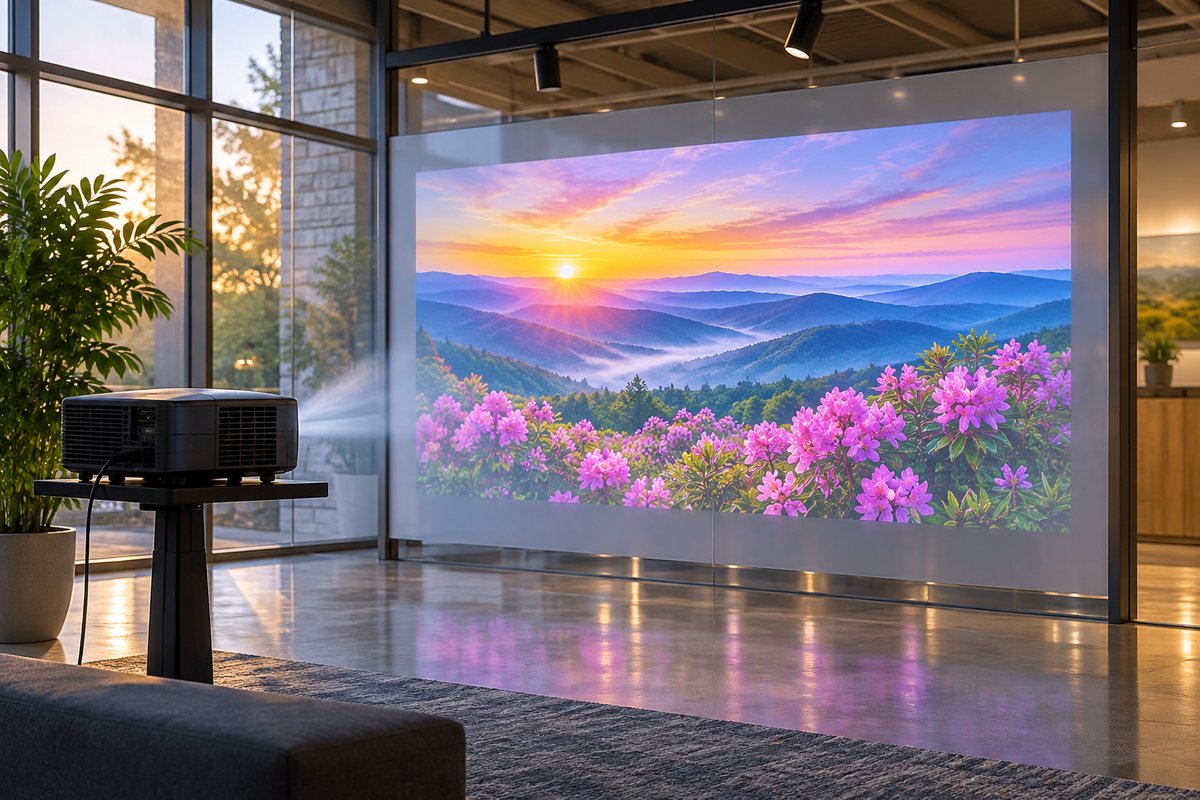
Rear projection film transforms glass surfaces—like storefront windows, museum partitions, and acrylic signage—into striking digital displays. For North Carolina settings ranging from the vibrant retail avenues of Charlotte and Raleigh to museum corridors in Greensboro and trade show venues in Asheville, this technology unlocks dynamic visual storytelling possibilities. As a division of Screen Solutions International, Rear Projection Films offers custom solutions cut to your project and shipped from our California office, ensuring a tailored fit for your unique requirements.
Every rear projection display starts with a purpose—whether eye-catching retail, interactive science center installations, or brand-driven event signage. Selecting film types is the first major step, followed by considerations for local lighting, power, and compliance. This guide walks North Carolina retailers, museum planners, corporate AV teams, and sign companies through the process, using available sample kits and technical guidance to optimize results for the state’s varied environments.
Testing and preparation are always recommended. Since conditions differ from bustling urban centers to smaller towns, begin with projection film samples to check clarity and brightness on your own glass, acrylic, or partition—even before ordering a full custom cut.
Choosing the Right Film for Your North Carolina Environment
Your setting and ambient light will guide your selection of projection film. North Carolina’s venues vary from sunlit storefronts to controlled corporate lobbies, each requiring a specific film for optimal impact. The general-purpose Rear Projection Accent Film provides a frosted white surface ideal for most retail glass. It balances contrast and uniformity and is a popular choice for internal partitions and front-of-store messaging.
For spaces with elevated ambient light—like street-level windows in downtown Raleigh, Greensboro, or Wilmington—the Rear Projection Definition Film delivers higher contrast for vivid images. Its darker surface helps outshine bright indoor and outdoor lighting, making content visible even in open, sunlit environments. For floating, holographic-style visuals in gallery or event settings, Intrigue Film produces a translucent effect, giving digital images a remarkable, see-through presence.
Dual-sided displays, often used in busy shopping centers or trade show booths, benefit from DualView Projection Film. This film can show content viewable from both sides of the glass, offering flexibility in high-traffic areas. Every project can benefit from testing with a sample kit to observe how each film type performs in your real lighting conditions.
Measuring and Sizing Film for Storefront and Venue Glass
Accurate measurement is essential, whether outfitting a boutique on Fayetteville Street or a visitor center glass wall in Durham. Begin by measuring only the visible area where projection is desired—taking care to account for hardware, window dividers, and borders that might obstruct the image.
Films arrive cut to your size specifications, so it’s important to double-check measurements for width and height, leaving a small margin or border where needed. For unusually shaped windows or partitions, trace the outline or draft a scale diagram for reference when ordering your custom rear projection film. Technical guidance is available during the ordering process if you have questions on fitting unusual glass or acrylic sizes.
Remember, projection films such as Accent, Definition, Intrigue, and DualView work only when installed on glass or acrylic—not directly on walls or opaque surfaces. To minimize visible seams in wide installations, consider segmenting into sections with thin joints aligned to existing architectural lines.
Balancing Projector Brightness with Local Daylight
Outdoor and indoor ambient light varies significantly across North Carolina—sunny afternoons on South Tryon Street in Charlotte present different challenges than shaded museum alcoves in Chapel Hill. Projector brightness should be matched to both the film type and the specific daylight conditions of your space for the most visible, impactful results.
High-contrast Definition films help combat ambient brightness, enabling successful displays even in areas with strong sunlight or heavy fluorescent lighting. Accent film works well in more controlled, shaded spaces. The more ambient light you have (such as in open retail districts or corporate lobby windows), the more important it becomes to select both a high-output projector and a film optimized for contrast.
We recommend working with your AV supplier to match projector performance to your glass, film, and operating hours, using a projection film sample kit to evaluate image quality before final installation. Always review your site’s daylight patterns before choosing equipment and film, and test during expected viewing hours for accuracy.
Power Planning for Your Display
Projector installations require reliable power and, often, discreet cable management. For new display areas or renovations in both older and modern North Carolina buildings, it’s wise to plan ahead to avoid visible cords and ensure continuous service. If you anticipate needing new circuits, dedicated outlets, or upgrades, the NC Public Staff utility resource will help you identify which of North Carolina’s major electric companies to contact for new service information or consultation.
Your AV integrator or in-house facility team should confirm available power, especially for more demanding multi-projector or large glass displays. Some spaces—such as convention centers or older storefronts—may have limited capacity or require temporary solutions, so check well ahead of any event or remodel. Battery-powered projectors are rare, so most practical installations benefit from planning a permanent, code-compliant electrical feed.
When routing power, keep accessibility, safety, and local codes in mind. Cable covers, floor outlets, and wall-mounted boxes all help maintain a neat appearance along the entire state’s Main Streets and high-traffic venues.
Mounting: Secure, Discreet and Accessible Installation
Successful rear projection setups in North Carolina’s retail districts, museums, and exhibit halls depend on secure, non-intrusive mounting—both for the film and the projector. Projection film is always applied to the inside of glass or acrylic for protection and image clarity. A clean surface is essential before installation; technical guidance is available for best application practices.
Projectors must be positioned behind the film, with alignment tuned for a sharp, rectangular image. Mounting equipment varies: shelf mounts, ceiling brackets, or enclosed rear-projection cabinets are commonly used, depending on your space’s layout and visibility demands. For DualView projects, remember this film can be matched with short-throw or off-axis projectors for more flexible placement.
Maintenance is simplest when the projector is easily accessible for lamp changes, filter cleaning, or service. If your installation is temporary—like for state trade shows in Charlotte or Raleigh—consider using secure but removable mounting hardware. Permanent setups may need to address vibration and security concerns, particularly in busy public-facing spaces.
Permits and Local Display Requirements: What to Check in NC
Display permitting and regulatory needs in North Carolina depend on your city, county, and project type. Requirements can differ dramatically between municipalities such as Charlotte, Greensboro, and Asheville. Signage, window displays, temporary event installations, and building modifications may each have separate rules.
Always check with your project’s local building, sign, or event office for current permitting and approval steps before installation—requirements may involve the city or county office, fire marshal, or a convention organizer. This is especially important for retailers in historic districts or locations with strict signage regulations. For larger venues or nonprofits, check if coordination with event managers or a facility manager is needed.
If your display needs new wiring or power upgrades, your utility company can advise on temporary or permanent service (see: NC Public Staff utility guide). Researching these requirements in advance can help you avoid costly delays and ensure full compliance across major metro areas and smaller towns alike.
Additional Tips: Testing, Environment, and Technical Guidance
North Carolina’s weather brings humidity and temperature swings—reason enough to always apply rear projection films inside glass or acrylic for optimal protection. Anti-glare films intended for reducing reflections on screens and glass are a separate product and should not be used as a projection surface. Before finalizing any installation, use a sample kit to test viewing angles, brightness, and clarity in sunlight and shade unique to your site.
Arrange content layout so that messages remain legible from common viewer positions—whether at street level in a busy retail area or within a museum exhibit corridor. For wide and tall installations, split content over multiple projectors or panels only if the physical layout supports clean seams and uninterrupted sightlines.
Technical guidance and custom film sizing are available from Rear Projection Films for all types of North Carolina projects. For questions as you plan, contact our team by phone or email, review product details online, and always verify your compliance steps with relevant local agencies or event organizers.
FAQ: Rear Projection Film in North Carolina
How do I know which projection film will work in my lighting?
Ambient lighting varies greatly across North Carolina venues. We advise using projection film samples to conduct site-specific tests in your intended setting—try several film types at different times of day to judge clarity and contrast before making your final choice.
Is it possible to cut projection film to any size or unusual shape?
Yes, films are supplied custom cut to fit your project, whether for standard storefront rectangles or custom partitions. For unique shapes, clear measurement or a scaled diagram helps ensure a perfect fit—technical team members can advise on ordering for unusual needs.
What permits or approvals might be needed for window projection displays?
Permit requirements depend on your city, county, event, and installation type. Check with your local building, sign, or event office for specifics, and consult the NC Public Staff utility resource if your display will require electrical upgrades or a new power connection.
To discuss your project’s needs, order samples, or receive personalized technical guidance, Request a projection film quote from Rear Projection Films today.