
A Texas Guide to Choosing and Installing Rear Projection Film
A step-by-step guide tailored for Texas retailers, attractions, and AV professionals: how to select, size, and install rear projection film on glass, with practical advice on projectors, local daylight, power planning, and permitting.
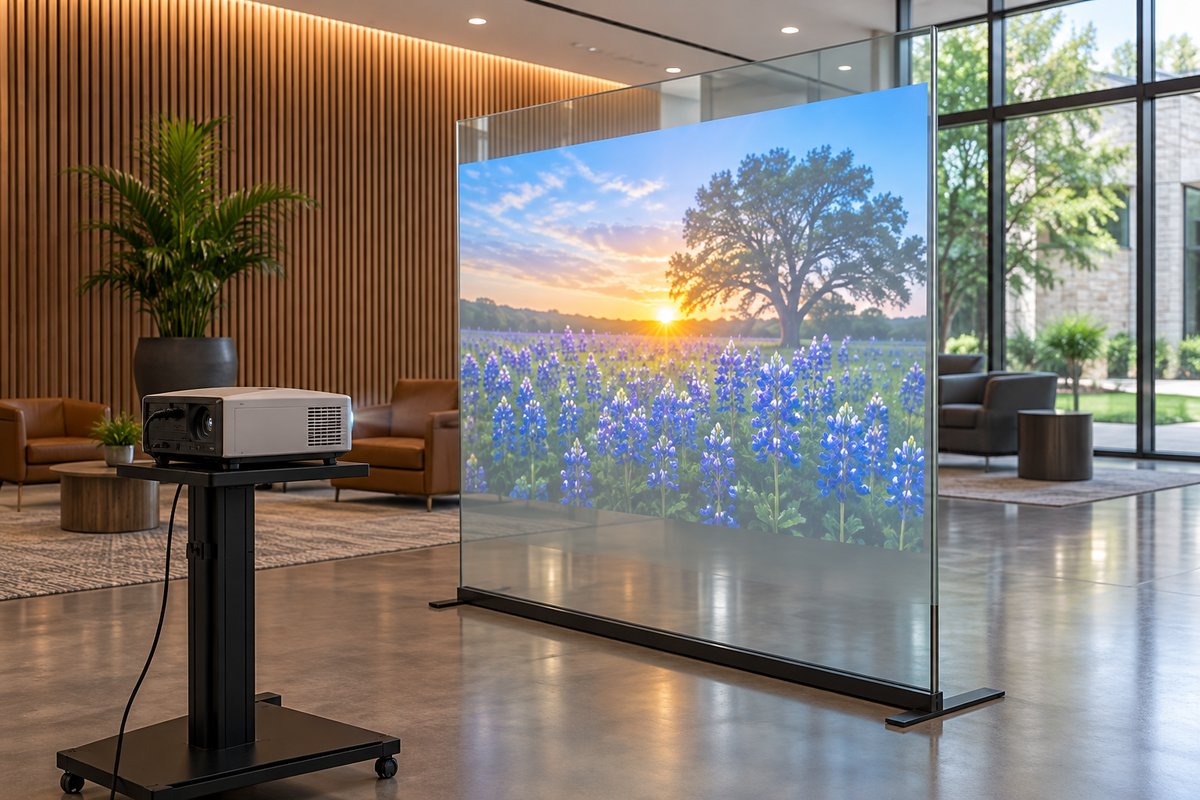
Understanding Rear Projection Film in Texas Environments
Texas storefronts, event venues, and attractions face unique display challenges, with intense sun, vast window spaces, and vibrant cityscapes. Rear Projection Films, a division of Screen Solutions International (SSI), specializes in projection film that transforms storefront glass, glass partitions, and acrylic into vivid dynamic displays using any standard projector—making it possible to turn ordinary windows into attention-grabbing digital signs or immersive experiences. But to achieve professional, day-bright results, especially in busy retail districts or major convention centers from Dallas to Houston and Austin, careful planning is key. This guide walks you through every step, from choosing the right film type to navigating local requirements in Texas.
Projection films are applied to the inside of glass or acrylic and illuminated by a projector placed behind. Several specific films are available; Accent is frosted white and general-purpose, Definition is dark gray for bright ambient light, Intrigue creates floating effects, and DualView handles two-sided viewing. Custom sizing and samples are available to test daylight conditions onsite before ordering.
Choosing the Right Projection Film for Texas Settings
Choosing the right film depends on the space, ambient light, and intended impact. For many Texas retailers and museums with broad windows or glass lobbies, visibility in bright, sunlit environments is a central concern. Accent Film delivers a clean frosted look suitable for most standard storefronts seeking privacy and vivid digital displays, while Definition and Definition Pro Films—dark gray, high-contrast options—excel in brightly lit or direct-sun rooms typical in Texas metro areas.
If you want an eye-catching, floating-image effect for a product launch, science exhibit, or lobby installation, Intrigue Film is designed for maximum transparency. For locations desiring to project from both sides of the glass, such as in high-foot-traffic retail settings or convention displays, DualView Projection Film allows viewing from inside and outside, and works well with short-throw or angled projectors.
Because light varies dramatically between a Dallas shopping corridor, Houston’s downtown towers, and San Antonio’s event spaces, ordering a projection film sample kit is highly recommended. Test different films at different times of day to see which delivers the desired brightness, contrast, and image quality before custom ordering.
Sizing Your Film for Glass Storefronts or Partitions
A precise fit is essential for a crisp display edge and professional look. Rear projection film is available in custom sizes, cut to fit the exact dimensions of your glass panels or acrylic sheets—whether you’re working with full storefront windows, shaped lobby dividers, or museum gallery glass. Begin by measuring the inside area of the glass you wish to project onto, accounting for any frame overlaps or design features.
In Texas, window and partition glass comes in a wide variety of shapes and installations, from tall retail displays in Austin shopping centers to unique curved museum glass walls. Take accurate inside measurements and note any irregularities. Film is applied to the glass’s interior, protecting it from cleaning activities and environmental exposure. Avoid films marketed solely for anti-glare, as these are not projection surfaces and serve a different purpose than rear projection applications.
For guidance on custom sizing, contact Rear Projection Films with your measurements. Technical guidance is available, and using a sample lets you confirm exact sizing and install placement before committing to a final cut.
Matching Projector Brightness to Texas Daylight
Texan cities and attractions experience intense sunlight and extended daylight hours, particularly in retail districts with south or west-facing glass. To ensure your content is visible and impactful, it’s critical to select a projector with brightness appropriate for the film type and your site’s lighting conditions. Definition and Definition Pro films can help maximize contrast in these high-ambient-light environments, as they are engineered to reject some external light and help projected images stand out.
When planning a display for a Houston convention center, Dallas storefront, or San Antonio exhibit, assess how much direct daylight the glass receives. Observe the space at multiple times—morning, midday, and sunset—and test films with your projector using a sample kit for optimal performance. Avoid relying solely on theoretical brightness values, as actual results depend heavily on site factors.
To plan for the impact of Texas weather and changing daylight, consult the NWS Austin / San Antonio Weather Forecasts. Timely forecasts can help you prepare for bright or overcast conditions, especially when scheduling major visual displays or preview events.
Power Planning: Reliable Electricity for Your Display
Depending on the scale of your projection installation—whether a simple pop-up retail sign or a large dual-sided corporate lobby wall—appropriate power delivery and reliable outlets are a necessity. Most projectors perform best with clean, consistent power and protection from surges or outages, especially in busy urban areas with shared circuits.
If you’re developing a permanent installation in a Texas commercial building, familiarize yourself with your site’s electrical layout and the availability of outlets near the display glass. Planning for surge protection or an uninterruptible power supply can help keep the display running smoothly during Texas thunderstorms. For setups in multi-tenant spaces, consult your property manager about additional power requirements or load limitations.
To confirm local electrical service providers or find utility contacts across the state, refer to the Texas Public Power Association Member Utilities listing. Coordination with local utilities may also be useful if adding new circuits or considering larger-scale, multi-window projection projects.
Mounting the Projector and Film for Secure, Long-Term Use
Proper mounting is crucial to achieving a bright, reliable, and safe display. Projectors can be ceiling-mounted, placed in custom enclosures, or positioned on secure rear shelving. For two-sided displays with DualView Projection Film, consider short-throw or off-axis mounting and allow enough space behind the glass for service and airflow.
The projection film itself applies to the glass’s inside surface. Follow the manufacturer’s instructions and perform the installation in a clean, dust-free environment to avoid air bubbles or debris under the film. Some film types, like Intrigue Film, require extra care due to their high transparency or visual effects. Take your time with placement and alignment for seamless edges and to match content framing.
Planning for maintenance is wise; ensure easy access to both the rear of the glass and to the projector for lamp changes or alignment adjustments. Engaging AV integrators or experienced sign companies can simplify complex or large-format projects.
Permits and Local Approval for Signage or Display Installs
Texas cities and counties vary greatly in their permitting requirements for window displays, digital signage, or glass-mounted installations. Regulations can depend on factors like district designation, display size, type of media, or whether the display projects onto a public sidewalk or street. Some cities treat rear projection storefront displays as signs, others regulate only if elements are visible from the exterior or powered continuously.
It is essential to check permit and inspection requirements before beginning any major installation—from Houston’s downtown to Dallas historic districts. Start by consulting the City of Texas City Permits & Inspections online portal as a reference for typical municipal processes; your own city or venue office can provide specifics on signage, electrical, or event display needs. Also, be aware that requirements may change for trade-show or temporary event displays versus permanent retail installs.
Project teams should prepare drawings, film specifications, and glass details in advance, and factor in schedule time for local approvals to avoid display delays.
Practical Tips for Texas Retailers, Attractions, and Integrators
Each Texas metro area has its own mix of weather, building codes, lighting, and display goals. From ultra-modern office lobbies in Houston’s energy corridor to eclectic arts venues in Austin and family destinations in the Dallas-Fort Worth metroplex, the right projection film and setup delivers professional impact. Sample kits allow live tests against your typical lighting and glass, helping retailers and museum staff compare Accent, Definition, Intrigue, and DualView options side-by-side.
Integrators planning for national brands or multi-location rollouts can collaborate with SSI for technical support, custom sizing, and up-to-date product recommendations. For ongoing performance, keep projectors and glass clear of obstructions, monitor changes in ambient light throughout the year, and periodically check mounting hardware for safety.
While anti-glare films can help with reflections on TV or monitor screens, only specialized rear projection films are designed to produce vivid, rear-projected images on glass. Apply films to the glass’s inside face and avoid direct spray cleaning until the adhesive sets.
Rear Projection Film in Texas: FAQ
What is the best way to determine which rear projection film will look brightest in my Texas storefront?
The most effective approach is to order a projection film sample kit and try each type (Accent, Definition, Intrigue, DualView) on your glass during a typical daytime period. Evaluate image quality, contrast, and visibility at various times of day, and seek technical guidance if you have unique lighting or glass challenges.
How do I know if I need permits for my rear projection window display?
Permitting requirements vary throughout Texas, and can depend on display size, whether it is visible from public spaces, and building codes. Start with your city’s sign and building office, such as the Texas City Permits & Inspections portal, to understand your local requirements and timelines. Always allow lead time for reviews and plan for changes in project scope or location.
Where can I find information about my local electric utility when planning a new projection display?
For a list of public power providers and municipal utilities in Texas, check the Texas Public Power Association Member Utilities directory. This resource can connect you with local contacts for power supply, upgrades, and installation support.
Ready to turn your Texas glass into a vivid display? Request a projection film quote now and get technical guidance, custom sizing, and practical support for your next project.
Useful Texas Resources:
Texas Public Power Association Member Utilities – Utility directory across Texas
City of Texas City Permits & Inspections – Online permitting and inspections for reference
NWS Austin / San Antonio Weather Forecasts – Local daylight and weather conditions for display planning