A Practical Guide to Rear Projection Film for Washington State
Discover how to choose and install rear projection film in Washington State’s retail, museum, and corporate settings—covering film options, sizing, brightness, power, and local planning details.
Understanding Rear Projection Film Technologies
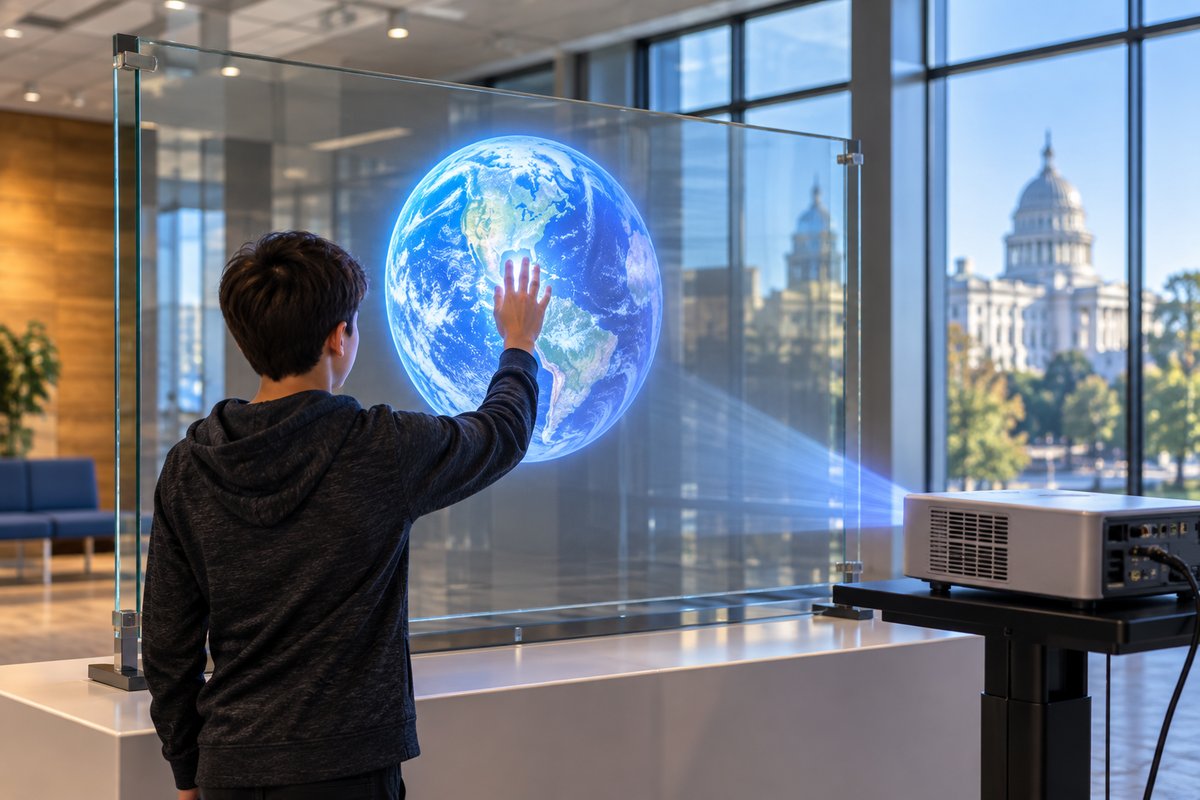
Rear projection film transforms ordinary glass or acrylic surfaces into dynamic digital displays, elevating storefronts and interactive experiences across Washington’s retail districts, museums, and event venues. By applying a specialty film—such as the Rear Projection Film—to an interior window or panel, you create a surface that displays vivid images when illuminated from behind by a projector. For projects across Seattle’s downtown, Tacoma’s retail corridors, Bellevue’s corporate campuses, and Spokane’s museums, these solutions make digital signage possible without compromising visibility or aesthetics.
Choosing among the main film types depends on your display’s goals and lighting conditions. Rear Projection Accent Film provides a frosted, white, general-purpose effect that suits most standard indoor environments. If your project is in a bright room, such as a glass-walled visitor center or busy convention lobby, the Rear Projection Definition Film and its Pro variant offer high-contrast dark gray surfaces that help images stand out even with ambient light. For floating, holographic effects on glass walls or meeting rooms, the Rear Projection Intrigue Film creates an attention-grabbing transparent screen. For situations that demand a two-sided presentation—such as street-facing retail or double-sided wayfinding—the DualView Projection Film enables projection viewable from both sides of the glass.
Each film is applied to the inside of the glass or acrylic for protection and improved image clarity. Since local environments vary dramatically—from the overcast Puget Sound to the bright, dry conditions of Eastern Washington—testing is essential. Projection Film Samples are available so you can evaluate real-world performance before ordering custom-cut film for your project.
Measuring and Sizing Film to Your Glass
Precise measurement ensures a professional finish, optimal image area, and easy installation. Start by cleaning and measuring the width and height of your glass, whether it’s a storefront window, partition, or tradeshow panel. For seamless visuals, plan for the film’s edges to be slightly inset from the seals or frames, avoiding interference with weatherstripping or metal trims. In large, multi-panel installations—common in museums or airports—choose whether to cover each pane individually or order one continuous film for a more unified effect.
The flexibility of custom sizing is key. At Rear Projection Films (a division of Screen Solutions International), every order is cut to your specified dimensions at our California office, helping you achieve the exact look and fit required by your Washington project. Remember that complex window shapes or curves—seen in certain gallery or retail environments—may require professional measuring and trial installations using sample kits before committing to a full order.
Consult with your AV partner or integrator to match your projector’s native resolution and aspect ratio with the planned display size. For temporary displays—like those in tradeshow booths at the Washington State Convention Center—or in pop-up retail concepts, measuring the available glass and mapping out projector distance ahead of time prevents surprises during setup.
Matching Projector Brightness to Washington Daylight
Washington’s wide range of daylight—from Seattle’s consistent cloud cover to the bright, sunlit shops of Spokane or Yakima—means projector selection is a critical factor. High-contrast films like the Rear Projection Definition Film perform particularly well in environments with high ambient light, common in open-plan corporate lobbies or glass atriums in Bellevue and Redmond.
Start by assessing the typical lighting in your space during display hours. Is your glass exposed to south-facing sun? Does street lighting hit your window after sunset? For these challenging conditions, a brighter projector paired with the right film is usually necessary. The use of DualView Projection Film can maximize visibility in open and public settings where viewers approach from multiple directions.
If your display location changes seasonally—which is common for festivals, storefront promotional campaigns, or science center events—plan for local weather variation. The National Weather Service Spokane office provides regional climate outlooks helpful for planning projection hours and adjusting projector settings to maintain clear images year-round.
Planning Power and Electrical for Projection Film Displays
Every rear projection film display relies on a stable, appropriately-rated electrical setup. Whether you’re planning a permanent window installation for a major retailer in Tacoma or a temporary display at a trade show in Seattle, understanding your electrical needs helps ensure reliability and safety. Projectors often require dedicated circuits, and some installations may need upgraded power service, especially when deploying several projectors across large glass facades.
Early in the planning phase, confirm available power sources and consult with a licensed electrician as needed. For significant upgrades—such as new circuits, outlets, or higher amperage to support high-brightness projectors—reference the Seattle City Light construction service guide, which outlines applications for new or upgraded electric service throughout the metro area. Comparable services exist in other Washington cities—check with local utilities for guidelines specific to your site.
Cable routing, projector mounting location, and ventilation must all be considered during electrical planning. For historic buildings or unique museum environments, work with building managers to meet code requirements, preserve heritage features, and minimize disruption during power installation.
Mounting Projectors and Installing Film
The success of any rear projection film installation depends on projector placement and secure, bubble-free film application. In most setups, the projector is mounted behind the glass, either ceiling-suspended, shelf-mounted, or positioned on a secure cart for mobile deployments. Short-throw and off-axis projectors are well-suited to narrow spaces such as small retail stores or exhibit cubicles—a practical fit for DualView Projection Film in high-traffic public areas.
Installing the film requires a carefully cleaned glass surface to maximize adhesion and image quality. The film should be applied using standard wet application techniques inside the building or display enclosure. Accurate alignment and the use of squeegees help prevent bubbles or dust entrapment. For larger glass panels—like those found in visitor centers or airports—having multiple installers simplifies positioning the film correctly.
If the space is used for temporary events or needs regular change-outs, consider mounting the projector on adjustable trusses or wheeled stands for rapid redeployment. For multi-day conventions in major venues, coordinate with event and facility staff to reserve access, account for ceiling height, and route power cables neatly and safely.
Understanding Permits and Local Planning
Displaying digital signage on storefronts, museum entrances, or public-facing windows often requires coordination with city or county planning offices. Washington’s permitting requirements vary by municipality and project size—window displays in downtown Seattle may face different reviews than installations in regional towns or on private campuses. Key factors can include building type, sign lighting, display duration, and historic zoning.
For permanent or high-profile installations, check early with your local building, sign, or event office for any specific approvals or inspections needed. This is especially important when displays are visible from public streets, use illuminated or moving content, or are part of a larger renovation. Requirements for temporary and mobile displays—such as exhibits at the Tacoma Dome or science festivals—are often distinct from those for permanent retail signage.
Since regulations change and can be project-dependent, always confirm current codes before installation. Local permitting teams can clarify if neighborhood, safety, or sign codes apply to your display plans and what documentation is required for review.
Tailoring Display Solutions for Washington’s Key Settings
Washington’s urban retail corridors, cultural attractions, trade shows, and corporate campuses each bring unique projection opportunities. A strategic approach starts by matching the projection film to your space’s specific needs: general retail benefits from the clean appearance of Accent Film, while bright lobbies or sun-filled venues call for the Definition or DualView options to maintain visual impact.
Museums and visitor attractions deploy transparent or floating-image films, such as Intrigue, for interactive media that doesn’t obstruct the view. For convention and tradeshow exhibitors, flexible and easily changeable films mean quick adaptability for new campaigns or one-off events. AV integrators working across multiple sites benefit from technical guidance and sample testing, ensuring performance in everything from dark galleries to daylight-exposed glass at transit hubs.
All these settings share a need for technical support and the ability to evaluate options before purchase. Take advantage of sample kits to review image quality and transparency—especially when environmental factors differ from site to site across the state.
Local Resources for Successful Installation
- Planning electrical upgrades or new power for your project? Review application guidance from Seattle City Light for permanent installations, and inquire with your city’s utility as needed for local requirements.
- Preparing for local daylight and weather? The National Weather Service Spokane Forecast Office is a resource for climate information and daylight patterns to help plan projector operation times and light management.
- Have questions about technical guidance or local conditions? Contact Rear Projection Films by phone at 888-631-5880 or email ssisales@ssidisplays.com for support on film selection, projector recommendations, and installation approaches tailored to Washington projects.
FAQ: Rear Projection Film in Washington
Can rear projection film be installed on existing glass storefronts?
Yes, rear projection film is designed to be applied to the inside surface of glass or acrylic. This makes it an effective upgrade for existing storefronts or partitions without requiring a full glass replacement. Just ensure the glass is thoroughly cleaned and free of surface imperfections before application.
How do I know which film suits my space’s lighting?
Lighting conditions and viewing angles differ across Washington, making sample testing essential. Use Projection Film Samples to compare Accent, Definition, Intrigue, or DualView on your specific glass and under local lighting before ordering a custom size. Technical support is also available to help you compare options.
What permits or approvals might I need for a projection film display?
Permitting in Washington is project-dependent and varies from city to city. It’s important to check with your local building, sign, or event office for guidance on whether permits or approvals are needed for your planned installation.
Ready to explore rear projection film for your next display in Washington? Request a projection film quote for custom sizing, sample kits, and technical guidance—delivered from our California office to your location.