Introduction
Rear projection film for temporary displays helps businesses create high-impact digital glass experiences without committing to a permanent installation. Furthermore, pop-up shops, trade shows, product launches, short-term retail activations, corporate events, museum exhibits, hotel events, and brand experiences can all use rear projection film to turn glass or acrylic into a flexible display surface.
For commercial buyers, this matters because temporary displays still need to look professional. A short-term activation may only run for a few days or weeks, but it still represents the brand. Additionally, if the display looks cheap, cluttered, or unfinished, the experience can weaken customer perception.
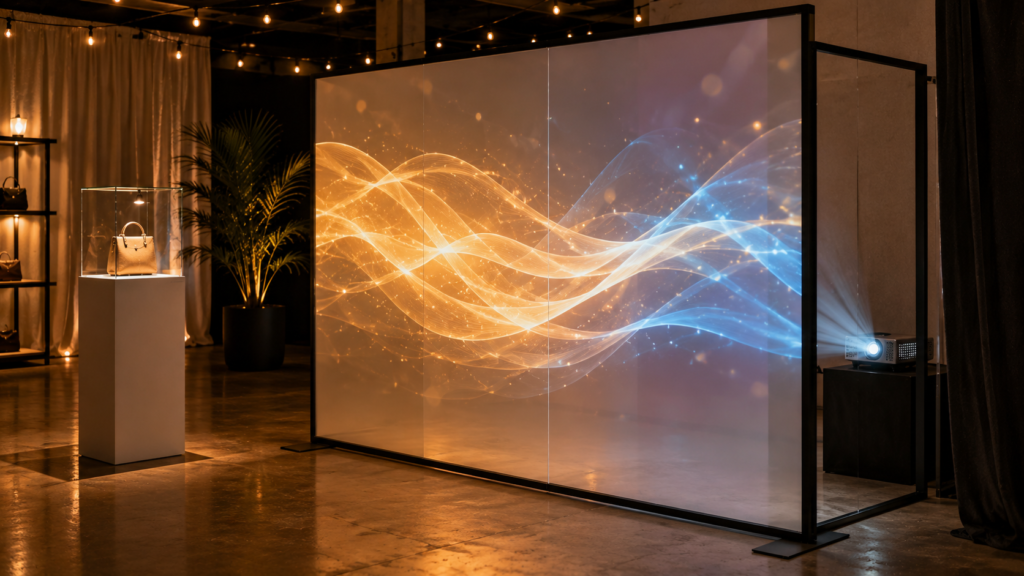
Rear projection film gives teams a cleaner option. It allows a projector to display content from behind a glass or acrylic surface, while viewers see the image from the front. As a result, temporary structures, acrylic panels, event walls, and pop-up storefronts can become digital display surfaces.
This approach can work especially well when a business needs visual impact without a full construction project. Instead of building a permanent screen wall, a team can plan a removable or modular display using film, a projector, a media player, and a properly designed surface.
RearProjectionFilms.com helps buyers understand how rear projection film works for commercial display projects. Screen Solutions International supports these projects through SSIDisplays.com with rear projection films, projection film samples, anti-glare film, transparent displays, digital signage, LED video walls, projector enclosures, interactive kiosks, and custom experiential display systems.
Why Temporary Displays Need Stronger Visual Impact
Temporary display projects usually compete for attention. A pop-up shop may sit in a busy mall, event district, or streetfront. Furthermore, a brand activation may need to attract attendees in a crowded venue. A short-term exhibit may need to communicate quickly before the visitor moves on.
Because of that, static signage is often not enough. Printed graphics can communicate a message, but they cannot move, shift, animate, or change by schedule. Meanwhile, standard monitors can feel generic if they are not integrated into the environment.
Rear projection film can help solve that problem. It adds motion and digital flexibility while keeping the visible display surface clean. In addition, it can make a temporary installation feel more custom and premium.
For example, a pop-up retail store can use rear projection film on an acrylic panel to show product videos. Additionally, a product launch can use a glass display wall to create cinematic motion visuals. Similarly, a traveling exhibit can use projection film panels to create digital storytelling surfaces that travel from venue to venue.
What Counts as a Temporary Rear Projection Film Display?
A temporary rear projection film display is any short-term or movable display using projection film on glass, acrylic, or Plexiglas. In conclusion, the display may last one day, one week, one season, or one event cycle.
Common examples include:
- Pop-up retail displays
- Trade show booth panels
- Product launch displays
- Temporary museum exhibits
- Event registration features
- Sponsor walls
- Hotel event partitions
- Corporate event displays
- Brand activation structures
- Seasonal storefront displays
- Portable showroom features
- Festival or venue displays
- Short-term sales center displays
Some temporary displays use removable panels. Others use modular structures that can be packed, shipped, and reinstalled. In either case, planning matters because the film, projector, surface, lighting, and content still need to work together.
Benefits of Rear Projection Film for Pop-Ups and Events
Temporary display projects need practical benefits, not just visual style. Finally, rear projection film can support several business goals.
It Creates a More Premium Look
First, projection film can make a temporary setup feel more custom. A clean acrylic or glass panel with projected visuals often looks more refined than a portable banner or basic monitor stand.
This can help brands create stronger first impressions, especially during launches and high-profile events.
It Supports Fast Content Changes
Next, digital content can change quickly. A pop-up can run one visual during the day and another visual during an evening event. A trade show booth can shift content by product demo. An event sponsor wall can update visuals for different sessions.
Because the content comes from a media source, teams can adjust messaging without replacing printed materials.
It Can Reduce Visual Clutter
Temporary activations often get crowded with signs, posters, products, cords, displays, and staff areas. Rear projection film keeps the front-facing display surface cleaner because the projector sits behind the glass or acrylic.
As a result, the customer-facing side can look more polished.
It Works Well With Modular Builds
Acrylic and glass-style panels can fit modular event structures. When rear projection film is applied to those panels, the same structure can serve as a divider, backdrop, and digital display surface.
This makes the installation more efficient.
It Helps Attract Foot Traffic
Motion attracts attention. Therefore, rear projection film can help a temporary space stand out from nearby booths, storefronts, or event displays.
The display does not need to be huge. A focused, bright, well-designed projection zone can still pull people closer.
Best Temporary Uses for Rear Projection Film
Rear projection film can support many short-term applications. However, it performs best when the project needs clean design, digital flexibility, and visual impact.
Pop-Up Retail Shops
Pop-up shops need to communicate quickly. Rear projection film can show product videos, campaign visuals, new arrivals, limited-edition items, or brand storytelling content.
A small display zone on the storefront or inside the shop can help the activation feel more polished.
Product Launch Events
Product launches need atmosphere and focus. A rear projection film panel can show teaser visuals, product silhouettes, feature animations, or cinematic launch content.
For high-end products, this can create a stronger reveal moment.
Trade Show Booths
Trade shows are one of the strongest temporary use cases. Exhibitors can use projection film on acrylic panels to create motion-driven visuals, demo support, sponsor content, or semi-private meeting spaces.
Because booth structures often need to ship and reinstall, acrylic panels may be a practical option.
Seasonal Storefront Displays
Retailers can use rear projection film for seasonal campaigns, holiday visuals, sale events, or limited-time window activations. A temporary display area can run for a campaign and then change for the next season.
This gives retailers more flexibility than static window graphics.
Traveling Exhibits
Museums, brands, and education groups can use rear projection film in traveling displays. Modular panels can show interpretive content, timelines, video loops, or atmospheric backgrounds.
A reusable display system can help reduce the need to redesign from scratch at every venue.
Hotel and Corporate Events
Hotels and corporate teams can use temporary rear projection film displays for conferences, galas, meetings, receptions, product showcases, and private events.
Content can include welcome visuals, branded motion, event schedules, sponsor recognition, or abstract ambience.
Rear Projection Film vs. Other Temporary Display Options
Temporary display teams often compare rear projection film with banners, TVs, LED walls, and printed graphics.
| Temporary Display Option | Best Use | Main Advantage | Key Consideration |
|---|---|---|---|
| Rear Projection Film | Glass/acrylic panels, pop-ups, event walls | Clean digital visuals on transparent surfaces | Needs projector space behind the surface |
| Printed Banners | Basic brand messaging | Low cost and simple setup | No motion or content updates |
| Standard Monitor | Product videos and demos | Familiar and easy to deploy | Can look generic or bulky |
| LED Video Wall | Large event impact | Bright and scalable | More structure, cost, and logistics |
| Projection Mapping | Custom surfaces and immersive visuals | Highly creative | Requires calibration and technical setup |
| Transparent OLED | Premium product showcases | Futuristic see-through effect | Higher-end display category |
In many cases, the best temporary display uses multiple tools. For example, a pop-up shop can use rear projection film for the window, printed graphics for permanent brand elements, and standard screens for detailed product information.
Choosing the Right Film for Temporary Displays
The best rear projection film depends on the display goal, lighting, transport needs, and surface material.
Definition Rear Projection Film
Definition Rear Projection Film works well when clarity and image quality matter. It can support product videos, brand visuals, and commercial messages where readability is important.
Accent Rear Projection Film
Accent Rear Projection Film can support bright visuals in controlled environments. Its frosted-style appearance may also work well for event partitions and modular panels.
Intrigue Rear Projection Film
Intrigue Rear Projection Film can create a holographic-style effect. This makes it useful for product launches, luxury pop-ups, futuristic demos, and premium event activations.
Film Samples
Before building a temporary display system, buyers should test samples. Sample testing helps compare film appearance, brightness, transparency, and visual effect under event lighting.
Surface Planning for Temporary Builds
Temporary displays often use acrylic, Plexiglas, or portable glass panels. Each surface has different strengths.
Acrylic can work well for portable projects because it is often easier to fabricate and transport than glass. However, it can scratch more easily, so cleaning and handling matter. Glass can look premium, but it may be heavier and more fragile during transport.
Before choosing a surface, review:
- Panel size
- Weight
- Transport method
- Surface flatness
- Scratch resistance
- Edge finish
- Mounting structure
- Stability
- Cleaning process
- Reuse plans
- Venue safety rules
For pop-ups and events, the surface should be strong enough to look professional and practical enough to install efficiently.
Projector Planning for Temporary Displays
Projector planning is essential for temporary installations. A display may need to set up quickly, fit into a small footprint, and survive event conditions.
Important projector questions include:
- How much space is behind the panel?
- Is a short throw projector needed?
- Will the projector sit on a stand, shelf, truss, or enclosure?
- Can the team align the projector quickly?
- Is there enough brightness for venue lighting?
- Will attendees see or touch the projector?
- Is cable routing safe?
- Does the projector need protection?
- Can the system be packed and reused?
- Who will operate it during the event?
Temporary displays should be designed for fast setup and reliable operation. If the system is too complicated, event teams may struggle under deadline pressure.
Content Design for Pop-Ups and Events
Temporary display content should communicate quickly. Most viewers will not study the display for long unless the visual gives them a reason to stop.
Strong content choices include:
- Short product loops
- High-contrast campaign visuals
- Abstract motion backgrounds
- Event welcome visuals
- Sponsor animations
- Product feature highlights
- Brand storytelling clips
- Countdown visuals
- Lifestyle footage
- Simple calls to action
Avoid dense text and overly complex layouts. If the display needs to provide detailed information, pair it with a QR code, salesperson, kiosk, or printed handout.
For best results, design content specifically for the display surface and viewing distance.
Setup and Teardown Considerations
Temporary displays need to install and remove cleanly. Because of that, logistics matter.
Plan for:
- Panel protection during shipping
- Film protection during transport
- Safe projector packing
- Cable labels
- Setup instructions
- Spare media player files
- Backup content
- Cleaning supplies
- Alignment marks
- Power needs
- Venue access times
- Labor requirements
- Teardown workflow
- Storage after the event
A strong logistics plan helps keep the display looking professional even when setup time is limited.
Common Mistakes to Avoid
Treating a Temporary Display Like a Cheap Display
Temporary does not mean low quality. The display still represents the brand, so it should look polished.
Forgetting Projector Space
Rear projection film needs room behind the surface. If the booth, pop-up, or event structure does not allow space, the display may need redesign.
Using Weak Event Content
Generic videos may not attract attention. Create content that fits the activation and supports the campaign.
Ignoring Venue Lighting
Event lighting can be unpredictable. Test brightness and contrast before showtime whenever possible.
Overbuilding the Display
A temporary setup should be impressive but manageable. Keep the system practical for transport, setup, and reuse.
Skipping Backup Plans
Events move fast. Bring backup files, extra cables, and a simple troubleshooting checklist.
Temporary Rear Projection Film Planning Checklist
| Planning Item | What to Confirm |
| Display Goal | Product launch, pop-up, sponsor wall, event feature |
| Surface | Glass, acrylic, Plexiglas, or modular panel |
| Film Type | Definition, Accent, Intrigue, or sample-tested option |
| Projector | Brightness, throw distance, placement, protection |
| Content | Short, high-contrast, event-specific visuals |
| Lighting | Venue brightness and reflections reviewed |
| Transport | Panel and equipment protection planned |
| Setup | Fast alignment and cable routing confirmed |
| Safety | Stable structure and safe power access |
| Reuse | Storage and future campaign plans considered |
This checklist keeps the project focused and realistic.
Future Trends in Temporary Projection Film Displays
Temporary display experiences will continue becoming more digital and immersive.
First, more pop-up shops will use projection film to create flexible storefronts without permanent construction. Next, event teams will use modular acrylic projection panels to reduce waste and improve reuse. Additionally, brands will combine rear projection film with interactive technology, QR codes, RFID, NFC, sensors, and mobile engagement tools.
Meanwhile, content will become more campaign-specific. Additionally, instead of using generic loops, brands will build short visual sequences for each event audience.
Over time, rear projection film can help temporary displays look more permanent, premium, and memorable.
FAQ
Can rear projection film be used for temporary displays?
Yes. Rear projection film can support temporary displays when applied to suitable glass, acrylic, or Plexiglas surfaces and paired with the right projector.
Is rear projection film good for pop-up shops?
Yes. Pop-up shops can use rear projection film to show product videos, brand visuals, seasonal campaigns, and promotional content on glass or acrylic panels.
Can rear projection film be reused?
Reuse depends on the film, surface, installation method, and handling. For reusable temporary systems, it may be better to apply film to modular panels that travel as a complete display element.
What projector works best for temporary rear projection displays?
The best projector depends on image size, lighting, throw distance, and setup space. Short throw or ultra short throw projectors may help in tight event environments.
Should I test samples before a temporary installation?
Yes. Sample testing helps confirm film appearance, brightness, transparency, and performance before building the full display.
Why Choose Screen Solutions International
Screen Solutions International helps businesses plan rear projection film displays for real commercial environments, including temporary activations, pop-up shops, trade shows, events, and modular builds. SSI offers rear projection films, film samples, anti-glare film, transparent displays, digital signage, LED video walls, high-bright displays, interactive kiosks, projector enclosures, and custom experiential display systems.
This matters because temporary displays need to look polished while staying practical. The right film, projector, surface, content, and setup plan can make a short-term activation feel premium.
For rear projection education and ideas, visit RearProjectionFilms.com. To review product options and project support, visit SSIDisplays.com. For project help, call 888-631-5880.
Final Takeaway
Rear projection film for temporary displays helps businesses create digital glass experiences for pop-ups, events, product launches, trade shows, and short-term activations. It can make temporary spaces feel more premium, flexible, and memorable.
In summary, successful temporary displays need clear goals, sample testing, practical surface planning, the right projector, and strong content. With the right setup, rear projection film can turn a short-term display into a standout brand experience.
To start planning a temporary rear projection film display, visit RearProjectionFilms.com or call Screen Solutions International at 888-631-5880.
Sources
Internal SSI Links
- SSIDisplays.com
- Rear Projection Films
- Projection Film Options
- Rear Projection Film Samples
- Definition Rear Projection Film
- Accent Rear Projection Film
- Intrigue Rear Projection Film
- Anti-Glare Film
- Rent Transparent OLEDs for Trade Shows