A Practical Guide for Georgia: Rear Projection Film Displays
Explore a hands-on approach to selecting, sizing, and installing rear projection film on glass in Georgia storefronts, museums, and event settings. Learn about film choices, power planning, permits, and customization.
Unlocking the Potential of Rear Projection Film in Georgia
For retailers, museums, and exhibit planners across Georgia, turning any glass surface into a dynamic digital display is easier than ever with rear projection film. By mounting a specialized film to storefront windows, partitions, or acrylic, it’s possible to create vibrant messaging that stands out in bustling retail corridors from Midtown Atlanta to Savannah’s River Street, busy convention centers, and modern corporate campuses. As a division of Screen Solutions International, Rear Projection Films offers a range of projection film options—each designed for different lighting and viewing scenarios—custom cut to fit your unique project and tested with sample kits before you commit. This practical guide steps through the essentials of selecting, sizing, powering, and permitting your next storefront window or projection display in the state of Georgia.
Choosing the Right Rear Projection Film for Your Setting
Not all glass is created equal—nor are all projection environments. Selecting the right rear projection film is key to display performance. The Rear Projection Accent Film is a frosted white film, perfect for general-purpose displays in areas like Peachtree Mall or Buckhead’s high-foot-traffic storefronts. For brightly lit rooms or glass facing sunlit streets, Definition and Definition Pro films offer a dark gray finish that boosts contrast for impactful visuals, often needed in lively shopping districts and science centers. The Intrigue film creates floating images, ideal for light-flooded lobbies or attention-grabbing visual merchandising, while DualView projection film enables two-sided viewing, making it a favorite for trade-show booths or downtown glass partitions visible inside and out.
Every environment in Georgia—whether a corporate atrium, convention popup, or museum gallery—presents different lighting, glass tints, and display angles. Order Projection Film Samples to quickly evaluate which film fits your real-world conditions under local daylight, overhead lighting, or dramatic evening displays. Technical guidance is available to help match films to your exact scenario.
Sizing & Preparing Your Projection Film for Georgia Storefront Glass
Custom-cut projection film means your digital display covers exactly what you need—no more, no less. Measure the glass or acrylic panels intended for display, accounting for any window mullions or architectural features found in historic storefronts or modern office buildings. Work with your AV team or installer to leave a small margin around the film edges for clean mounting within the frame. For stunning seamless displays, join adjacent glass panels with hidden seams, paying special attention to alignment during installation.
Since Rear Projection Films are applied to the inside surface of the glass or acrylic, installation avoids exposing the film to outdoor conditions, even in Georgia’s humid climate. This also means the visible image remains vibrant and protected in high-traffic pedestrian areas from Marietta Square to Augusta’s Riverwalk retail galleries. Always test samples on your specific glass type, especially for heavily tinted or UV-coated panes found in some modern buildings.
Matching Projector Brightness and Lens Type to Local Conditions
Projection film doesn’t produce light—it depends entirely on your projector, so matching projector brightness to Georgia’s daylight levels is vital. For most storefronts and public venues, ambient light is highest midday and near exterior-facing glass. Use sample kits and test with your available projectors in real conditions, taking into account overcast days or the late-afternoon sun, which can impact contrast and visibility.
If you’re deploying high-contrast Definition film, a projector with a higher output may be recommended for sun-exposed glass, while Accent film performs well in lower-light interior settings. Where space is tight—such as window ledges or narrow retail strips—a short-throw or off-axis projector can save on setup depth and reduce visible hardware, especially when paired with DualView film.
Always test projection with ambient lighting to find the best placement before final mounting. For longer-term projects, check local daylight levels with the NWS Peachtree City forecast office to anticipate seasonal brightness and adapt your system accordingly.
Planning for Power and Electrical Service
Reliable projection displays require safe, sufficient power. Before you finalize your design, survey where your storefront or exhibit will draw electricity—either from existing outlets or by extending power to new locations, especially in older buildings or temporary convention spaces. If additional wiring or new circuits are needed, your electrician should review the Georgia Power New Service Construction Guide for steps to request new electrical service or for engineering reviews of commercial build-outs.
Plan your power access not just for the projector, but for any video distribution hardware, media players, and control interfaces. Factor in cable management, accessibility for maintenance, and any code-compliant enclosures required in public areas. Establishing dedicated power lines is particularly important for displays running several hours daily, as in high-traffic zones in Atlanta’s metro area or busy exhibition halls in Macon or Athens.
Mounting Films and Projectors for Optimal Results
Rear projection film is self-adhesive and engineered for smooth application to glass or acrylic. Careful cleaning and surface prep help avoid bubbles or misalignment—especially critical for multi-panel exposures common in large retail or museum window displays. For glass in historic districts or buildings with unique architecture, always test a corner with a sample before full installation.
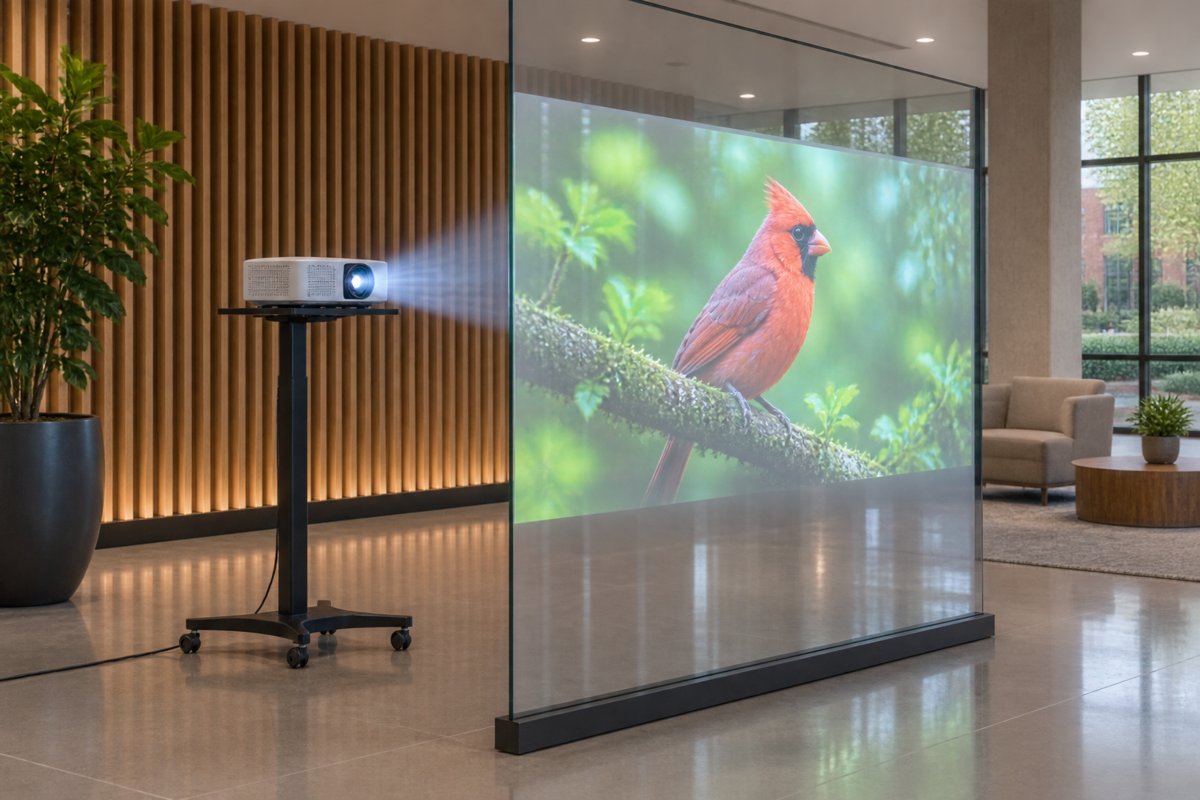
Projectors are placed behind the film, facing the glass. For temporary installations—such as trade shows at the Georgia World Congress Center—rig sturdy but moveable projector stands, taking care that lens angles match film height. In permanent setups, wall- or ceiling-mount projector brackets may be used; work with facilities or integrator partners to ensure safe, adjustable placement. If the display will be visible from both sides, as with glass partitions at corporate campuses or exhibit flooring, consider the DualView projection film, which accommodates two-sided viewing.
Understanding Permitting and Local Sign Regulations
The regulations for installing projection film displays in Georgia can vary widely depending on locality, building ownership, and display intent—whether permanent or temporary. While projection films are typically applied to interior glass, some jurisdictions treat digital displays or window signage separately, especially in commercial corridors or historic preservation zones. Check with the appropriate local building, sign, or event office for your project’s requirements. Atlanta-based projects can begin by consulting the Online Permitting portal for Atlanta for guidelines and to initiate any necessary reviews or approvals.
Common considerations include visibility from the street, light output during nighttime hours, and compliance with size limitations. Temporary installations may have different rules from permanent fixtures. Asking your event or property manager early in the process, and preparing application documents in advance, can streamline your planning timeline.
Testing, Customization, and Getting Started
No two venues are the same, especially across Georgia’s diverse cities and climates. Take advantage of Projection Film Samples to see exactly how each film presents in your site’s average lighting and to compare Accent, Definition, Intrigue, and DualView options. Once you’re confident in your selection, Rear Projection Films offers custom cutting to the exact measurements of your glass or acrylic, ensuring a tailored fit for every project from a single storefront to multi-panel museum displays.
Technical guidance is available to assist with selecting the right film, pairing with projectors and specifying installation approaches tailored to Georgia’s typical venues and weather. By testing first and planning out your requirements, you’ll set up your projection display for lasting impact and performance.
FAQ: Rear Projection Film Displays in Georgia
How do I select the right projection film for my location?
Assess your lighting: Accent film is suited for general environments, Definition or Definition Pro for higher-brightness spaces, Intrigue for floating effects, and DualView for two-sided displays. Testing samples in your specific location is the best way to confirm your choice.
What should I consider when planning power for my projector and display?
Review your site’s available outlets, distance to equipment, and total load. If new service or specialized circuits are required, consult the Georgia Power New Service Construction Guide and coordinate with a professional electrician.
Do I need a permit to install a projection film display?
Permitting requirements depend on display type, location, and local ordinances. Consult your city or county’s building or sign office—such as using the Online Permitting resources for Atlanta—to confirm what’s needed for your project.
Ready to transform your Georgia storefront or glass partition into an attention-grabbing display? Request a projection film quote to get started, or connect at 888-631-5880 or ssisales@ssidisplays.com for technical guidance on selecting, sizing, and planning your project.